
OpenAI’s Codex Micro keyboard adds optional “yeet” and “yolo” keys, via Work Louder
It is OpenAI’s first branded hardware play, turning “agent control” into a desk gadget with visible thread status.
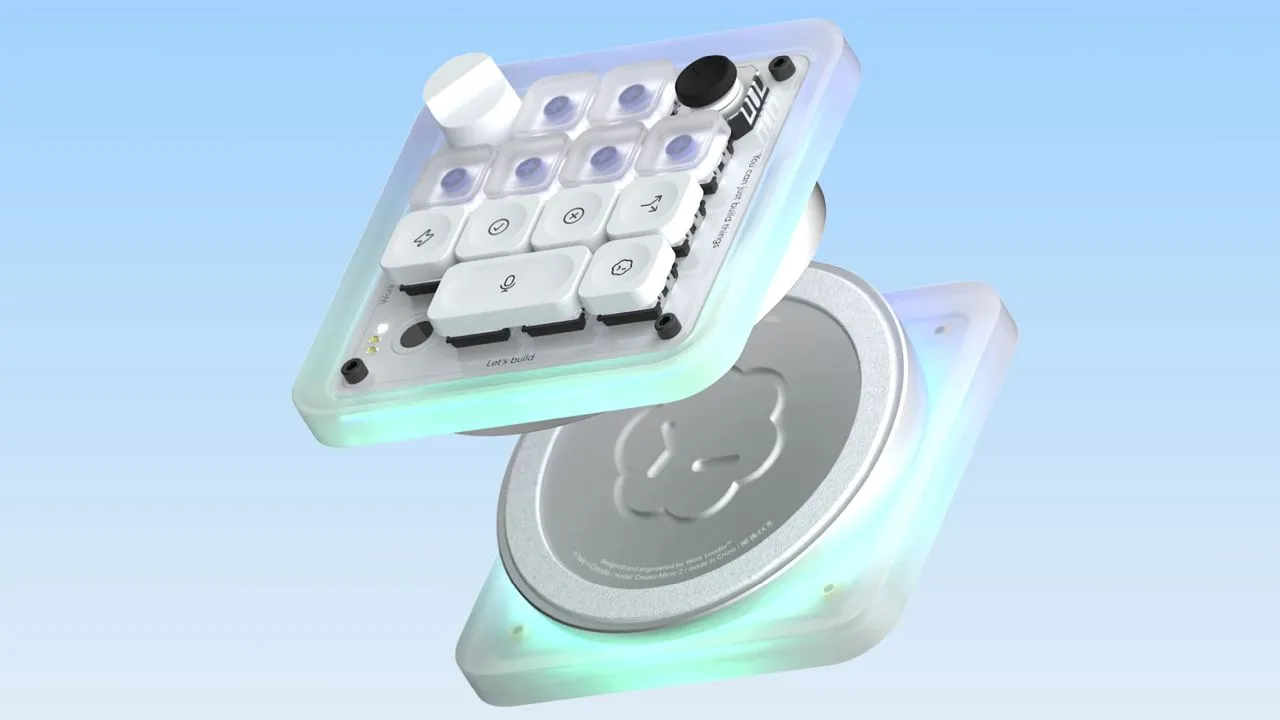
OpenAI is launching the Codex Micro mini keyboard in collaboration with Work Louder, designed to interact with and monitor multiple Codex threads. The boardroom implication is simple: branded consumer hardware is becoming a new interface layer for AI workflows, not a one-off vanity product.
OpenAI is using the keyboard market to test a very specific idea: give people hands-on control of their coding agents. Its Codex Micro mini keyboard, built in collaboration with Work Louder, is positioned as OpenAI’s first venture into branded hardware, and it is doing something more practical than the typical “look cool on your desk” gadget move. The key feature is the ability to interact with (and monitor) multiple Codex threads at once, with light-up keys indicating each thread’s individual status. So instead of treating AI as a black box chatbot you consult when you feel like it, this device tries to make AI work feel more like an operating system: multiple threads running, visibly tracked, and directly steered from your desk.
And yes, it includes optional keys labeled “yolo” and “yeet.” The Codex Micro comes with 32 swappable keycaps, and those two are among them. For anyone thinking OpenAI would come in sober and serious because it is selling AI to developers, this is a deliberate wink. The product page also adds another control knob to the whole concept of agent depth: a little dial in the top right that can be used to “control how deeply your agent thinks.” Turn it down for quick tasks, dial it up “when the work needs to be more considered.” In other words, you are not just triggering an agent. You are tuning its reasoning intensity from physical controls, which is a very different user experience than clicking a setting somewhere in a web UI.
If you zoom out, this lands at an important moment for AI companies. The source notes that rumors have swirled about OpenAI potentially launching an AI-powered smart speaker, but the Codex Micro instead is aimed at coding workflows. That distinction matters. A smart speaker would broaden where the conversation happens, but a keyboard changes how work is executed during the day. For decision-makers evaluating AI “distribution,” the keyboard concept is basically a new input channel. It is closer to developer tooling behavior than generic consumer AI. And because the device is described as allowing monitoring of multiple Codex threads at once, it suggests a future where users manage parallel workstreams, not just single-turn prompts.
There is also the branding strategy angle. The device is described as looking a lot like Work Louder’s Creator Micro range of customisable mini keebs. The Codex Micro’s resemblance signals an approach that borrows from an existing enthusiast product category, then adds OpenAI-specific features. At the same time, the article positions this as OpenAI’s first branded hardware, which means the company is stepping into a domain where loyalty is earned through aesthetics, reliability, and modularity, not through model capability alone. In a market like keyboards, “limited launch” matters because it creates urgency among early adopters. The source is clear that the Codex Micro is launching in a limited run, and if you want one, you need to pick one up quickly.
The product’s alternative is also telling. The article mentions the Creator Micro 2, which looks very much like the same product minus the Codex-specific features, and comes in a black finish without OpenAI branding plastered on the box. That creates a natural contrast: buyers who care about hardware design can get the physical experience, while buyers who care about the agent workflow features get the OpenAI package. One of the cultural jokes in the source lands on the missing “yeet” button in the Creator Micro 2. But underneath the humor is a real differentiation story: the “agent controls” and the thread status indicators are the meaningful part of the Codex Micro, not just the fact that it is shaped like a custom mini keyboard.
From a governance and regulatory background perspective, there is a practical consideration, even if this story does not mention compliance issues directly. Any time AI capability is integrated into a hardware control scheme, you effectively change how users trigger and steer the system. The dial that changes how deeply the agent thinks, plus the ability to monitor multiple threads and their status, means the user experience can influence how often agents run, how long they work, and what the system is encouraged to do. Even if OpenAI is not making new legal claims in the source, operationally it shifts the human-AI interaction from “prompt and wait” toward “manage ongoing processes.” That is relevant for board-level risk thinking: more automation and more ongoing execution usually increases the need for clear expectations, safe defaults, and understandable controls.
Second-order, this hardware move could pressure competitors. If OpenAI’s first branded hardware is already leaning into visible thread management and physical reasoning controls, other AI tooling providers may feel compelled to offer equally tangible interfaces. Because this is a limited launch, the early cohort will also likely function as a feedback channel for product teams watching how people actually use the “control how deeply your agent thinks” dial and whether users find it intuitive to run multiple Codex threads simultaneously. The story ends on a simple choice for consumers: grab the Codex-branded limited launch device now, or consider the Creator Micro 2 if you mainly want the hardware look. For executives and investors, though, the stakes are broader. This is not just merch. It is an attempt to turn AI agent workflows into a daily physical ritual, and whoever owns that ritual could own a surprising amount of mindshare.
This story's Key Insights and Take-aways are locked.
Create a free account to unlock Executive Actions for one credit.
Register to UnlockAlways free for Executives Club members. Join the Club
More in Technology

Google quietly links your phone number to every Android account on your SIM
Adding a SIM now ties your phone number to all Google accounts - and future accounts inherit it. Here's the security and privacy stakes.

Hijacker AI 'Skynet mode' runs 100,000 attack steps against exposed models
Symantec caught a criminal AI agent that borrows other models, steals data, and mines crypto; the only relief is no confirmed victims yet.

Nvidia's AI-financier shift faces its first big test as neoclouds stumble
A rout in neocloud stocks is forcing investors to weigh Nvidia's hidden exposure as both supplier and lender to the AI buildout.