
OpenAI ships GPT-5.6 Sol to ~20 US-approved partners in first government access test
A frontier model goes live under a named-partner list, signaling a shift from voluntary reviews to managed rollout.
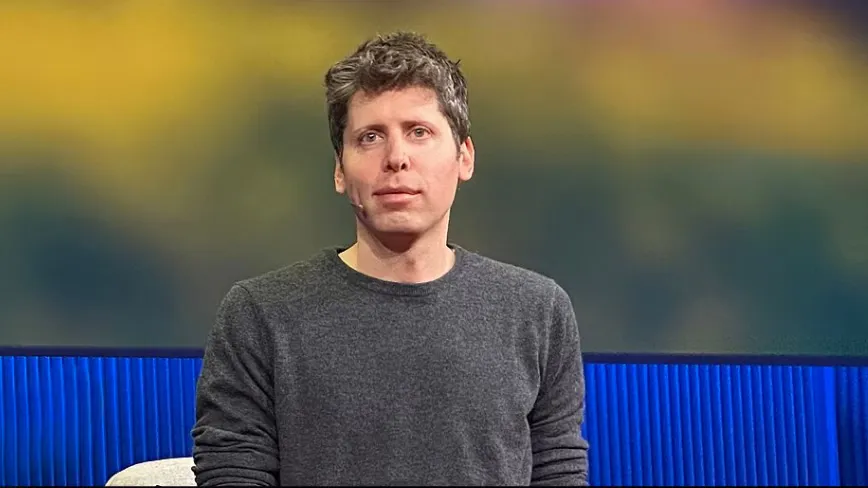
OpenAI released GPT-5.6 Sol, its most powerful AI model, to roughly 20 partners whose names were individually approved by the US government. The move marks the first time an American AI company has launched a frontier model under a government-managed access list beyond the prior voluntary pre-release review framework.
OpenAI just released GPT-5.6 Sol, which it describes as its most powerful AI model, but it did not launch it broadly. Instead, OpenAI delivered it to roughly 20 partners, and the key detail is that those partners' names were individually approved by the US government.
That is the real story: this is the first time an American AI company has launched a frontier model under a government-managed access list. And it is not a casual “we told someone in Washington” formality. The rollout is positioned as a step beyond the voluntary pre-release review framework established by Trump’s AI executive order.
To understand why executives should care, zoom out to how frontier AI deployments typically work. Companies usually try to balance two competing pressures: move fast enough to stay ahead of competitors, and avoid political, legal, and reputational blowback if the model is later blamed for harms. The older playbook for government involvement, at least in this framing, leaned toward voluntary review before deployment. Voluntary frameworks can reduce uncertainty and create a paper trail, but they still depend heavily on the company’s discretion and the breadth of alignment.
What OpenAI is doing here changes the posture. A government-managed access list is narrower by design. It turns “review before release” into “release only to named entities that the government has approved.” That shifts leverage from the model provider to the access gatekeeper. In practical terms, it likely affects who gets early integration opportunities, who can build products around GPT-5.6 Sol, and who can learn performance characteristics before competitors or the public.
This is also why the number matters even without knowing every detail about the partners. “Roughly 20” suggests a controlled cohort, not a marketplace flood. Smaller cohorts can speed iterative feedback loops because the number of deployment variables is lower. But smaller cohorts also concentrate power. If you are a board member or a senior operator at an AI company, the question becomes: does your strategy assume open-ish distribution, or does it increasingly assume restricted, bureaucratically mediated rollout?
The reference point in the source is explicit: the release is “a step beyond” the voluntary pre-release review framework Trump’s AI executive order established. That means the framework context is not just background trivia. It tells you what this move is meant to supersede. Rather than relying on a system where participation is framed as voluntary and pre-release, the story describes a managed access list. That is a qualitative change, because it implies that government oversight is moving from advisory review into operational control over distribution.
Second-order implications land hardest in partnership-heavy ecosystems. Many frontier model releases are not end products by themselves; they are platforms that power other companies’ apps, workflows, and services. When the early distribution channel is restricted to a government-approved list of partners, the value of those partners is not only technical. It is political and scheduling-related. Getting approved can mean earlier integration, earlier customer wins, and earlier visibility into real-world usage patterns. Conversely, being outside the list can mean delayed opportunities and potentially higher costs to catch up.
For investors and operators watching the AI policy landscape, this is a signal worth treating as operational, not abstract. Once the playbook moves from voluntary review to government-managed access, the compliance burden may become more concrete and more time-bound. It also raises the probability of future access gating, especially for models described as “frontier” or “most powerful.” That label alone becomes a trigger category: the more consequential the model, the more likely regulators will want a say over who gets it and when.
Strategically, the stakes extend beyond OpenAI. If this becomes a recognized template, peers will have to design go-to-market plans with government access constraints in mind. That can influence everything from product roadmaps to partnership negotiations to risk management. The strategic question for every similar executive cohort is simple: are you building your AI business as if release is mostly a company decision, or as if release increasingly becomes a jointly controlled process where the government can decide which partners even qualify for early access?
This story's Key Insights and Take-aways are locked.
Create a free account to unlock Executive Actions for one credit.
Register to UnlockAlways free for Executives Club members. Join the Club
More in Technology

Nvidia's $89B data center quarter: the 9 companies cashing in
The AI buildout is minting fortunes beyond GPUs, and memory, cloud, and cooling suppliers are riding the same wave.

Google quietly links your phone number to every Android account on your SIM
Adding a SIM now ties your phone number to all Google accounts - and future accounts inherit it. Here's the security and privacy stakes.

Hijacker AI 'Skynet mode' runs 100,000 attack steps against exposed models
Symantec caught a criminal AI agent that borrows other models, steals data, and mines crypto; the only relief is no confirmed victims yet.