

Orlando Bravo stops the 2 a.m. email, uses AI at midnight for Thoma Bravo juniors
Thoma Bravo's billionaire founder says associates can do more high-order work, and the firm will hire more.
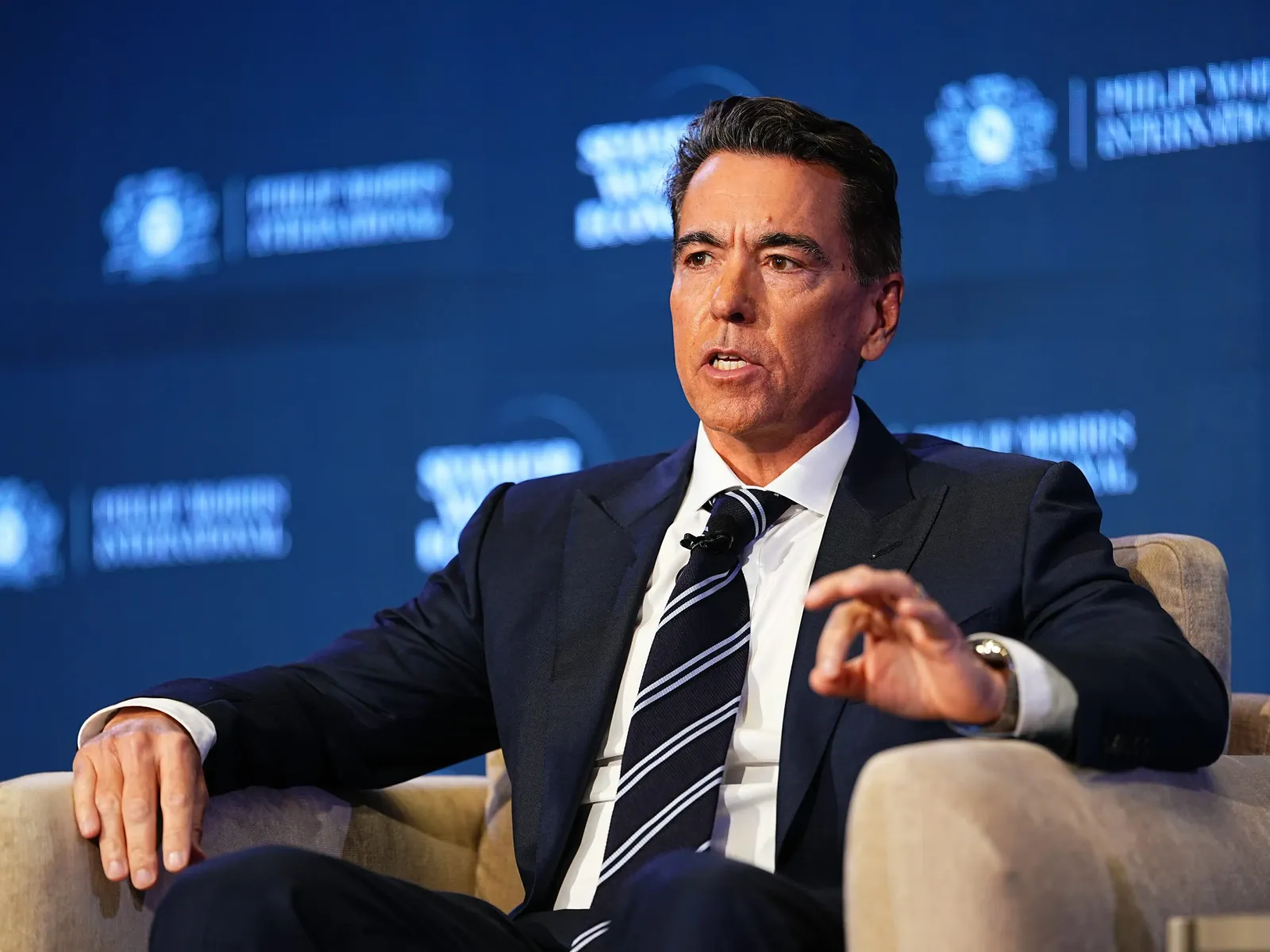
Orlando Bravo, founder of software-focused private equity firm Thoma Bravo, said AI lets him handle tasks at midnight without calling junior associates. The consequence for decision-makers: entry-level roles shift toward higher-order investing work, and staffing models may change instead of simply shrinking.
Orlando Bravo, billionaire founder of software-focused private equity firm Thoma Bravo, just changed his own bedtime habits. At a conference in Berlin on Tuesday, he said he bothers junior associates a lot less because, at midnight, he can do things quickly with AI instead of calling them to handle the work in the middle of the night. In his framing, that single behavior change is the start of a broader redesign of what entry-level “glued to the computer early hours” labor should look like.
Bravo tied this directly to an old Wall Street pain point: the frantic 2 a.m. email that juniors often receive. He argued that AI tools can absorb many of the time-consuming tasks juniors have historically done, like building models or creating pitch decks, which means fewer late-night requests and a faster route for young employees to “mature” into higher-order thinking. He also made a counterintuitive staffing claim. Despite fears that AI could reduce demand for junior employees, Bravo said he feels Thoma Bravo needs to hire more associates for the first time in his three-decade career in private equity.
This is a big deal because private equity is a leverage business, and “lean firm” staffing is part of how it squeezes value from deals. The Business Insider piece says Thoma Bravo employs around 220 people and that its founder’s firm manages more than $180 billion. That scale matters for the market narrative: when a high-profile finance leader with real assets under management says junior work is shifting rather than disappearing, it challenges the common storyline that AI simply replaces entry-level labor. Bravo explicitly rejected the replacement framing, telling CNBC that if you define the associate role as only doing a spreadsheet, then you do not need that many associates. But at his firm, he said, associates now call on companies more, develop relationships with CEOs, and therefore the firm needs “a lot more of them.”
Under the hood, the logic is straightforward. AI is most useful when it can take repetitive, structured tasks off human time. The article points to tasks like model building and pitch deck creation as examples of what AI can handle. If those tasks require less manual effort, then the human workforce is freed to spend more time on activities that are harder to automate, like relationship-building and higher-order investing judgment. Bravo’s “mature faster” argument also signals an operational shift. In practice, it changes training velocity: juniors may get more reps on real investor work sooner, instead of spending weeks locked into rote outputs that feed senior decision-making.
This matters beyond Thoma Bravo because the “brutal entry-level hours” debate is not new. The Business Insider piece notes that questions about those brutal hours have persisted for decades, with some employees reporting weeks exceeding 100 hours. AI as a productivity tool has been the dominant public stance among Wall Street leaders, and the technology has been framed less as a replacement plan and more as a way to reduce friction. In the same article, it notes that Wall Street executives have largely framed AI that way, and that none of them have publicly announced large-scale cuts tied to the technology. It also adds that the number of summer interns on Wall Street has largely held steady or risen.
But the staffing question is not purely about internal efficiency. It is also about incentives, board dynamics, and talent pipelines. When investors and deal teams are asked to deliver better returns with fewer missteps, firms tend to protect the parts of the workflow that are most legible to senior stakeholders. That is where AI can help, by making outputs faster and more consistent. If the work product shifts from “produce deliverables” to “participate in investing conversations,” firms might actually need more entry-level hires to cover the front-line activity of meeting customers and engaging leadership, even if the spreadsheet burden goes down.
There are also industry signals that the hiring footprint could move even if job cuts are not yet public. For example, the Business Insider piece references Goldman Sachs CEO David Solomon, who earlier this month said the bank’s post-graduation hiring could “contract a little” over the next three years as AI reshapes work. That is a different tone than outright displacement, but it suggests a gradual reconfiguration of labor demand rather than a sudden torch-and-replace moment.
So the strategic stakes for peers are immediate. Bravo’s claim is not that junior roles vanish, but that their content changes: less midnight labor from the boss, more associate involvement in calls and relationships, and an organization that needs to hire more because the associate mandate expands. For decision-makers watching AI reshape finance workflows, the takeaway is simple but uncomfortable: do not plan around “AI replaces juniors.” Plan around “AI changes what juniors are for,” and then audit your operating model, training system, and coverage plan accordingly.
This story's Key Insights and Take-aways are locked.
Create a free account to unlock Executive Actions for one credit.
Register to UnlockAlways free for Executives Club members. Join the Club
More in Business

Anthropic’s Levant Alpöge cracks the Jacobian conjecture after 87 years
A Harvard valedictorian used Claude to hit a 1939 breakthrough, but the missing “why” is the real problem.

Uber buys Delivery Hero for nearly $15B, vaulting to top food delivery outside China
The deal doubles Uber's dual-services footprint and pushes a ride-and-eats bundling play into 50 more markets.

Epic and Google drop settlement bid, forcing rival Android app stores by July 22
Google told the court it is ready to carry third-party app stores starting Wednesday, July 22.