
Oura's Ring 5 shrinks 40% and keeps the $399 entry price
The smarter move for Oura is not just making the ring smaller - it's proving premium hardware can still justify premium pricing in a crowded wearable market.
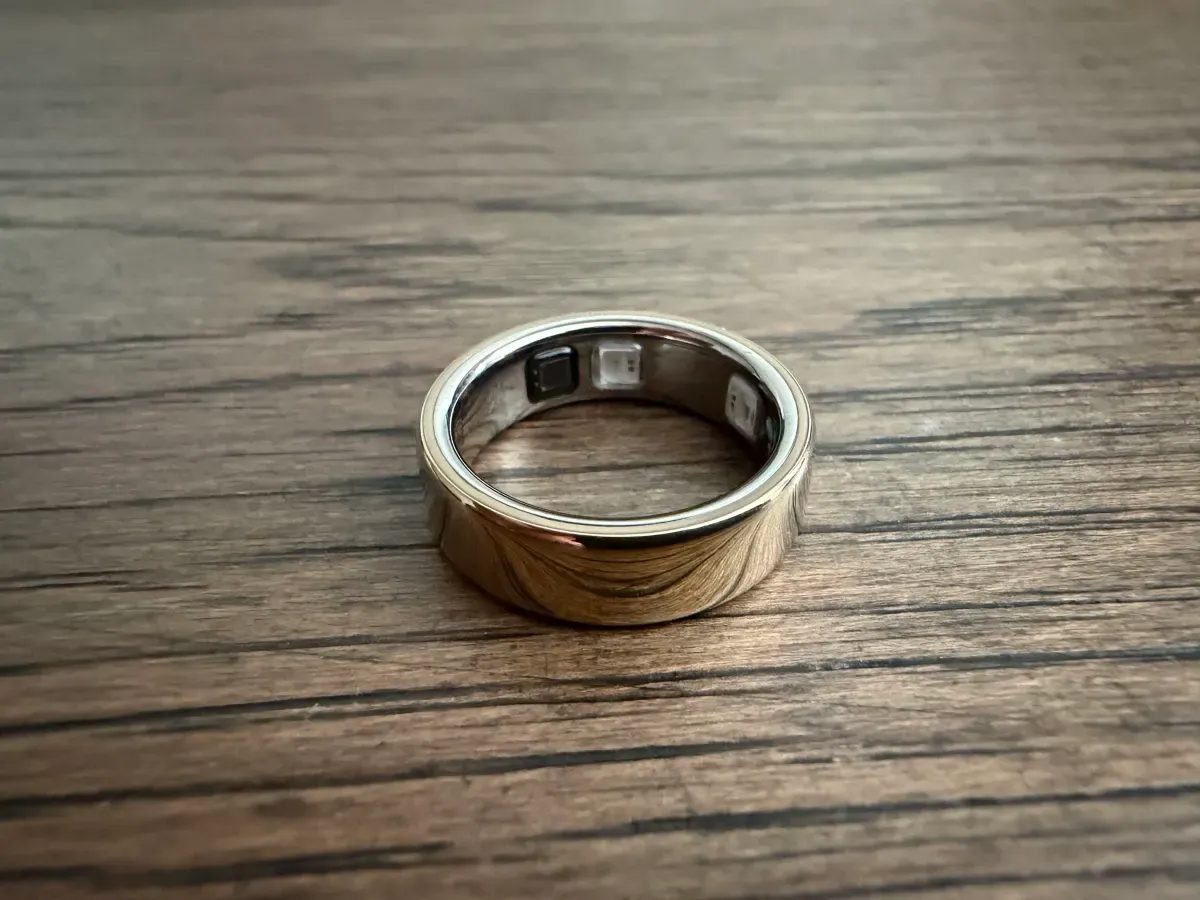
Oura released the Ring 5, which it describes as the world's smallest smart ring, making it 40% smaller than its predecessor and starting at $399. For executives and investors, the move shows how consumer hardware companies are trying to win on design and perceived value, not just raw feature count.
Oura's Ring 5 is not just another incremental gadget refresh. According to TechCrunch's summary of the device, Oura describes it as the world's smallest smart ring, says it is 40% smaller than its predecessor, and prices it from $399. That combination matters because in wearables, size is not cosmetic. It is the product. A ring has to disappear on your finger while still feeling worth the money, and Oura is clearly betting that shrinking the hardware helps make the case for a premium price tag.
The starting price is doing a lot of work here. At $399, the Ring 5 is not trying to compete like a bargain tracker. It is positioned as a premium health and lifestyle device, which is exactly where consumer hardware makers want to be when the market gets crowded and basic features become easy to copy. The pitch is simple in plain English: if the ring is smaller, lighter, and more comfortable, more people will wear it consistently, and if people wear it consistently, the product becomes more valuable. That is the logic behind nearly every successful wearable, from watches to earbuds. The hardware is just the wedge. The habit is the business.
That makes Oura's design choice strategically interesting for founders and product teams. Shrinking a device by 40% is not merely an engineering flex. It is a signal that the company believes ergonomics can be a competitive moat. In wearables, comfort can drive retention just as much as sensor quality or software features. A device that stays on the finger all day has a better shot at becoming part of the user's routine, which is where these products earn their keep. For executives watching the category, the lesson is blunt: premium hardware increasingly has to justify itself by being less annoying, not just more capable.
There is also a broader market context behind this kind of launch. The wearable industry has matured into a race where nearly everyone can claim health tracking, sleep insights, and activity monitoring. That pushes brands toward differentiation through form factor, aesthetics, and status. A smart ring sits in an interesting middle ground: more discreet than a smartwatch, more visible than software alone, and easier to market as both a health tool and a personal accessory. Oura's claim that Ring 5 is the world's smallest smart ring is meant to sharpen that identity. In a market full of similar promises, smaller can mean more ownable.
The pricing is just as revealing as the size. Starting at $399, the Ring 5 sits in the kind of range that forces buyers to answer a very deliberate question: do I want a wearable, or do I want this wearable? That is the sort of decision premium consumer tech companies need to create if they want to avoid racing to the bottom. It also tells you something about how Oura sees its customer base. This is not a mass-market impulse buy. It is a product for people already inclined to pay for design, data, and a more seamless body-worn device. For that audience, making the ring smaller may reduce a major psychological barrier: if something this expensive is going to live on my hand every day, it had better feel natural.
For boards and operators, the second-order implication is about product strategy under pressure. As categories mature, companies often face the same trap: adding features without improving the experience. Oura's Ring 5 suggests the opposite playbook. Make the product physically better, then let the rest of the value stack follow. That can help defend pricing, reduce churn, and reinforce brand perception without relying on a constant flood of headline-grabbing gimmicks. It also highlights a truth the best consumer companies learn early: if the object is small enough to become part of the body, every millimeter matters.
For peers in wearables, health tech, and premium consumer electronics, the takeaway is clear. Oura is leaning into the idea that the next round of competition is not only about what devices do, but about how invisible and intuitive they feel once bought. The Ring 5's size reduction and $399 starting price make that strategy visible in one clean package. If the product lands, it could reinforce a larger lesson for the category: when features start to blur together, form factor and comfort can become the sharpest edge of all.
This story's Key Insights and Take-aways are locked.
Create a free account to unlock Executive Actions for one credit.
Register to UnlockAlways free for Executives Club members. Join the Club
More in Technology

OpenAI says 10,000 agents cracked a 90-year math problem in 88 hours
The company's claim is audacious, but one mathematician is pushing back. Here's what it means for AI-driven discovery.

Meta still serves child sexual abuse ads on Instagram in India - BBC report
A new report following the BBC Eye investigation says the ads are still there - what it signals for every platform with a self-serve ad engine.

White House yanks 'Build the Wall' game after Tetris Company copyright warning
The administration's arcade game vanished in hours - and the takedown playbook every brand can learn from.