
Owlcat’s Andrey Tsvetkov calls its 10-year sprint “speedrunning” CRPGs, not quitting
The publishing chief explains how miniatures, crowd funding, and parallel teams keep the studio fast.
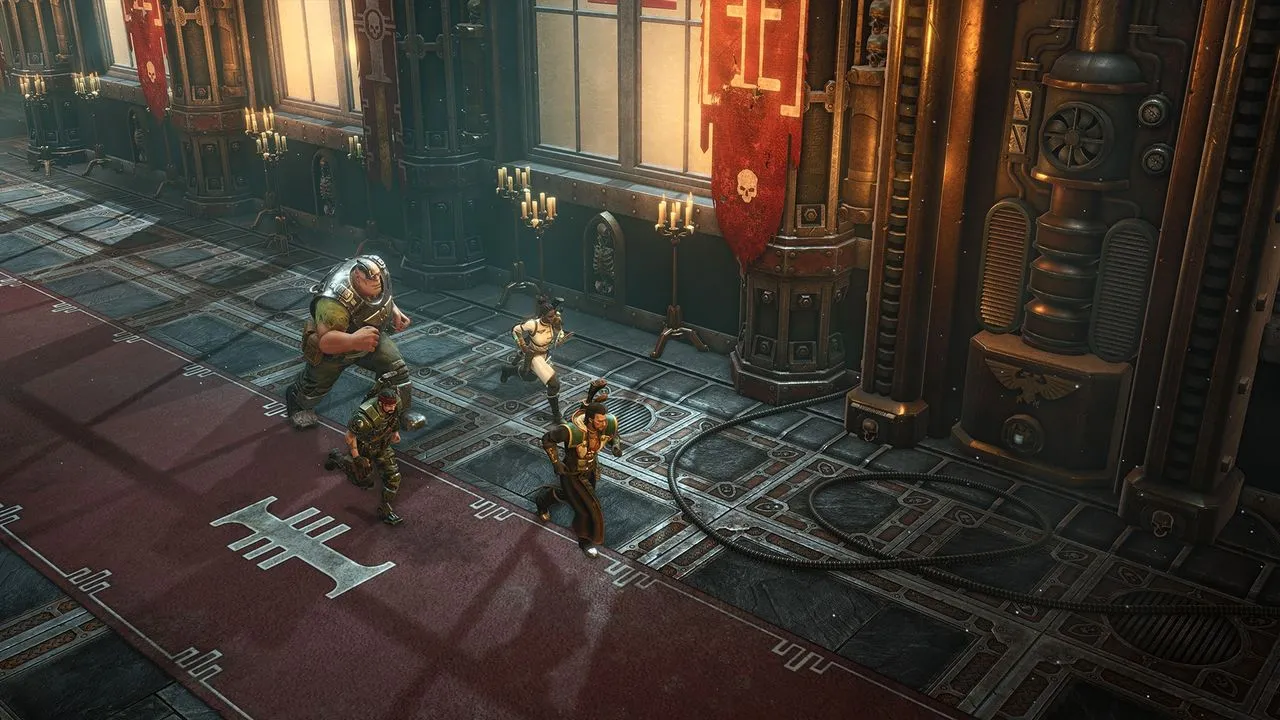
Owlcat Games head of publishing Andrey Tsvetkov says the studio is “kind of speedrunning this,” after turning 10 in June. His approach: ship multiple RPGs in parallel, deepen community collaboration, and expand beyond CRPGs without leaving them behind.
When Owlcat Games turned 10 in June, head of publishing Andrey Tsvetkov didn’t treat the milestone like a victory lap. He treated it like an explanation, calling the studio’s pace “kind of speedrunning this.” The reason is simple and concrete: in 10 years, Owlcat “managed to ship three games,” including sprawling isometric titles in the Pathfinder universe and 2023’s Warhammer 40K: Rogue Trader.
But the second payoff is what matters for decision-makers. Tsvetkov is explicit that the studio won’t be quitting the CRPG genre, even as it prepares its debut third-person RPG, The Expanse: Osiris Reborn, set to launch in 2027. That means a portfolio strategy that widens the audience funnel without treating core fans like a past life.
To understand why this “speedrunning” frame is more than a joke, zoom out to what it was pushing back against. Through the 2000s and early 2010s, the RPG genre seemed to drift toward third-person action, from Fallout and The Elder Scrolls to BioWare’s Dragon Age and Mass Effect. CRPGs were allegedly “off the spotlight.” Then veteran developer Obsidian Entertainment crowdfunded RPG Pillars of Eternity in 2015, saving itself from dire finances with a return to 90s-style isometric RPGs. Tsvetkov points to that moment as proof the market did not move away from these products, and that it inspired Owlcat to start working on a concept that eventually became Pathfinder: Kingmaker.
The funding details are where Owlcat’s execution gets real. Pathfinder: Kingmaker was crowd funded, with 18,351 backers raising $909K, far more than its original $500K target. For the sequel, 2021’s Pathfinder: Wrath of the Righteous, more than 35,000 backers pledged two million dollars. For boards and investors, this is a classic case of demand validation functioning like a risk filter: instead of betting the studio’s future on uncertain mainstream tastes, Owlcat used community-backed momentum to justify scale and speed.
Owlcat also doesn’t treat its fans as a post-launch marketing channel. Tsvetkov says the studio continues working with fans from early stages, including pre-release builds for Warhammer 40,000: Rogue Trader and its follow-up Dark Heresy that help shape vision. He then uses a simple origin story for why this matters operationally: when the studio was thinking about what kind of story to tell and what might be the next studio partnership, “more than half of the studio” explicitly told them they wanted Warhammer. Owlcat “approached Games Workshop,” found common ground fast, and started working on an RPG based on the Warhammer universe.
That passion, in his telling, is also the mechanism behind the shipping cadence. Tsvetkov argues the creative team is not stuck waiting for a five- or six-year single-project cycle. “There is a list of things that the creative team would like to do, and we try to chase them,” he says. Owlcat built the studio so it can work on several projects at once: some teams are in full production schedule stage right now, while others are in early pre-production with concepts. The operational implication is straightforward: parallel pipelines can compress time to market while still letting teams iterate on different ideas before creative energy cools.
This is where a second-order governance theme sneaks in. Tsvetkov describes quarterly meetings to assess whether “old design ideas” are still relevant, can be improved, or are holding the studio back. He uses the “bronze statue” metaphor: a studio should be “a living, breathing organism,” with room for new ideas to grow. And he frames the reason as player expectations, not nostalgia. Players have already experienced classic references like the original Baldur’s Gate, Icewind Dale, Pillars of Eternity, and Wasteland, so the studio needs to avoid repetition and deliver something new.
Finally, Owlcat’s future plan shows how it’s trying to expand influence without forfeiting identity. Tsvetkov points out that Owlcat is already a mainstay in CRPG, but it may be nearing broader mainstream visibility, similar to how The Witcher 3, Kingdom Come: Deliverance 2, and Baldur’s Gate 3 put their developers on broader maps. Warhammer 40,000: Dark Heresy could bring “the floodgates open,” and The Expanse: Osiris Reborn could resonate with starved Mass Effect fans because it is Owlcat’s third-person debut. At the same time, he says there is a new unannounced project “quite different from what we’ve done in the CRPG genre before,” while still leaving “room for experiments.”
For executives in gaming, or any business with community-driven products, the strategic stakes are clear. Owlcat’s approach ties community feedback, parallel development, and IP partnerships to a disciplined belief that CRPGs are not a fading niche. Tsvetkov puts it plainly: “So we won’t be quitting the CRPG genre.” The competitive question for peer studios and funding partners is whether you can build a system that stays loyal to its craft while moving fast enough to keep the market from changing around you.
This story's Key Insights and Take-aways are locked.
Create a free account to unlock Executive Actions for one credit.
Register to UnlockAlways free for Executives Club members. Join the Club
More in Entertainment

'It's a Magic Trick': Ballet Experts Say Rosalía's SNL Pose Is Impossible
Three ballet experts tell Rolling Stone Rosalía's gravity-defying SNL stillness shouldn't be possible - and why the debate is now part of the show.

Activision CMO: GTA 6 Will Boost Call of Duty, Not Bury It
Activision's top marketer says Rockstar's blockbuster will drive players back to consoles and into Modern Warfare 4, even as the company admits its recent strategy failed.

Justice to Score GTA 6, Share New Song with Tame Impala, SZA, King Gizzard
Rockstar taps the French duo for the GTA VI score, and the first taste is a genre-melting collab with Tame Impala, SZA, and King Gizzard & The Lizard Wizard.