

P&G's $100M cashmere diaper bet is CEO Jejurikar's inflation answer
How a 10% pricier Pampers line fueled P&G's best organic sales quarter in 11 quarters and what it signals for consumer giants.
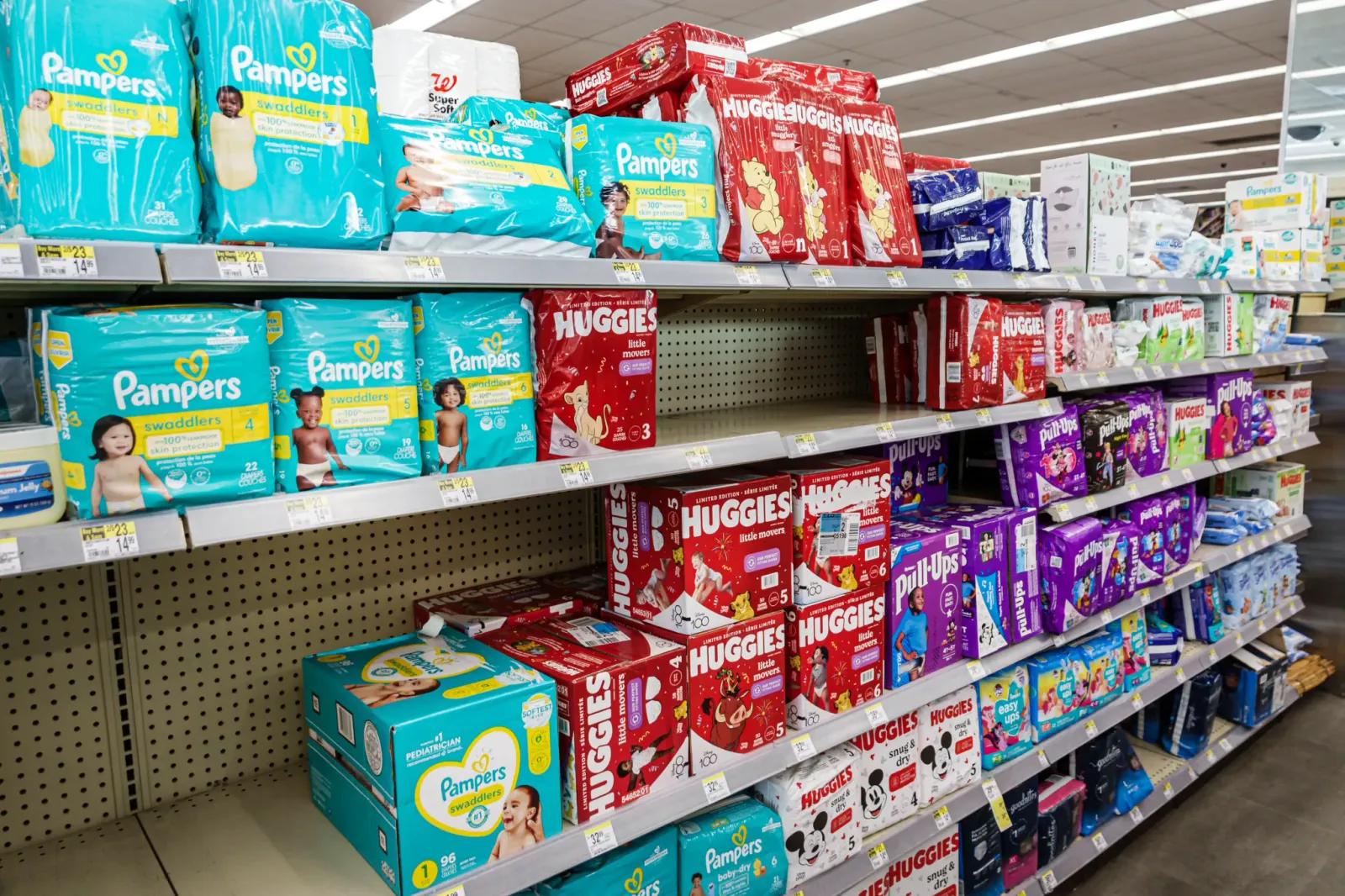
Procter & Gamble CEO Shailesh Jejurikar is betting premium products like the Pampers Amore diaper line, on track for $100 million in first-year sales, can revive pricing power amid inflation. The strategy delivered 4% organic sales growth and a 6% share jump, signaling that consumer giants can win by splitting their approach between bargains and innovation.
P&G's answer to inflation-weary shoppers is literally softer: a $100 million diaper line. Pampers Amore, launched in the U.S. in March, is on track to hit $100 million in first-year sales, making it the company's first new diaper line since 2018 and a key contributor to Procter & Gamble's best quarter for organic sales growth in nearly three years. The product carries a real premium: a 108-pack of Amore costs 10% more than Pampers Swaddlers. For new CEO Shailesh Jejurikar, that premium is the point, not the problem.
Last week P&G reported that organic sales, a metric that strips out currency swings and acquisitions, rose 4% in its first fiscal quarter of 2027, the best performance in 11 quarters. Wall Street rewarded the reversal: shares jumped 6% Thursday, their biggest one-day gain since 2020. The results quieted doubts about whether Jejurikar, who took over on Jan. 1, can navigate a brutal consumer environment. "We know how to grow these categories and win with superior innovation, better execution, and clear communication," CFO Andre Schulten, a 30-year P&G veteran, told CNBC. Bloomberg Intelligence analyst Diana Gomes wrote that the results "should bolster confidence that its innovation and value interventions are restoring underlying growth."
The strategy is really a two-front war. On the lower end of the income spectrum, P&G is cutting prices and introducing new pack sizes of household staples; in its most recent quarter, average price in its baby, feminine, and family care unit fell 1.2%. On the higher end, it is selling innovation like Amore diapers, which feature greater absorbency, a cashmere-like feel, and superior skin protection properties. Another recent example is Pantene's Abundant & Strong haircare line, launched last year for women struggling with hair loss and built on P&G research linking scalp oxidative stress to poorer scalp conditions. This "bargains below, innovation above" approach lets P&G defend value-conscious households while capturing shoppers willing to pay for more.
It is also a direct answer to the slide that preceded Jejurikar. Under former CEO Jon Moeller, who led P&G from 2021 through 2025, the company managed inflation by raising prices just enough to protect revenue without alienating consumers, while pruning slower-growth products. But organic sales growth shrank steadily, from 7% in fiscal 2023 to just 1% in fiscal 2026. The recent quarter sharply reversed that decline, and investors are treating it as evidence that Jejurikar's mandate is not just about cost cutting. The current two-year restructuring program, which includes 7,000 job cuts, is halfway done, but the harder task is re-energizing the innovation machine so P&G can defend market share and pricing power with a constant flow of new products.
Jejurikar has the institutional depth for that mission. He joined P&G in 1989 as an assistant brand manager in India, reached the global leadership team in 2014, became CEO of its largest business unit, Fabric & Homecare, in 2019, and was promoted to operating chief two years later, the same role Moeller held before becoming CEO. He was named chairman this summer. "We have to again step out from the pack and lead," Jejurikar told Wall Street analysts soon after becoming CEO. The Amore launch is his first big test of whether that leadership translates into shelf-level pricing power.
The unresolved risk is whether inflation-weary households will keep paying a 10% premium for cashmere-soft absorbency once the novelty fades. The company is betting that genuine product differentiation, not just price increases, can sustain momentum even as consumers demand more for every dollar. The early evidence is encouraging: Amore was a key contributor to the quarter's performance, and the 6% share jump shows investors are buying the story.
For every consumer products leader, the P&G playbook offers a concrete lesson: do not choose between low prices and premium products. Offer both, separately. The quarter shows the split strategy can reignite growth even in a tough climate, and the market's response suggests investors will reward companies that execute it. Whether the model survives a prolonged inflation shock is the next test, but for now the softest product in P&G's lineup is also one of its sharpest strategic signals.
This story's Key Insights and Take-aways are locked.
Create a free account to unlock Executive Actions for one credit.
Register to UnlockAlways free for Executives Club members. Join the Club
More in Business

Cloud revenue doubles, but Alphabet stock heads for worst drop in years
The market shrugs off a cloud milestone to punish AI-driven erosion of search profits, a warning for every Big Tech AI budget.
Anthropic Files for IPO, Ticker 'ANT' - The AI Listing to Watch
The AI company has filed for an initial public offering under the ticker 'ANT,' giving public investors a new way to bet on the generative AI boom.
Anthropic's S-1 reveals $80.7B loss as it races OpenAI to IPO
The Claude maker files publicly for a Nasdaq listing under 'ANT,' exposing staggering losses and a world-altering ambition before it can beat OpenAI to the market.