
Palo Alto CEO Nikesh Arora: AI token pricing must drop 90%
He warns sky-high token costs could block large-scale AI adoption, forcing buyers, vendors, and boards to rethink unit economics.
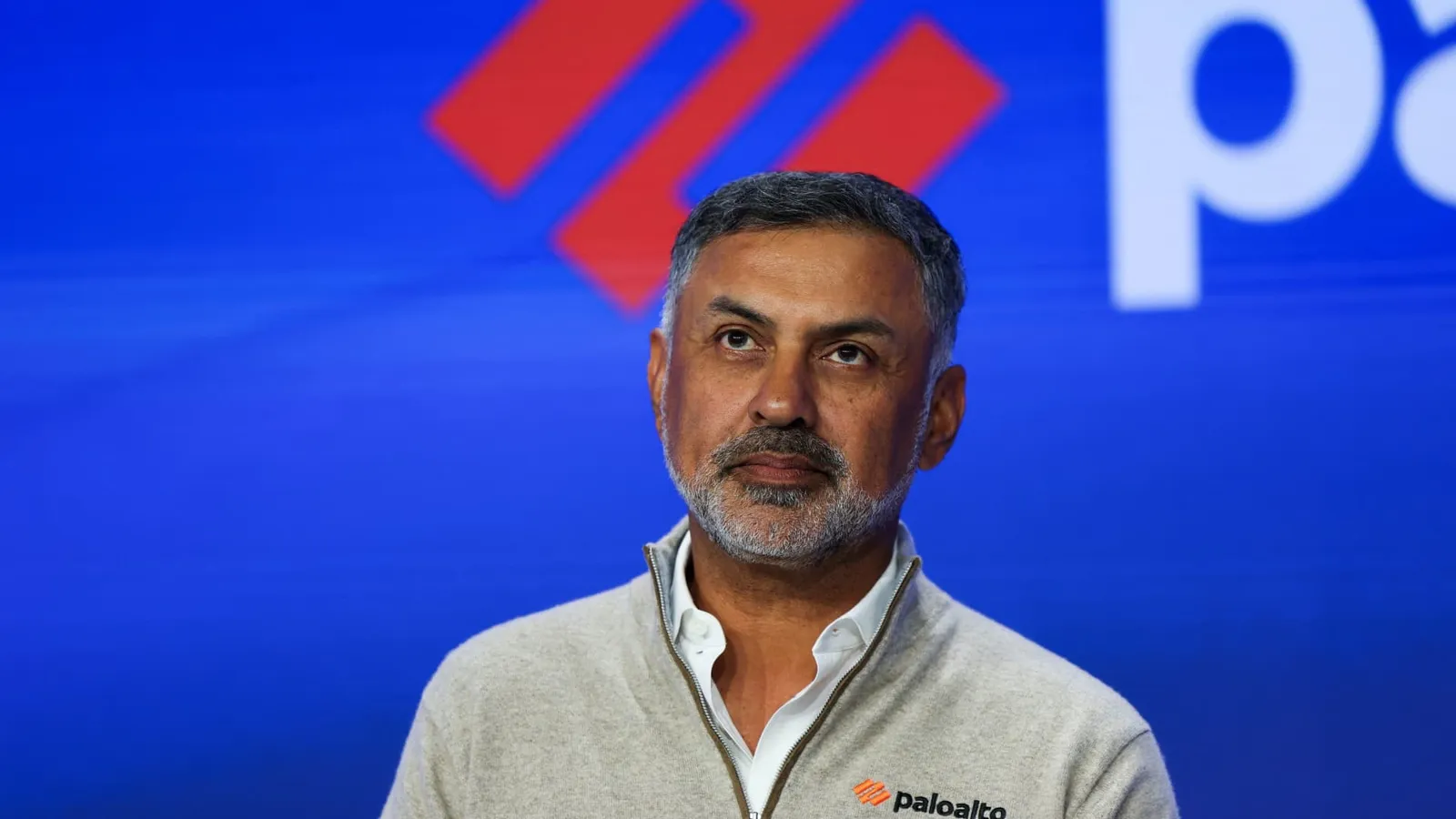
Palo Alto Networks CEO Nikesh Arora said high token costs could prevent businesses from adopting artificial intelligence at scale. His message puts the spotlight on AI pricing and the near-term economics that decide whether pilots become deployments.
Palo Alto Networks CEO Nikesh Arora is drawing a line in the sand on AI costs: he said AI token pricing needs to fall 90% because token costs are “skyrocketing,” and those costs could stop businesses from adopting AI at scale. In plain English, the argument is that even if models work, the bill can quietly kill the use case before it ever ships broadly.
Arora, speaking as the leader of a company closely tied to enterprise security and infrastructure decisions, is framing token pricing not as a technical detail but as an adoption bottleneck. The core claim is straightforward: if token costs stay too high, businesses will either scale more slowly, cap usage, or choose narrower workflows that fit within budgets. That is a different problem than “AI accuracy” or “model performance.” It is a spending problem, and spending problems are what boards and CFOs feel immediately.
To understand why this matters right now, you have to zoom out to how AI gets purchased. In many AI deployments, the pricing model is consumption-based. Users pay per input or output token, meaning costs rise with usage, not just with one-time implementation. That can be fine when volumes are predictable, but it is a landmine for broad adoption, where the whole point is giving teams autonomy to use AI more widely. Arora’s 90% figure is essentially a threshold argument. If you want AI to move from “try it” to “run it,” unit costs have to become compatible with everyday operations.
This is where “token costs skyrocket” becomes an executive governance issue, not just a product issue. When per-use costs are uncertain or steep, procurement cycles stretch, pilots stall, and internal adoption gets rationed. Teams often respond by building guardrails and policy limits: fewer prompts, shorter outputs, restricted tools, and more manual review. Those mitigations reduce risk, but they also change the economics and can limit the value organizations expected from AI at scale. Put bluntly: expensive tokens can force companies to behave like they are allergic to AI, even if they are technically capable of using it.
There is also a broader strategic tension. AI vendors and platform providers have strong incentives to keep pricing aligned with demand and model value. But enterprise buyers face procurement constraints, compliance expectations, and cost centers that cannot treat AI as an infinite experiment. When Arora flags token pricing as the adoption blocker, he is highlighting the mismatch between how quickly AI demand is expanding and how quickly unit economics can realistically compress.
Now add the security and governance angle that sits naturally in Palo Alto Networks' world. Enterprise AI adoption does not happen in a vacuum. It interacts with risk models, data handling requirements, and the need to control how systems access networks and information. If token costs are too high, organizations may rely more heavily on centralized, permissioned workflows. That can concentrate both opportunity and risk. The upside is tighter control. The downside is slower learning, slower deployment, and a smaller surface area for AI-driven productivity gains. From a board perspective, this is about throughput and execution speed, not just cost.
Finally, the 90% reduction call lands in a moment when many organizations are looking for clarity on what “scale” actually means. Because consumption-based AI pricing ties spend directly to usage, CFOs have to plan for cost curves, not just budgets. If costs do not drop enough, AI becomes a line item that executives constantly manage rather than a capability that teams naturally integrate. Arora’s warning implies that the next phase of AI adoption depends on more than model capability. It depends on whether pricing moves fast enough for enterprises to confidently widen adoption without fear of runaway costs.
For peers across software, cloud infrastructure, cybersecurity, and AI platforms, the takeaway is uncomfortable but useful: unit economics determine adoption cadence. If token costs stay high, the market may keep “proving AI works,” while still failing to “deploy AI everywhere.” The competitive advantage may go to the organizations that can turn AI value into a predictable cost structure, because that is the difference between pilots that end and programs that scale.
This story's Key Insights and Take-aways are locked.
Create a free account to unlock Executive Actions for one credit.
Register to UnlockAlways free for Executives Club members. Join the Club
More in Technology

Google quietly links your phone number to every Android account on your SIM
Adding a SIM now ties your phone number to all Google accounts - and future accounts inherit it. Here's the security and privacy stakes.

Hijacker AI 'Skynet mode' runs 100,000 attack steps against exposed models
Symantec caught a criminal AI agent that borrows other models, steals data, and mines crypto; the only relief is no confirmed victims yet.

Nvidia's AI-financier shift faces its first big test as neoclouds stumble
A rout in neocloud stocks is forcing investors to weigh Nvidia's hidden exposure as both supplier and lender to the AI buildout.