

Palworld 1.0 patch notes barely fit Steam as July 10 exit ramps up
Pocketpair’s “Pokémon with guns” game leaves early access Friday, but the biggest update ran into Steam space limits.
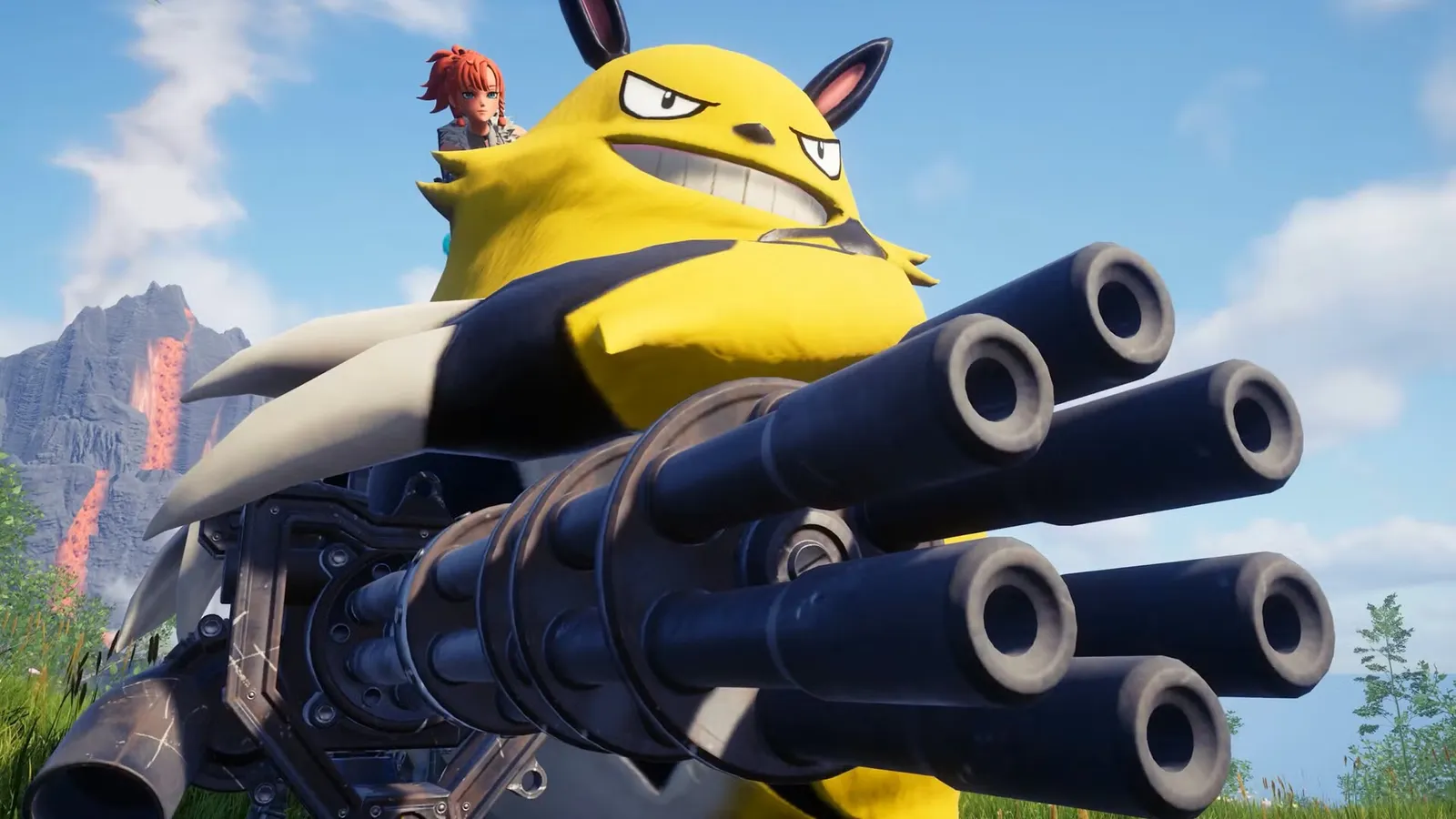
Pocketpair says Palworld, its “Pokémon with guns” game, will leave early access on Steam with Palworld 1.0 on Friday, July 10. The release needed such massive patch notes that they had a hard time fitting on Steam, signaling how much is changing at once.
Palworld 1.0 is due out Friday, July 10, and Pocketpair is treating its Steam exit like more than a checkbox. After more than two years in early access, the company is finally releasing the full version of its game described as a “Pokémon with guns” experience. But the timing comes with a fun, telling problem: the patch notes for what’s changing are so big that they had a hard time fitting on Steam.
That detail matters because it frames the release as a “here’s the whole new you” moment, not a “minor polish” landing. If the patch notes struggle to fit on a platform where players are expecting clarity, it hints at the scale of changes Pocketpair has made between early access and 1.0. In other words, the jump from early access to full release is not just a version number. It is a content and systems shift big enough to overload the standard way Steam typically presents update information.
For decision-makers watching this, Palworld’s patch-note problem is a business signal hiding in plain sight. Steam is a key distribution layer for PC games, and Steam release mechanics are part UI, part trust contract with players. When a patch notes document becomes too large to comfortably display, the risk is not just aesthetics. It is interpretation. Players and streamers parse what changed to decide whether to return, to grind, or to wait. If the platform experience compresses or truncates the details, the game’s reputation can swing based on what people manage to read, not what actually shipped.
This is especially relevant for games exiting early access, because the early access relationship is fundamentally different. Early access customers are, by design, more tolerant of incomplete features and shifting balance. Full release usually triggers a different expectation from players and, depending on the game’s themes, potentially heightened attention from regulators, storefront policies, and media scrutiny. The source does not add new regulatory facts, but it is still useful context: games like Palworld that blend familiar creature collection tropes with weapons, violence, or other mature-adjacent mechanics can sit in a more sensitive narrative zone. When you go from “early access experiment” to “released product,” the audience asks for consistency, completeness, and clearer communication.
And communication is where the patch note fit issue becomes more than a quirky anecdote. Steam users rely on release notes as a quick risk checklist. Players want to know if performance improved, if progression was rebalanced, if exploits were addressed, and if the game now runs as advertised. When a patch notes set is enormous, it can create a second-order effect: players may not read all the changes, but they will experience them. That gap between what shipped and what was clearly communicated can widen if patch notes are constrained by the storefront.
There is also the capital and execution angle. Pocketpair has been “hard at work” on getting the game out of early access, and more than two years of development signals steady iteration and resource commitment. The Steam patch notes size problem is a reminder of how much work goes into finalizing a product: compatibility updates, new content, tuning, bug fixes, and changes to progression and systems. When all of that lands at once, it is harder for any team to keep the release narrative clean. Even if the game is better, the perception can lag if the update story is too complex to fit into a single storefront surface.
For peers, the takeaway is straightforward even if the anecdote is quirky. Exiting early access on a major platform is not only about shipping 1.0. It is about managing expectations in a constrained user interface. Patch notes are part of the release product, not an afterthought. If your changes are large enough that the patch documentation strains Steam’s format, plan for how players will discover and understand those changes, especially in the first days after launch. That first wave often determines whether a game re-accelerates with new buyers and returning players or whether it stumbles on confusion.
Palworld’s July 10 release week is likely to be defined by the gap between how big the changes are and how easily players can see them. Pocketpair’s massive patch notes struggling to fit Steam is a real clue that 1.0 is a heavy lift. For executives and boards evaluating similar launches, the strategic stakes are clear: clarity is part of quality, and storefront constraints can shape the public’s first impression as much as the underlying patch itself.
This story's Key Insights and Take-aways are locked.
Create a free account to unlock Executive Actions for one credit.
Register to UnlockAlways free for Executives Club members. Join the Club
More in Entertainment

12TB Steam 'teraleak' goes beyond Valve: GTA 3, Mafia 2 prototypes exposed
A 12-terabyte dump of Steam data reveals prototypes and builds of third-party classics like GTA 3 and Mafia 2, plus unreleased Valve content, rewriting game history.

LinkedIn's romance problem: 1 in 4 workers say dating on it is fair game
A new survey shows a quarter of U.S. employees treat the professional network as fair game for romance, even as LinkedIn bans it and removes hundreds of thousands of offending posts.

Enhypen's first No. 1 album breaks K-pop's Billboard 200 streak
The K-pop group's 98,000-unit debut tops the chart while Dolly Parton's catalog reentry shows how death reshapes streaming.