
Paramount Bleeds $7M a Day as Iowa, Montana Move to Block California Suit
Two states are asking the Supreme Court to halt California's antitrust case against Paramount after settlement talks collapsed - with millions bleeding out each day.

Paramount is facing $7 million daily in delay costs as Iowa and Montana petition the Supreme Court to block California's antitrust lawsuit, following the collapse of settlement talks in August. For executives, this underscores the escalating cost of regulatory hold-ups and the leverage states wield in shaping media landscape.
The clock is ticking loudly at Paramount. Every day the company waits, it burns $7 million in delay costs - a direct consequence of California's antitrust suit that refuses to go away. This week, Iowa and Montana fired off a petition to the Supreme Court, asking it to step in and halt the case entirely. The move comes after settlement talks collapsed in August, leaving the company exposed to an open-ended legal battle with one of the country's most aggressive state attorneys general. The numbers are brutal: $7 million a day compounds into $210 million a month, and with no resolution in sight, the financial drag threatens to reshape Paramount's strategic options.
For decision-makers watching this from the outside, the headline figure is only part of the story. The real signal is the legal maneuvering - Iowa and Montana's intervention is not a routine legal formality. It is a coordinated push to bring a state-level antitrust dispute to the nation's highest court, a move that could set a precedent for how state AGs pursue cases against national corporations. If the Supreme Court agrees to hear the case, it could not only freeze California's suit but also send a message about the limits of state-level antitrust enforcement. For Paramount, that would be a lifeline; for its competitors, it would be a playbook.
The costs themselves are not just a line item in a filing. They represent real operational drag: legal fees, management attention diverted from core strategy, and impaired ability to strike new deals or raise capital. In the media industry, where speed is everything, a prolonged legal fight can mean missed opportunities, lost talent, and weakened negotiating position. Paramount's daily burn rate suggests the company is spending heavily on outside counsel, expert witnesses, and internal compliance - all while the antitrust suit hangs over its head like a sword.
The collapse of settlement talks in August is especially telling. It implies that California's attorney general is not willing to accept a modest or gradual remedy; the state is prepared to litigate to the end, which raises the stakes for Paramount's board. Boards typically prefer settlement when the cost of delay exceeds the cost of concession, but here the state's position seems uncompromising. That leaves Paramount with two bad options: keep fighting and watch the money pile up, or concede to terms that could reshape its business model. Either way, the company is bleeding.
Iowa and Montana's petition adds a wildcard. These are not states with obvious antitrust grievances against Paramount; their involvement suggests a broader political or ideological alignment against California's regulatory assertiveness. This could be a signal that state AGs are increasingly willing to cross traditional jurisdictional lines to challenge each other's authority over national corporations. For executives in any sector, that is a chilling thought: a single state's regulator can impose massive costs, and other states are now stepping in to defend or attack such moves depending on their own interests.
For the Supreme Court, this case could become a bellwether on the scope of state antitrust power. If the Court takes it up, it might clarify whether a state can sue a company for conduct that occurs largely outside its borders, or whether such suits require a clearer nexus to in-state harm. That question has huge implications for every company with a national footprint. The Court's decision on whether to grant certiorari - expected in the coming months - will be watched closely by corporate legal teams everywhere.
Meanwhile, Paramount's shareholders are paying the price. The $7 million-a-day figure is not just an abstract number; it erodes earnings per share and undermines confidence in the company's future. If the litigation drags on into next year, Paramount may have to revise its guidance, cut investments, or even reconsider strategic moves like divestitures or partnerships that could otherwise bolster its position. The irony is that the antitrust suit - designed to preserve competition - could end up weakening a competitive player by draining its resources.
For executives and boards, the takeaways are sobering. Regulatory risk is no longer just a compliance issue; it is a financial issue that can move the needle on a daily basis. The Paramount situation shows how a single state's legal action can create massive, immediate costs, and how the judicial system becomes the final arbiter of corporate fate. Smart companies will start modeling litigation delay costs into their contingency plans - and watching the Supreme Court's docket with as much attention as their competitors' earnings calls.
This story's Key Insights and Take-aways are locked.
Create a free account to unlock Executive Actions for one credit.
Register to UnlockAlways free for Executives Club members. Join the Club
More in Business
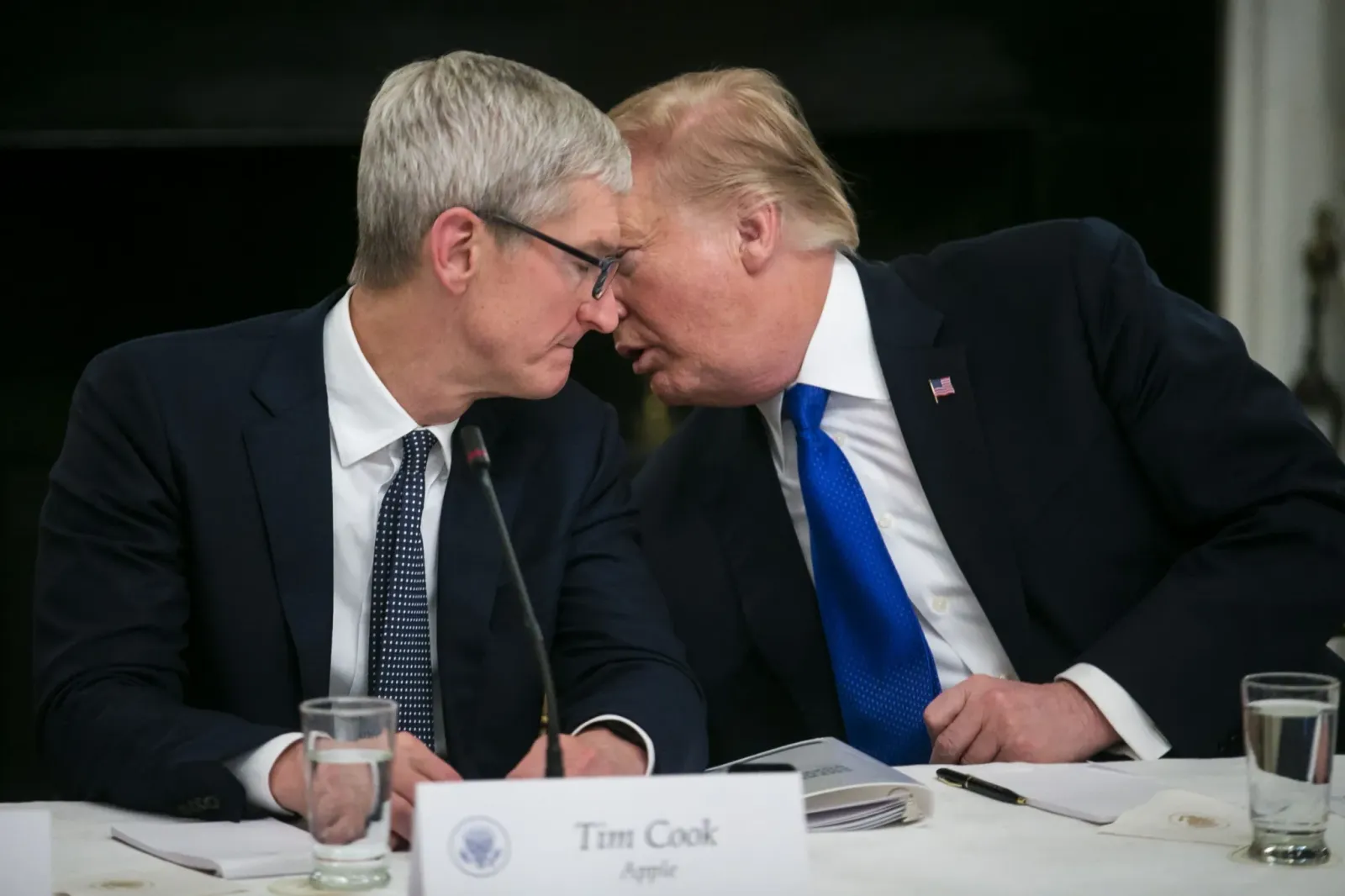
Tim Cook steps down as Apple CEO, stays on as chair with $45M equity
The 'Trump whisperer' keeps his White House and Beijing access as Apple navigates tariffs and a $4.6 trillion market cap.

Snowflake shares surge as AI data demand crushes estimates, lifting full-year forecast
Stocks jumped on stronger-than-expected guidance, signaling enterprise AI workloads are accelerating faster than Wall Street priced in.

Tim Cook's 15-year Apple CEO run ends: 3 lessons for any successor
After 15 years, Tim Cook hands Apple to John Ternus - here's how he turned a $350B company into a $4.6T juggernaut.