

Paramount makes Paramount+ and Pluto TV share one tech platform, then reshuffles teams
David Ellison’s convergence project aims for a mid-year launch, then moves staff into new Solutions Teams.
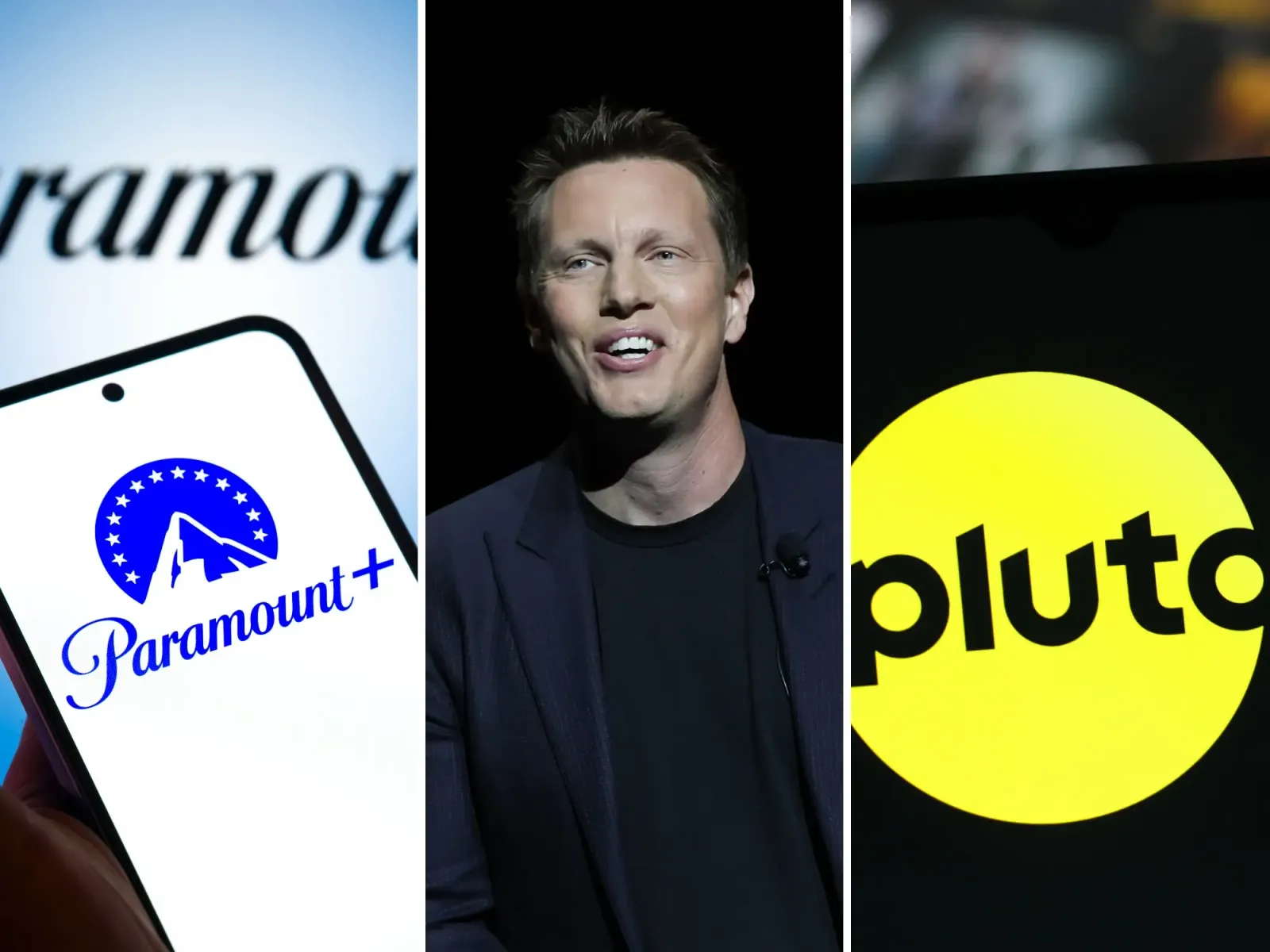
Paramount Skydance CEO David Ellison is pushing a “convergence” effort to unify Paramount+ and Pluto TV on one tech platform. After completion, Paramount plans to reassign streaming staffers and reorganize teams around monetization, content, and live & video.
Paramount Skydance is preparing to move some streaming staffers around after finishing its long-term “convergence” project. The goal: put Paramount+ and free streamer Pluto TV on one tech platform, while still keeping both services separate. According to two high-level streaming employees who spoke to Business Insider, convergence is on pace to meet Paramount’s stated goal of a “mid-year launch,” which matters because it sets the clock for when the company switches from building to operating.
In a quarterly meeting on Wednesday morning, streaming leaders told employees that once convergence is complete, Paramount will reassign staffers who worked on it. Paramount also shared a plan to “organize our teams against thematic pillars” including monetization, content, and live & video, based on a screenshot of a presentation Business Insider viewed. The sharp detail inside that shift: some employees will be utilized to create select additional Solutions Teams focused on things like advertising formats, the user experience for the short-form video feed on Paramount+, and video playback. Paramount’s intent, as described by a person familiar with the company’s streaming strategy, is essentially “redeploying” product employees after convergence wraps.
Why do this at all, if the apps stay separate? Efficiency and better outcomes are the main bet. Paramount expects that a single tech platform will save resources and improve recommendations across each app, which could drive higher engagement. In streaming, recommendations are a quiet engine. They influence what viewers watch next, which translates into time spent, retention, and eventually how advertisers and content partners value the platform. Even if Paramount+ and Pluto TV have different audiences and content catalogs, sharing core systems can reduce duplication across engineering, testing, and experimentation. That is the promise of “convergence,” and it is the reason it is being treated as a top priority.
This is also part of a broader pattern under Ellison. Since he became Paramount’s CEO in August, the company has leaned into technology as a management strategy, shaking up teams, making key hires, and adding new streaming features. Business Insider previously reported that Paramount merged some technical streaming teams in March. Paramount said putting the Paramount+ Global Quality Engineering group and Pluto TV’s Software Test Engineering team under one roof helped facilitate “AI enablement and automated testing.” That is consistent with a “single platform” endgame: when systems run on shared infrastructure, it becomes easier to standardize testing, automate QA, and roll out AI features across multiple experiences.
Paramount is also expanding its data leadership role. The company increased the scope of EVP Jason Kim, who since January has overseen data and insights across all of Paramount, not just streaming. On paper, that matters because recommendations and personalization typically depend on data pipelines and analytics. When a company unifies product platforms, it usually tries to unify measurement and decision-making too. The staffing reshuffle coming after convergence looks designed to align teams with how Paramount wants to execute next, not just how it built the system.
The staffing moves are happening alongside significant organizational hiring. Paramount has brought in former Google AI executive Barak Turovsky as head of consumer AI, and former Google executive Hugh Williams as an EVP. It also hired former Amazon ad sales leader Danielle Carney as head of its US ad sales group, plus product chief Dane Glasgow from Meta and revenue chief Jay Askinasi from Roku. Meanwhile, there have been key departures as well, including former tech chief Phil Wiser in May and former head of streaming product and tech Vibol Hou in January. Taken together, this reads less like a simple reorg and more like a deliberate buildout of streaming capabilities, followed by a transition into product-led optimization once the underlying platform work is done.
Convergence is not the only engagement play Paramount is exploring. Beyond marrying Paramount+ and Pluto TV’s tech stacks, the company hopes to boost engagement by adding vertical video clips and interactive features, including a shopping tool. It is also exploring adding video podcasts, noting that rival Netflix recently made a major move into licensed podcasts. Those product experiments matter because once the platform layer is unified, teams can focus more effort on experiences that move user behavior, not just on systems that make apps run.
But the biggest strategic context is the merger question hovering over all of this. Paramount’s most transformative change would be buying Warner Bros. Discovery, which would give it control of the Warner Bros. Studio, HBO, HBO Max, and cable networks like CNN. The merger still needs regulatory approval in the US and abroad, and Paramount hopes to get that by the end of September. That regulatory process is important for planning because consolidation can change what platforms compete on, how content bundles are packaged, and what tech investments are prioritized. In that sense, the convergence project is a bet on building durable infrastructure now, even while the company waits for a potentially massive ownership rewrite later.
For executives watching from the sidelines, the subtext is clear: when a streaming company unifies platforms, it is not just an engineering project. It becomes an operating model shift. Paramount is signaling that it will treat convergence as a time-boxed program, then redeploy talent into monetization, content, and live and video pillars, with targeted Solutions Teams for advertising formats, short-form user experience, and playback. If convergence hits its mid-year target, Paramount’s teams will pivot quickly toward engagement and revenue mechanics. If it slips, the staffing and platform timeline collide, and every downstream experiment gets harder to schedule. That is why the “mid-year launch” line is not fluff. It is the hinge on which the next phase of Paramount’s streaming strategy swings.
This story's Key Insights and Take-aways are locked.
Create a free account to unlock Executive Actions for one credit.
Register to UnlockAlways free for Executives Club members. Join the Club
More in Business

Anthropic’s Levant Alpöge cracks the Jacobian conjecture after 87 years
A Harvard valedictorian used Claude to hit a 1939 breakthrough, but the missing “why” is the real problem.

Uber buys Delivery Hero for nearly $15B, vaulting to top food delivery outside China
The deal doubles Uber's dual-services footprint and pushes a ride-and-eats bundling play into 50 more markets.

Epic and Google drop settlement bid, forcing rival Android app stores by July 22
Google told the court it is ready to carry third-party app stores starting Wednesday, July 22.