

Paramount+ plans a free front porch rollout in Q3 to drive “acquisition and winbacks”
A new free tier lets US users sample select shows, aiming to pull in subscribers without “harming paid starts.”
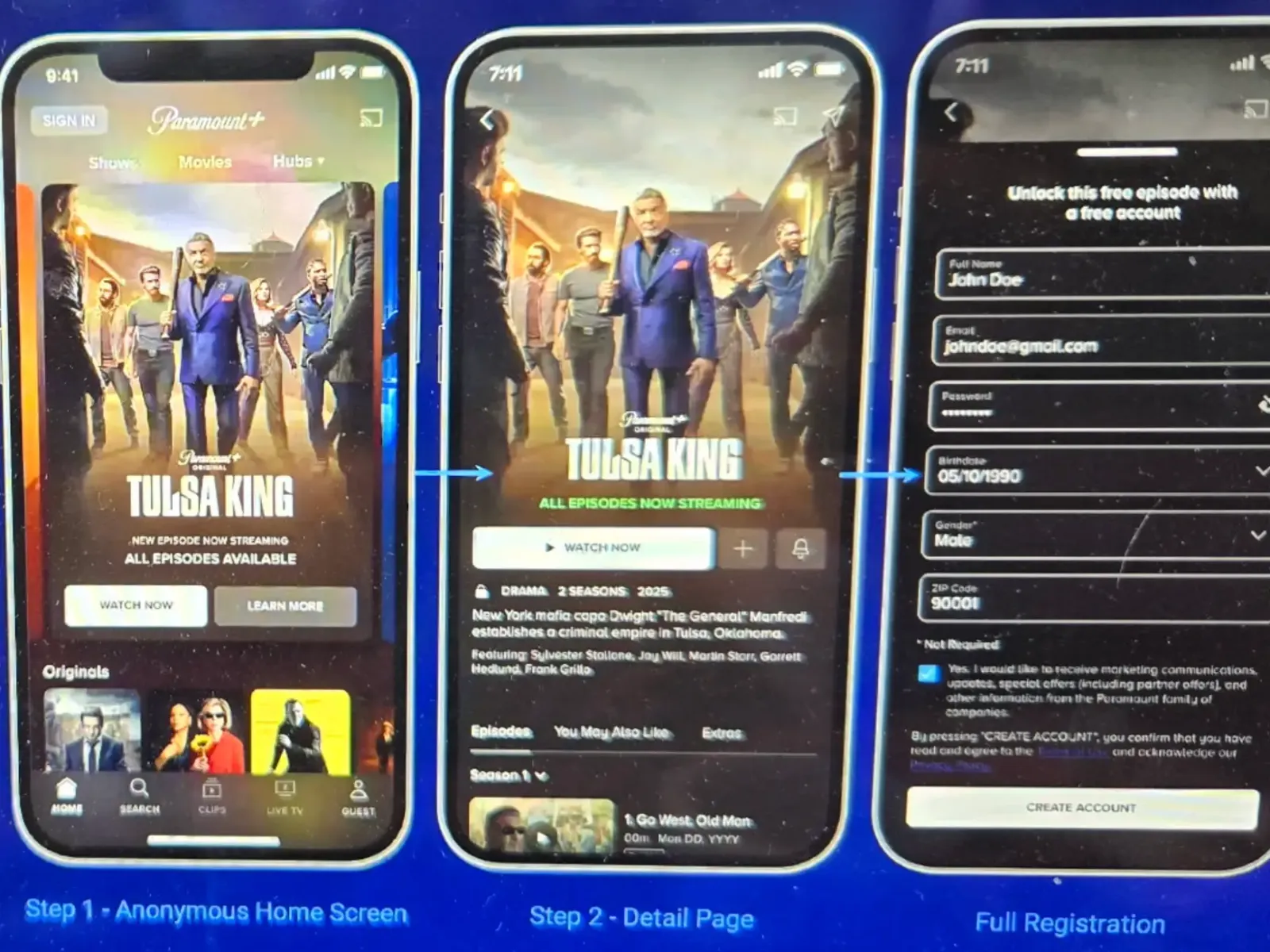
Paramount+ is building a free tier, a “free front porch” that will let people in the US watch select movies and shows after registering for a free account, with rollout expected in Q3. For decision-makers, it signals a mainstream shift: paid streamers are fighting price-sensitive churn with ad-supported free sampling and measurable account-registration funnels.
Paramount+ is preparing a “free front porch” feature that starts in Q3, letting people in the US watch select movies and shows at no cost by registering for a free account. The internal presentation viewed by Business Insider describes it as a way to reduce friction for browsing and watching, while still nudging those viewers toward paid subscriptions.
The stakes are not subtle. Paramount+ currently costs $8.99 per month with ads or $13.99 without ads, and the presentation frames the free tier as something that should not “harm paid starts,” citing A/B tests on its iOS app where moving the paywall did not reduce new subscription starts. In other words, Paramount is trying to widen the top of the funnel without poisoning the bottom.
So what exactly is the plan? According to the presentation, Paramount+ will expand access to content available to people without a subscription, which is a departure from the typical paid-streamer playbook where shows are locked behind a subscription. The rollout is expected to begin in the third quarter with the Paramount+ mobile app. During a town hall on Wednesday, it was listed as a “Q3 Product Priority,” alongside a plan to test micro dramas.
This is designed to look and feel familiar to users who already consume free video. Paramount already has Pluto TV, and it is putting Pluto TV on the same tech platform as Paramount+ as part of a process called “convergence.” The new free tier is effectively the next step in that convergence, extending free-access behavior into the Paramount+ app experience itself. The presentation also indicates Paramount+ has had limited selection of free TV episodes on its website, suggesting this Q3 effort is about scaling free sampling, not inventing it from scratch.
The user mechanics matter, too. Paramount will require users to register with their emails to watch free content. That means free viewers become addressable leads, one step closer to being marketed to for a subscription. The presentation also connects this to reactivation economics. It says the strategy can “drive acquisition and winbacks,” meaning it is aiming both to pull new customers in and to bring back past customers who canceled, by building habits and giving people a reason to keep the Paramount+ app on their phones.
Paramount is also not pretending this is purely a brand move. The internal deck says success will be evaluated by how many account registrations the free front porch drives, and by the marketing emails Paramount sends afterward. The content strategy includes short-form vertical video too: Paramount+ will let users watch its short-form vertical video feed without registering or subscribing, per the presentation. That matters because it helps Paramount compete where attention already lives, not only where customers have already paid.
Monetization is part of the equation as well. While free content is about reach, the deck positions monetizing free content with ads as a strategic goal, aiming to grow advertising revenue and inventory. It says show samples can “drive reach and visit frequency,” which is basically a measurement-friendly way of saying: get people to show up, then sell the opportunities created when they are there.
Zoom out and the reason for urgency becomes clearer. The source points to a market reality: free streaming services like YouTube have gained viewers as paid streamers raise prices. Hollywood has noticed. For context, Apple TV already lets users sample shows, and Business Insider reported that Disney+ is exploring free content, too. That pattern matters for boards and leadership teams because it frames Paramount+ as responding to competitive behavior across the entire ecosystem, not just mirroring a single rival.
There is also a data backdrop. The source cites Nielsen data showing the top three free streaming services, YouTube, The Roku Channel, and Tubi, had an 18.7% viewership share on US TVs in April (the latest month available), up from 16.8% a year earlier and 12.7% in April 2024. Meanwhile, large paid streamers like Netflix, Disney+, and Hulu have only grown viewership shares slightly over the last two years. The same Nielsen framing includes Paramount+ and Pluto TV, which, in the year since April 2025, have seen viewership share fall from 2.4% to 2.1% in April 2026. That decline is exactly the kind of signal that turns “we’ll think about it later” into “we need Q3 impact.”
On the strategy side, the source positions David Ellison’s company as trying to gain ground on Netflix and take on YouTube by pushing into free streaming and short-form content, including micro dramas. Even if you are not tracking micro dramas day-to-day, the underlying motion is the same: build more entry points, reduce paywall friction, and attach those entry points to registration, habits, ads, and eventual paid conversion.
For executives at any paid-streaming business, this is the playbook shift to watch. Paramount+ is trying to operationalize the idea that free is not a rival to monetization, it is a funnel. And with Q3 labeled a product priority inside Paramount, the company is betting that it can make the free tier measurable enough to satisfy finance and marketing, while still protecting the “paid starts” it already needs to grow.
This story's Key Insights and Take-aways are locked.
Create a free account to unlock Executive Actions for one credit.
Register to UnlockAlways free for Executives Club members. Join the Club
More in Business

Anthropic’s Levant Alpöge cracks the Jacobian conjecture after 87 years
A Harvard valedictorian used Claude to hit a 1939 breakthrough, but the missing “why” is the real problem.

Uber buys Delivery Hero for nearly $15B, vaulting to top food delivery outside China
The deal doubles Uber's dual-services footprint and pushes a ride-and-eats bundling play into 50 more markets.

Epic and Google drop settlement bid, forcing rival Android app stores by July 22
Google told the court it is ready to carry third-party app stores starting Wednesday, July 22.