

Paramount's $110B Warner Bros takeover ends legal war, reshapes Hollywood
The mega-merger creates a studio giant, but antitrust watchdogs and rivals are already circling.
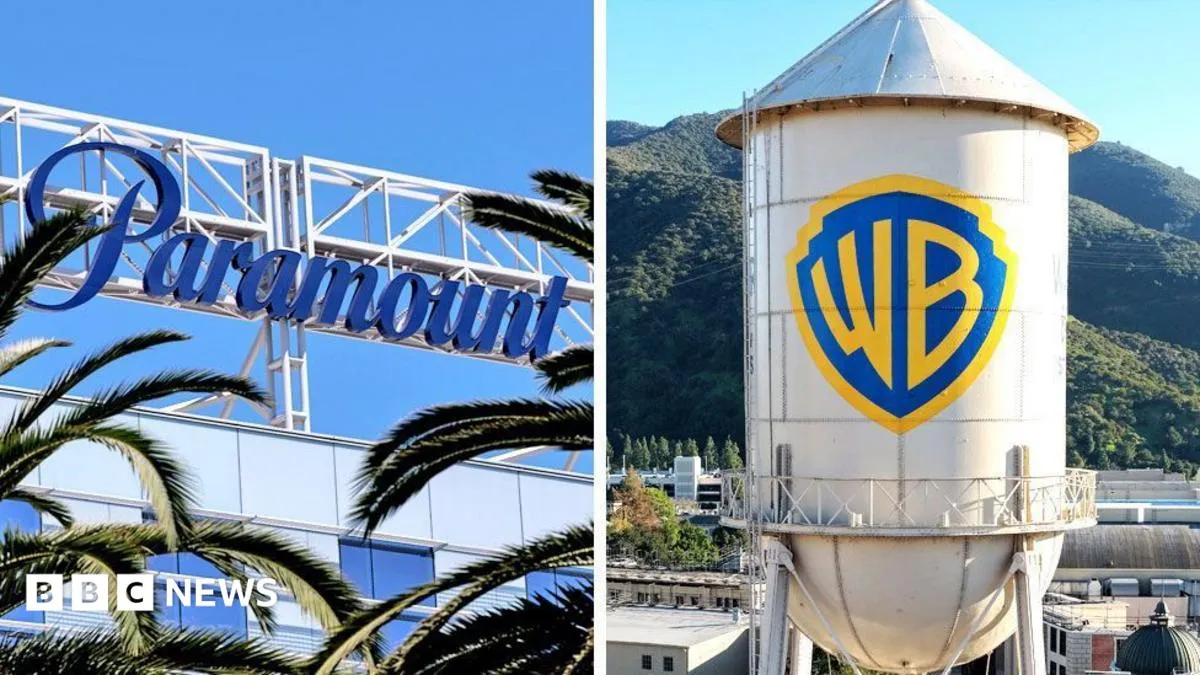
Paramount has acquired Warner Bros in a $110 billion merger, capping months of legal disputes. The combined studio will dominate content production and streaming, forcing competitors to rethink their strategies.
Paramount has taken over Warner Bros in a $110 billion merger, a blockbuster deal that ends months of legal wrangling and sets up a new Hollywood powerhouse. The transaction, reported by the BBC, combines two of the industry's biggest studios under one roof, creating a behemoth with vast film libraries, TV networks, and streaming ambitions. For executives across media and entertainment, the price tag alone signals that scale is now the only defense in an era of shrinking theatrical windows and ballooning content budgets.
The merger comes after a contentious period marked by legal disputes and regulatory concerns over competition. The source notes that the deal follows months of legal battles, underscoring how hard-fought this consolidation was. Regulators had worried about the concentration of power in an industry already dominated by a handful of players. Now that the deal is done, the question shifts from whether it should happen to how it will reshape the competitive landscape for everyone else.
Historically, mega-mergers of this magnitude have triggered intense antitrust scrutiny, and this one is no exception. The $110 billion valuation reflects the premium on owning intellectual property outright, as streaming platforms fight for exclusive content to retain subscribers. The combined Paramount-Warner entity will control an enormous catalog of films and shows, from classic franchises to new releases, giving it unmatched negotiating leverage with talent, distributors, and advertisers. That leverage is exactly what regulators feared, and it is why the deal was contested for so long.
For rival studios, the implications are immediate and strategic. Disney, Netflix, Comcast, and Amazon now face a competitor with deeper pockets and a broader content moat. The merger could force these players to accelerate their own consolidation moves or double down on original programming to differentiate. Independent producers and smaller studios may find themselves squeezed, as the new giant commands premium slots in theaters and on streaming homepages. The balance of power in Hollywood has shifted decisively, and every content deal will now be negotiated in the shadow of this new titan.
Financially, the deal is a bet on the enduring value of intellectual property in a fragmented media landscape. With $110 billion on the table, Paramount's leadership is clearly betting that owning content outright is more valuable than licensing it. That logic has driven a wave of consolidation across the industry, from Disney's acquisition of Fox to WarnerMedia's own merger with Discovery. But this deal is larger than any of those, and it sets a new benchmark for what a studio is worth. For CFOs and boards, the message is clear: if you hold valuable IP, the market may be willing to pay a premium for it, but only if you are willing to make bold moves.
The legal disputes that preceded the merger also offer a cautionary tale. Months of litigation and regulatory pushback delayed the deal and likely added costs, but they did not stop it. That outcome suggests that determined buyers can overcome antitrust hurdles if they are willing to make concessions or fight in court. For executives considering similar mega-deals, the lesson is to prepare for a long and messy process, but not to assume it is doomed. The regulatory environment is tough, but not impenetrable, especially when the strategic rationale is strong.
For decision-makers across media, tech, and finance, the Paramount-Warner merger is more than a headline. It is a signal that consolidation is the default strategy for survival in an industry where scale determines access to capital, talent, and audiences. Boards should review their own content pipelines and distribution channels, asking whether they have the scale to compete or the niche to thrive. The deal also raises the stakes for regulators, who will now face pressure to scrutinize future mergers more aggressively. In the end, this is a story about power, money, and the relentless drive to own the stories that define our culture.
This story's Key Insights and Take-aways are locked.
Create a free account to unlock Executive Actions for one credit.
Register to UnlockAlways free for Executives Club members. Join the Club
More in Business

Elon Musk unveils a flying car, and SpaceX helped build it
The Tesla CEO's showcase at a SpaceX facility signals a future where road and rocket engineering converge.

Apple's $2,000 iPhone Duo opens preorders, taking on Samsung and Google
Apple's first foldable hits the market at a premium price, reshaping a category Samsung and Google have led.

Pope Leo XIV, first American pope, diagnosed with lung cancer
The 71-year-old Chicago-born pontiff underwent successful surgery on his right lung, and his diagnosis raises new questions about his AI-focused papacy and the Vatican's future.