
Patronus AI raises $50M to stress-test AI agents in simulated worlds
Decision-makers get a new Waymo-style model: test AI agents in replicas before they touch real systems.
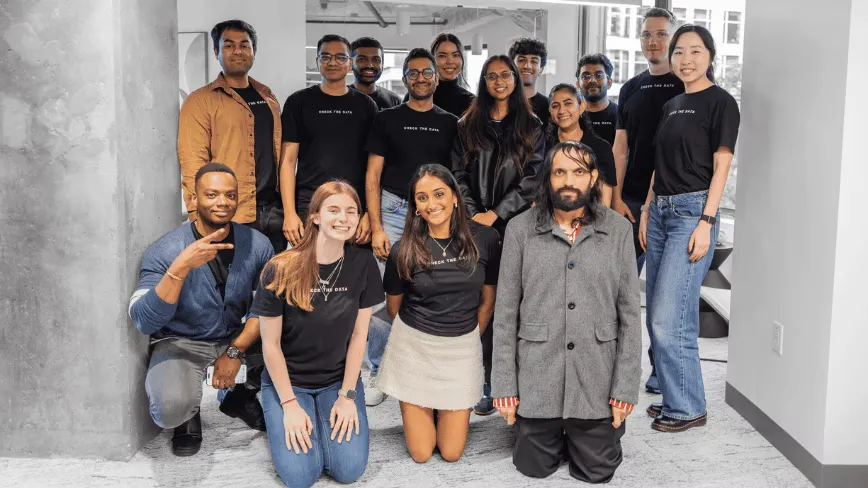
Patronus AI raised $50M to build simulated worlds where AI agents can be tested before running in the real world. For leaders betting on agentic AI that books trips, writes code, and runs financial analysis, this shifts risk management from pilots to preflight training.
Patronus AI just raised $50M for a very specific problem: AI agents are being built to do real work, but most companies still lack a credible way to break them safely before they are connected to anything that matters. The company is using that money to build simulated worlds where those AI agents can be stress-tested before they touch a real system. In other words, it is trying to move “trust” from vibes and after-action reports to replica testing.
The pitch is intentionally borrowing from Waymo's playbook: train in a replica before you trust the road. That matters because agentic systems are not single-shot tools. They take actions, follow goals, and interact with environments. If an agent books a trip, writes code, or runs financial analysis, a mistake is not just an incorrect answer. It can become a workflow event with downstream cost, embarrassment, or exposure. Patronus AI is positioning simulated worlds as the place where those failure modes should show up early, so the real systems do not become the test harness.
Zoom out and the timing makes sense. AI agents are moving from demos into deployments, and that creates a new operational reality for boards and executives: the risk surface expands. Instead of evaluating a model that generates text, leaders now have to evaluate systems that can perform tasks end-to-end. That can mean integrating with calendars, ticketing, repositories, finance tools, or internal data pipelines. Even without adding any new capability, the “agent wrapper” creates more ways for things to go wrong, including tool misuse, incorrect assumptions, and unexpected behavior when the environment deviates from training expectations.
This is where simulated worlds become more than a technical flex. In many AI rollouts, teams run pilots to learn in production-like conditions. But pilots have a bias problem: they often run scenarios the business expects, and they may avoid the messy edge cases that cause the biggest surprises. Simulation aims to systematically manufacture the weird. It is a way to pressure-test decision policies and action loops under a range of conditions, before those loops are allowed to touch real infrastructure.
The Waymo analogy is a useful framing because it makes the incentive structure clear. Self-driving cars and AI agents both involve action in a dynamic world, not just prediction. You can validate perception or outputs with offline datasets, but you still have to prove the behavior of the full system when it is operating under uncertainty. Patronus AI's approach implies a similar principle: you do not wait for real-world incidents to learn how agents fail. You build replicas that let you observe failure in a controlled space.
There is also a governance angle. When agents can book trips, write code, or conduct financial analysis, decision-makers need to answer practical questions: What does the agent do when it is wrong? How do you prevent it from taking irreversible actions? How do you measure reliability beyond benchmark scores? Simulation is one component of that answer because it creates a test discipline: you can define scenarios, run them repeatedly, and compare outcomes. That is the kind of evidence that can help internal stakeholders align faster, whether they are security, legal, operations, or finance.
Regulatory and compliance pressures are trending in the direction of requiring more than “we tested it.” Even where formal rules are still evolving, organizations face expectations around auditability, controls, and risk management, especially for systems that touch sensitive processes like finance. A simulated testbed supports that posture by enabling more structured evaluation before deployment. It also gives boards a more concrete lever to ask about: not only model performance, but agent behavior under stress.
For peers considering agentic AI, the second-order implication is simple: the bar for rollout is moving upstream. As more teams adopt agent workflows, the competitive advantage may shift from “who has the coolest agent” to “who can prove safety and reliability fast enough to scale.” Patronus AI is betting that simulated worlds will become the standard preflight step. If they can deliver credible stress testing at scale, executives deploying agents will have a new baseline question to ask their vendors and their internal teams: have you trained your agents in replicas, or are you still learning in the real system?
This story's Key Insights and Take-aways are locked.
Create a free account to unlock Executive Actions for one credit.
Register to UnlockAlways free for Executives Club members. Join the Club
More in Technology

Nvidia's $89B data center quarter: the 9 companies cashing in
The AI buildout is minting fortunes beyond GPUs, and memory, cloud, and cooling suppliers are riding the same wave.

Google quietly links your phone number to every Android account on your SIM
Adding a SIM now ties your phone number to all Google accounts - and future accounts inherit it. Here's the security and privacy stakes.

Hijacker AI 'Skynet mode' runs 100,000 attack steps against exposed models
Symantec caught a criminal AI agent that borrows other models, steals data, and mines crypto; the only relief is no confirmed victims yet.