
Patti Smith met Pope Leo XIV on July 31 and heard: “That was marvelous.”
The Vatican audience lasted about 40 minutes, and Smith says the moment will always produce a smile.

Patti Smith met Pope Leo XIV on Friday, July 31, at the Apostolic Palace, where the pope responded to her song “Wave.” For boards, cultural institutions, and public figures, the meeting shows how music, credibility, and diplomacy can reinforce each other in real time.
Patti Smith went to meet Pope Leo XIV expecting an audience, and the pope went back with a very specific compliment. After the Friday (July 31) meeting at the Apostolic Palace, Smith posted about the encounter on Instagram and wrote, “This is a moment that shall forever produce a smile.” The most concrete detail, though, comes straight from the source: Pope Leo XIV was familiar with Smith's tune “Wave,” and he told her, “That was marvelous.”
This was not a quick photo-op either. According to a Vatican official, the conversation lasted around 40 minutes. Smith sat down across from Leo at his desk, wearing a crucifix necklace and her trademark braids. She began softly with a “Hi,” a line that matters because it echoes how “Wave” opens. The song starts with “Hi. Hi,” in the same breathy voice Smith used with Leo on Friday, a neat little bridge between pop performance and papal listening.
So why is this kind of moment worth executive attention beyond the obvious celebrity factor? Because it is a real-world example of how cultural influence and institutional legitimacy travel through trusted channels. In the Vatican’s case, Smith is not just “a famous person who visited.” The source says she has become an increasingly visible presence at the Vatican thanks to her friendship with the Rev. Antonio Spadaro, undersecretary in the Vatican’s culture ministry. That matters because institutions do not integrate outsiders randomly. A cultural ministry connection acts like a governance gate, matching the right artist with the right agenda and audience.
Smith also brings her own credibility story to the room, and the source includes the important nuance. She has said she is not Catholic, and that she was drawn in particular to Pope Francis for his “gentle, open, and steadfast sense of humanity.” That kind of statement is not a trivia detail. It signals why the Vatican might lean into her: she is visibly engaged without being framed as a captive spokesperson. It is a form of soft alignment that does not require her to claim religious identity she does not have.
Then there is “Wave,” which turns this from a meeting into a theme. Smith’s 1979 tune is described as a make-believe conversation with the pope who had just died after a 33-day papacy. It begins with the same “Hi” Smith used in the Apostolic Palace encounter. That connection makes the pope's reaction feel less like generic flattery and more like recognition of a shared reference point. The song is about a specific kind of dialogue with loss and leadership transition, and the pope showing that he knew it pulls the conversation into a deeper register.
The source also ties this meeting to Smith’s broader arc with Vatican figures. She met Francis in 2013 and sang for him in 2014. When Francis died on April 21, 2025, Smith wrote a poem on social media, comparing Francis to a dandelion, “humble yet strong,” and stating, “Nature and poetry and the suffering shall miss their champion.” That matters because it positions her as a consistent cultural presence around major institutional events, not a one-off visitor. For executives overseeing reputations, this is the difference between sporadic attention and sustained narrative credibility.
There is a final layer that reads like a pattern: the Vatican is coordinating cultural moments around high-profile music. The source notes it was Leo’s second encounter with a music legend this week. On Wednesday, Leo attended a concert in his honor by tenor Andrea Bocelli. If you are on a board, in comms, or leading a cultural institution, the strategic takeaway is uncomfortable but clear. Culture is not a “nice-to-have” accessory. In moments like these, it is part of how institutions communicate values, cultivate relationships, and signal openness without issuing press releases for every step.
And if you are someone thinking about how public figures move influence, the operational detail is simple: the meeting did not just happen. Spadaro joined Smith at the audience, and he said in a text message that it “felt more like a conversation between two people discovering they were old friends, sharing memories woven from words and music, dreams, visions, and hopes - both from yesterday and for today.” Spadaro also said Smith ended with “Bye. Bye.” A seemingly small ending can be a meaningful exit tone when the institution is trying to keep the relationship human, not ceremonial. In other words, it is diplomacy with a melody.
For peers in similar roles, the stake is whether you understand the mechanism. When cultural legitimacy is routed through the right institutional people, the signal becomes durable. The pope saying “That was marvelous,” the shared “Hi. Hi” echo, the 40-minute conversation, and Smith’s Vatican visibility all point to one consistent outcome: music becomes a credible pathway for connection, and connection becomes a kind of soft power that can last longer than the headlines.
This story's Key Insights and Take-aways are locked.
Create a free account to unlock Executive Actions for one credit.
Register to UnlockAlways free for Executives Club members. Join the Club
More in Entertainment

'It's a Magic Trick': Ballet Experts Say Rosalía's SNL Pose Is Impossible
Three ballet experts tell Rolling Stone Rosalía's gravity-defying SNL stillness shouldn't be possible - and why the debate is now part of the show.

Activision CMO: GTA 6 Will Boost Call of Duty, Not Bury It
Activision's top marketer says Rockstar's blockbuster will drive players back to consoles and into Modern Warfare 4, even as the company admits its recent strategy failed.
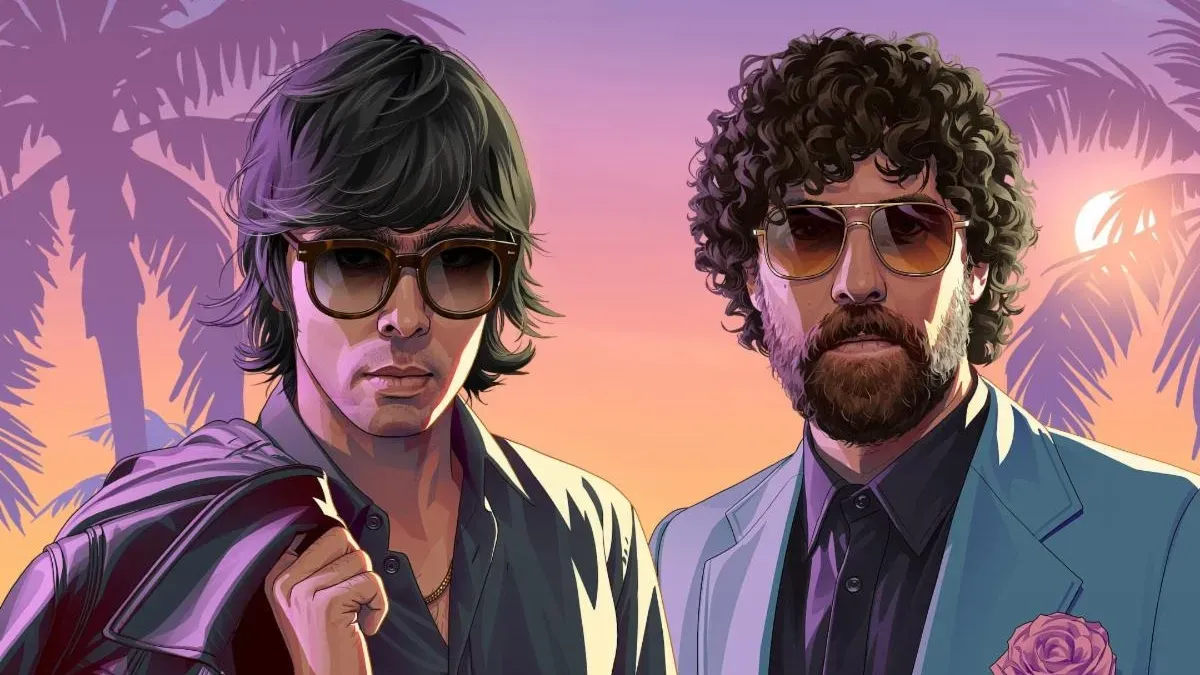
Justice to Score GTA 6, Share New Song with Tame Impala, SZA, King Gizzard
Rockstar taps the French duo for the GTA VI score, and the first taste is a genre-melting collab with Tame Impala, SZA, and King Gizzard & The Lizard Wizard.