
Paul Florsheim fights a $313 trespassing ticket to reach Wisconsin Supreme Court
A retired UW-Milwaukee professor says a shoreline step is becoming a national fight over who controls public access.
Paul Florsheim, a recently retired UW-Milwaukee professor, is contesting a $313 trespassing ticket from the Village of Shorewood over his decades-long walk along Lake Michigan. His Wisconsin case is unfolding alongside Texas Supreme Court action that limited challenges to SpaceX's Boca Chica beach closures, reshaping how executives should think about public access risk.
Paul Florsheim did not wake up looking for a legal crusade. He just wanted to walk his beach. For more than 50 years, the retired UW-Milwaukee professor has walked a stretch of Lake Michigan shoreline in Shorewood, Wisconsin, every season, even in winter. But last year, after he walked the route again, the Village of Shorewood issued him a $313 trespassing ticket.
Now, Florsheim’s fight is heading through Milwaukee County Circuit Court, with an eye on the Wisconsin Supreme Court. He says the stakes are bigger than one man’s morning walk, arguing that waterfront access is getting more exclusive in practice, even if the legal foundation is supposed to protect it. His case has already drawn a packed courtroom for the December 2024 trial, and an NPR member station story previewing it reportedly became the most-read piece in that station’s history, according to Florsheim. For decision-makers, it is a reminder that “small” compliance disputes can turn into precedent, and precedent can turn into operating risk.
Florsheim’s ticket story started with a neighbor. A dentist who built a boathouse on the beach and monitored foot traffic from it began calling police on walkers. When Shorewood issued the ticket, Florsheim’s first instinct was to fight it. He says that when the village lawyer called before the Dec. 2024 trial and encouraged settlement, warning of mounting court fees, he declined. That matters because it shows something executives understand instinctively: when incentives shift from “quiet resolution” to “public principle,” litigation strategy can stop being about cost and start being about leverage.
Florsheim also knows he is unusual. A water policy professor at UW told him she had “been waiting for a case like this my whole life,” and that people may get tickets for walking private beachfront without fighting them. Florsheim frames his willingness to push as a function of retirement and time, not ambition. The reason this is still worth watching is that Wisconsin’s rules on shoreline access are distinctive. Like most states, Wisconsin recognizes the “Ordinary High Water Mark” as the boundary of public ownership. But where many states allow “riparian” access, letting the public cross private beachfront in transit to reach publicly held waters, Wisconsin grants landowners exclusive control over that strip of shoreline. People can boat, fish, or swim freely if they are in the water, but they cannot set foot on the sand to get there.
That line is central to the legal fight, and it comes from Doemel v. Jantz, a 1923 Wisconsin Supreme Court ruling. Florsheim has spent months researching it, tracing the original dispute to Lake Winnebago and finding it involved a dairy farmer’s right to walk cattle through privately owned property to access publicly owned water. If the cattle remained in the public water, the farmer was fine; if they crossed onto sand, not so. Florsheim’s current argument, filed through his attorneys, is that the land he walked is owned by the state of Wisconsin, not his neighbor. On June 22, his attorneys filed their response brief with the circuit court, stating: “It is decidedly not his land; it is the public's land.” They also argue the access is protected under the public trust doctrine, which Florsheim says is “baked into the state's constitution,” meaning no public vote is required to establish protection because it is already established.
The trial court’s posture adds another detail that executives should note: the municipal judge ruled against him in January but wrote a 16-page opinion described as extraordinary for a small municipal court, holding she was bound by Doemel, while also saying it “probably should be revisited and perhaps overturned.” Florsheim is scheduled to be heard again on Aug. 13. He is also careful about who the real adversary is. His “bitter feud,” he says, is not with the dentist who called police, but with the village, because it should be protecting rights of the general citizenry rather than property owners on the beach.
For context, this Wisconsin case is not happening in a vacuum. Florsheim points to a similar dynamic in Texas, where, on June 19, the Texas Supreme Court unanimously ruled that SaveRGV, the Sierra Club, and the Carrizo/Comecrudo Nation of Texas had no legal standing to challenge SpaceX’s closure of Boca Chica Beach during rocket launches. The state attorney general had intervened to defend SpaceX without reaching a constitutional question about whether a 2009 amendment backed by 77% of Texas voters protecting public beach access outweighs a 2013 law written for SpaceX. The court dismissed on standing, and an attorney for the groups, Marisa Perales, told Fortune that the “affected public has no remedy to enforce their constitutional right to access their own beach.”
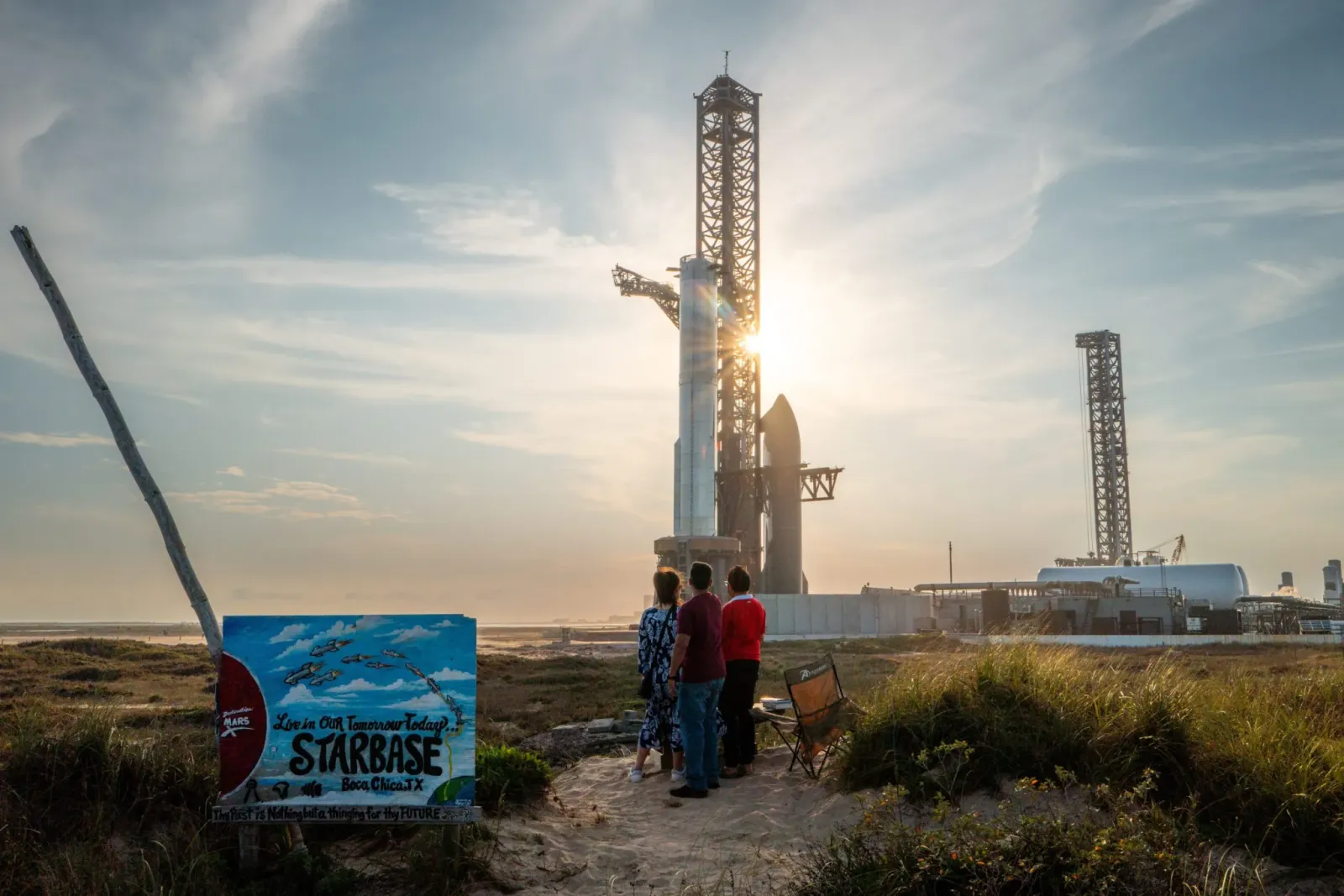
Boca Chica Beach, locally known as “poor man's beach,” is an eight-mile, free, undeveloped stretch of Gulf shoreline near Brownsville where Highway 4 dead-ends at the water and SpaceX’s Starbase launch towers loom to the north. It is described as the last wild, free, publicly accessible beach on the southernmost tip of Texas. Florsheim’s point is not that the facts are identical, but that the direction is. Boca Chica’s takeover had been proceeding on the ground regardless of litigation. SpaceX employees voted to incorporate the area as the city of Starbase in 2025, and a county handed the new municipality authority to close the beach during launches. In February, Starbase officials voted to annex 7,133 additional acres near the beach, much of it within the Boca Chica Wildlife Refuge. The Texas Supreme Court ruling, by removing the last legal obstacle, effectively narrowed the available legal path for challengers.
Even if you never operate near a coastline, the second-order implications travel. In the Great Lakes region, data center projects are pulling water into the spotlight. The source notes that more than 220 data centers are planned across the Great Lakes region, driven by the basin’s freshwater, which is described as 21% of the world’s surface supply for server cooling. Microsoft is investing $20 billion in data centers at Mount Pleasant, Wisconsin, and Mount Pleasant can divert lake water because the community straddles the Great Lakes basin line. Midwest Environmental Advocates, the same nonprofit representing Florsheim, sued after Racine, Wisconsin, withheld public records about a data center’s water consumption for seven months. When public access debates and water oversight collide with infrastructure scale, boards and executives should assume the conflict will be litigated and politicized, not handled quietly.
Put simply: Florsheim is not only fighting a ticket. He is testing whether the courts will treat a shoreline step as part of a protected public system, especially when the practical trend is towards exclusivity. If that precedent shifts in Wisconsin, it could influence how other localities, operators, and regulators understand their leverage over access. And if courts in other states limit remedies through procedural barriers like standing, the lesson for leaders is stark: sometimes the biggest constraint is not the right itself, but the ability to enforce it.
This story's Key Insights and Take-aways are locked.
Create a free account to unlock Executive Actions for one credit.
Register to UnlockAlways free for Executives Club members. Join the Club
More in Business

A flaw in PHP just forced governments to pull their own sites offline
European agencies from Belgium to Germany took websites dark to patch a critical weakness in the language behind almost 70% of the web, and the blast radius extends far beyond government portals.

BioWare shuts down, Mass Effect 5 dead after $55B EA buyout
The legendary RPG studio's closure lands months after a $55 billion investment group buyout of EA, raising tough questions for gaming's biggest acquirers.

Musk barred from the room as Tesla, SpaceX boards weigh $3.5 trillion merger
The CEO of both companies is a 'conflicted party' watching independent directors negotiate a tie-up that would create a $3.5 trillion giant he would own about a third of.