

Peptide sellers hit $100 million as crypto becomes the gray-market rail
A Fortune experiment shows how vendors selling wellness drugs and research-only peptides are routing payments through stablecoins to dodge banks, and why that matters to regulators, founders, and payments teams.
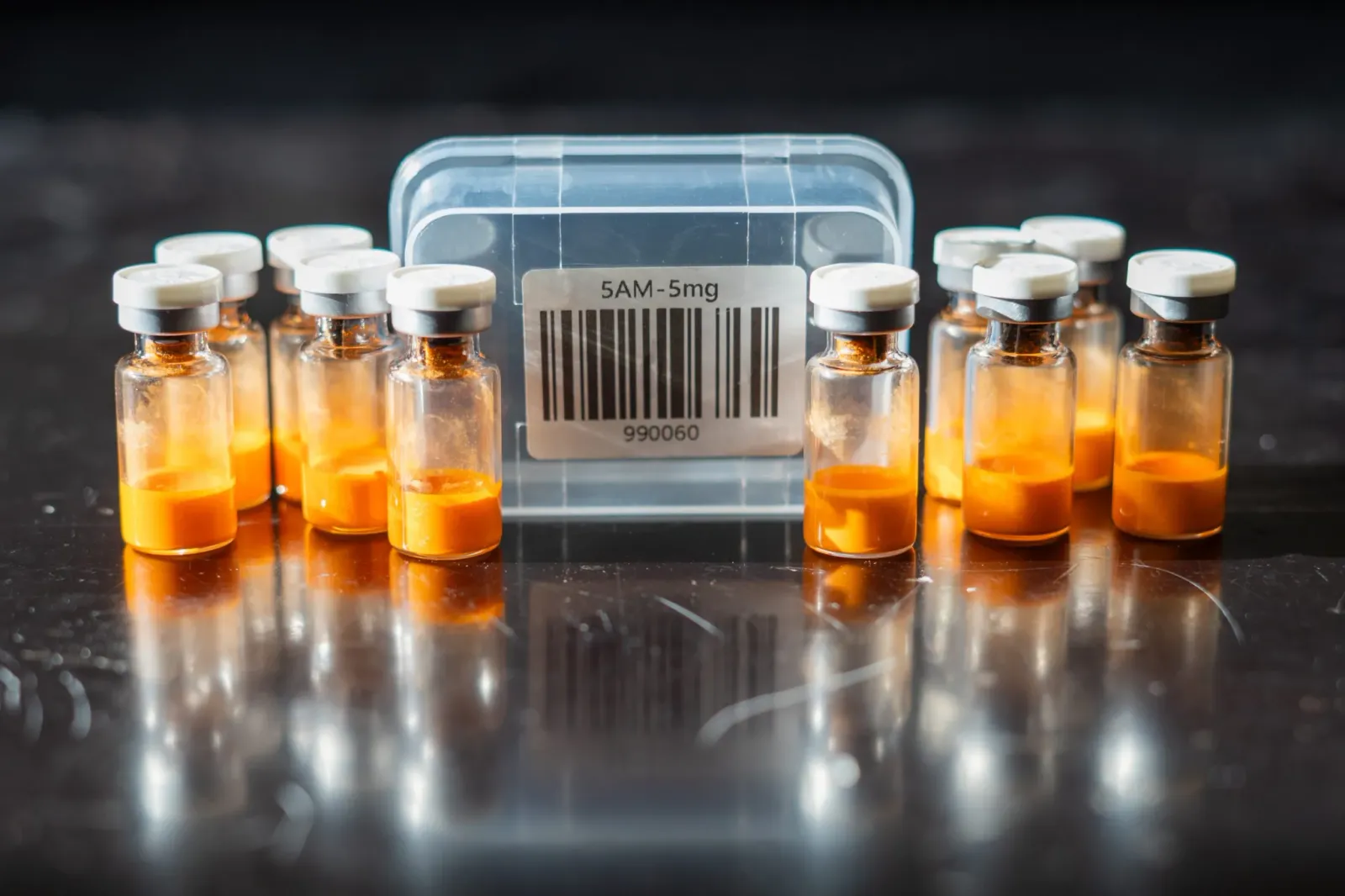
Fortune bought $109 of peptides with USDC from a seller named Louise, then traced how Chainalysis says peptide vendors took in $32 million in digital assets in Q1 2026 and could top $100 million this year. The consequence is bigger than one quirky purchase: crypto is quietly becoming the default payments layer for a fast-growing gray market that banks and card networks may refuse to touch.
Fortune’s reporter did not just write about the peptide market, he bought into it. He messaged on WhatsApp asking for peptides, got a reply within two minutes from a seller using a U.K. area code and a profile photo of a young woman with airbrushed skin, and was offered a menu that ranged from testosterone boosters to synthetic growth hormones to weight-loss medications. He picked 5-amino-1MQ, paid $49 for the product plus $60 for overnight shipping, and sent $109 in USDC after being given the option of Alipay or crypto. Two days later, a package with 10 vials of bright-orange substance showed up at Fortune’s office from a facility in New Hampshire. That small purchase is the point: according to Chainalysis, it dropped into a gray-market economy that is increasingly leaning on digital assets to move money.
The scale is what makes the story matter. Chainalysis says peptide vendors received $32 million in digital assets in the first quarter of 2026, up 700% from the year before. If that pace holds, the firm projects more than $100 million in crypto volume this year. That is not a niche side hustle anymore. It suggests a payment rail is forming around a category of products that sit in a legal gray area, where some peptides are FDA-approved, others are not, and many are sold directly from manufacturers in China for “research purposes.” In other words, the money trail is growing alongside demand, and the infrastructure supporting it is getting more sophisticated, not less.
Why peptides, why now? The source ties the surge to the explosive popularity of Ozempic and Wegovy since 2021. The “p” in GLP-1, the drug class that includes those blockbuster weight-loss medicines, stands for peptide, a chain of amino acids. But the current wave goes beyond mainstream obesity treatment. Wellness influencers and Silicon Valley biohackers are increasingly experimenting with more unproven compounds that proponents say may promote blood vessel growth, improve sleep quality, or enhance collagen production. The trend has also merged with “looksmaxxing,” a viral social media movement in which young men inject peptides or undergo surgery to become more attractive. Even Health Secretary Robert F. Kennedy, Jr. has voiced support, telling Joe Rogan in February, “I'm a big fan of peptides.”
The payment problem is the business problem. Joshua Sharfstein, a professor of public health at Johns Hopkins University and a former FDA deputy commissioner, said, “Generally, companies selling products to affect the structure and function of the body need FDA approval.” That matters because vendors that sell directly to consumers can struggle to keep access to banks and payment networks. Olivia Chow, an advisor at crypto consultancy Zero Knowledge Group, said regulated entities usually will not touch these businesses, and card networks like Visa and Mastercard are especially risk-averse. That leaves sellers with a practical incentive to lean into crypto, where settlements can move without a bank deciding whether a transaction looks too risky, too ambiguous, or too likely to attract compliance headaches.
That is exactly how the new pipeline works. Shannon is not the story here, and neither is novelty for novelty’s sake. The story is that wallets, stablecoins, and pseudonymous blockchain addresses are increasingly serving as the financial plumbing for products that live in a legal no-man’s-land. Shuyao Kong, cofounder of blockchain company MegaETH, said this is why peptide vendors are approaching her team. “A lot of peptides companies are already using crypto,” she said. “When they look at crypto, they're like, ‘This is like the most natural, logical payment rail.’” The appeal is obvious: no intermediaries, no card decline, and a lower-friction path to customers who may already be comfortable paying digitally for wellness, performance, or appearance.
There is also a darker commercial lineage here. Chainalysis found that a subset of vendors have shifted from making fentanyl chemical precursors to making peptides. Sara Graham, a senior intelligence analyst at Chainalysis, put it bluntly: “They just rebranded,” and “They pivoted to peptides because it's less costly.” Not every seller is linked to fentanyl, and Chainalysis found no evidence that Shanghai ERP Peptide Biotechnology Co., Ltd. was tied to that trade. But the pivot itself matters. It shows how supply chains can adapt when one product becomes too risky or expensive and another offers better margins, lower enforcement heat, or both. That kind of shift is useful context for anyone watching how illicit, semi-illicit, and lightly regulated commerce evolve when new payment tools make transactions easier.
The broader implication is uncomfortable for anyone in fintech, payments, or regulated consumer health. Crypto is not just a speculative asset class in this story. It is acting as a practical workaround for vendors that cannot easily get banked. Louise, the seller who represented Shanghai ERP, declined to explain why her firm accepts crypto and later told the reporter, “Honey, I won’t tell you anything,” adding, “I won’t risk sending my boss to jail.” That combination of hesitation and utility is the tell. The market is large enough to draw in sellers, buyers, and even party hosts. At a peptides-themed event near Wall Street, cocktails had names like “Tirzepatini,” “GHK-Mule,” and “Oxytonic,” and attendees included Avery Haskell, cofounder and CEO of Seedbox Labs, who said he had recently sent his dealer about $900 in stablecoins for NAD+, MOTS-c, and Tesamorelin. A former quant trader at the party summed up the vibe in one line: “It's Silk Road all over again.” For executives, the takeaway is simple: when a category grows fast enough and enough banks step back, crypto does not just become an option. It becomes the path of least resistance.
This story's Key Insights and Take-aways are locked.
Create a free account to unlock Executive Actions for one credit.
Register to UnlockAlways free for Executives Club members. Join the Club
More in Business

Anthropic’s Levant Alpöge cracks the Jacobian conjecture after 87 years
A Harvard valedictorian used Claude to hit a 1939 breakthrough, but the missing “why” is the real problem.

Uber buys Delivery Hero for nearly $15B, vaulting to top food delivery outside China
The deal doubles Uber's dual-services footprint and pushes a ride-and-eats bundling play into 50 more markets.

Epic and Google drop settlement bid, forcing rival Android app stores by July 22
Google told the court it is ready to carry third-party app stores starting Wednesday, July 22.