
Pete Cancro borrowed $125,000 at 17, and it’s now worth about $8B
The Jersey Mike’s chairman turned a high school loan into a chain Blackstone valued at roughly $8 billion.
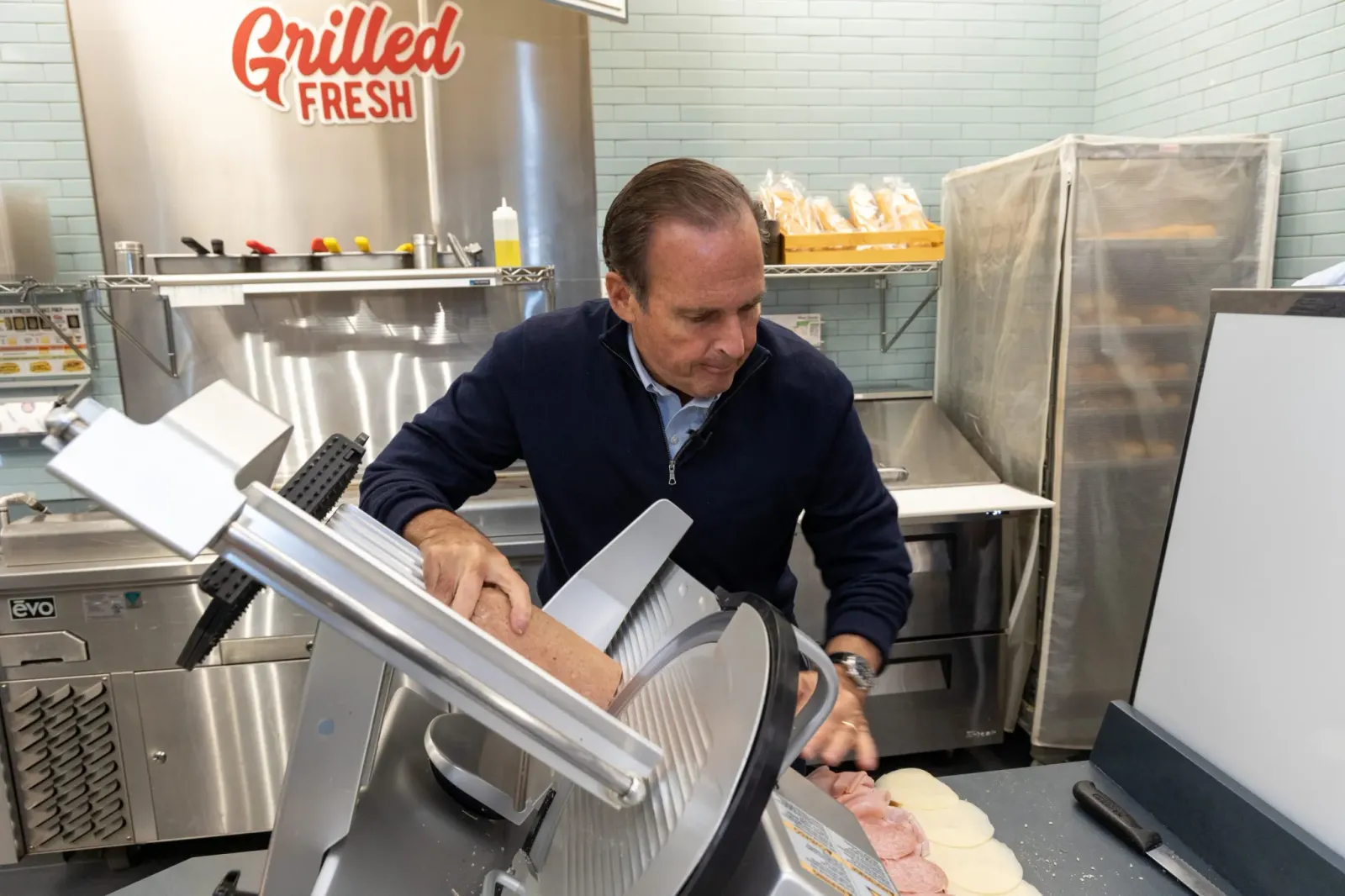
Peter Cancro, Jersey Mike’s chairman, borrowed $125,000 at age 17 to buy the shop he worked at since 14, and that deal anchors the brand’s rise. The story ends up colliding with today’s finance reality: Blackstone’s majority-stake valuation is about $8 billion, with IPO talks that could raise at least $1.1 billion in proceeds.
Peter Cancro, now Jersey Mike’s chairman, borrowed $125,000 when he was 17 to buy the sub shop where he had already worked since he was 14. He officially purchased the shop on March 31, 1975, while still in high school. That loan, described as six figures in Fortune’s account, would be worth about $775,000 today, a neat reminder that “small” decisions can compound into something very not small.
This same founder-led bet eventually scaled into Jersey Mike’s, a national chain that Fortune notes has 4,000 locations open and under development. And now the capital markets are circling. Fortune writes that the chain is approaching a potential blockbuster IPO, set to value the company at about $8 billion and bring in at least $1.1 billion in immediate proceeds. Even after the company’s leadership shift, the original builder’s footprint remains: Cancro stepped down as CEO last year and was succeeded by Charlie Morrison, the former CEO of Wingstop, while Cancro stayed on as chairman.
To understand why this matters to executives and boards, zoom out from the biography and look at the incentives. A teenage purchase is rare in any industry, but it is especially rare in franchising, where the whole model depends on repeatable systems, franchisee confidence, and the ability to scale operations without losing quality. Fortune’s timeline shows Cancro working in the shop as a 14-year-old in 1971, starting at $1.75 an hour, then using the advantage of firsthand operational knowledge to buy the business rather than wait for credentials. He had planned to attend the University of North Carolina at Chapel Hill and possibly study law, but instead he “bought a sub shop instead,” and committed to a 50-year journey.
The financing piece is where this story turns from inspiring to instructive. Cancro needed a six-figure loan, and the path to it was not a sleek venture round. Fortune reports he went “literally knocking on doors” after approaching investors in nearby towns with no leads. The breakthrough came when he called Rod Smith, his former youth football coach, who was also a banker. They met at Smith’s house on a Sunday night, and Smith helped him get the $125,000 loan.
That detail matters for two reasons. First, it highlights how early-stage capital is often social and local, not institutional. Second, it foreshadows what happens later when capital tightens. Jersey Mike’s hit turbulence in 1991 when a recession led to banks in the Northeast sharply restricting financing. Fortune says Cancro recalled being $1.5 million to $2 million in the red, and he even had to liquidate his 401(K) plan to keep the business afloat. He described the moment as “a dark time” and said it was the first time in his life he went down and got stripped and sold everything.
That crisis is the backbone of the company’s scaling philosophy in Fortune’s telling. After the struggle, Cancro later said he learned to resist the temptation to grow too fast. He also experienced another kind of constraint later, during the franchising build-out. Fortune notes that franchising required him to meet with attorneys and juggle a complicated process alone, because “There wasn’t any roadmap,” and he said he didn’t have mentors in business showing him how to do it. In other words, the operational constraints were matched by regulatory and legal complexity, long before the business was a public-market story.
Fast forward to today and the regulatory and capital-market dynamics are different, but the board-level questions rhyme. When Blackstone acquired a majority stake in Jersey Mike’s, Fortune says the chain was valued at about $8 billion. Blackstone’s entry brings institutional scrutiny, governance expectations, and a capital structure reality check. Meanwhile, the company is tied to filings: Fortune references Jersey Mike’s S-1 filing with the Securities and Exchange Commission, and notes Cancro still owns more than 30 million shares. For decision-makers, the implication is clear: founder ownership and board leadership continuity can remain intact even as CEO authority shifts, and as the company moves closer to the liquidity and disclosure demands of an IPO.
Finally, there is the human signal embedded in all these corporate steps. Fortune reports that Cancro says Jersey Mike’s growth story is still just beginning. He said in a statement last year when the Blackstone deal was announced, “We believe we are still in the early innings of Jersey Mike’s growth story.” Whether you view that as founder conviction or board positioning, it frames the stakes for executives watching the process. The story shows a company that learned through a financing crunch, built franchising muscle without a mentor playbook, and now faces the next phase where valuation targets, market timing, and capital markets discipline will matter as much as the sandwich.
For peers in similar roles, the lesson is not “buy a sub shop at 17.” It is that leadership transitions can be engineered, but capital risk and growth discipline cannot be wished away. The board agenda in a potential IPO era is built around the same fundamentals that turned this chain from a local shop into a franchise giant: sustainable scaling, survivable financing, and a governance structure that keeps continuity while still enabling change.
This story's Key Insights and Take-aways are locked.
Create a free account to unlock Executive Actions for one credit.
Register to UnlockAlways free for Executives Club members. Join the Club
More in Business

Anthropic’s Levant Alpöge cracks the Jacobian conjecture after 87 years
A Harvard valedictorian used Claude to hit a 1939 breakthrough, but the missing “why” is the real problem.

Uber buys Delivery Hero for nearly $15B, vaulting to top food delivery outside China
The deal doubles Uber's dual-services footprint and pushes a ride-and-eats bundling play into 50 more markets.

Epic and Google drop settlement bid, forcing rival Android app stores by July 22
Google told the court it is ready to carry third-party app stores starting Wednesday, July 22.