
Philippe Stern revived Patek Philippe by selling $40,000 status watches
As electronics sped up timekeeping, Stern leaned into luxury theater to rescue a struggling watchmaker.
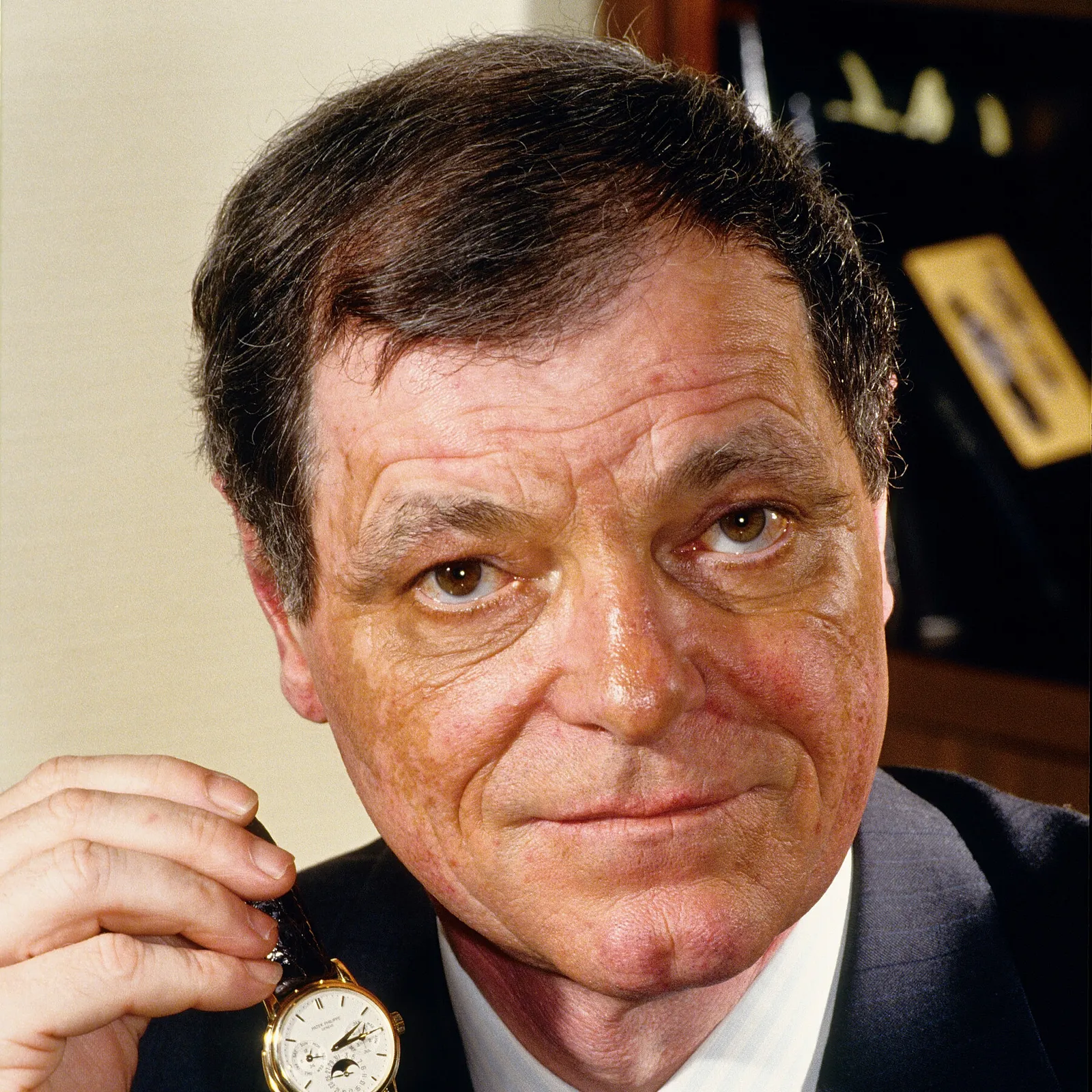
Philippe Stern, heir to the Patek Philippe watch brand, died at 88. In an era of electronic timepieces, he helped market $40,000 handmade watches as status symbols, breathing new life into the industry.
Philippe Stern, the heir to the Patek Philippe watch brand, died at 88. His signature move was almost heretical for a world drifting toward electronic timekeeping: he leaned harder into expensive, handmade mechanical watches, marketing $40,000 pieces as status symbols rather than as just instruments for telling time.
That framing mattered because the market logic of timekeeping was changing fast. When electronics arrive, they typically win on convenience and accuracy. Stern’s approach was a counterpunch: the product was not trying to beat a quartz watch on specs, it was selling identity, craft, and exclusivity. In other words, in an era where “time” increasingly came from circuits, he positioned Patek Philippe’s value in symbolism and rarity, not in the mechanics of punctuality.
For decision-makers watching premium categories, this is a useful reminder that “disruption” rarely kills demand for meaning. It changes what customers are buying. Mechanical watches used to compete like industrial appliances. Stern helped reframe the conversation so the purchase became closer to collecting art or signaling belonging. When an expensive watch costs $40,000, it cannot be only a functional object, because the buyer can get accurate time far cheaper elsewhere. The practical question becomes: what story does the brand make the buyer feel confident telling?
Stern’s work also highlights how heritage brands survive when the underlying technology commoditizes. Electronic timepieces shift consumer expectations about what timekeeping should be. At that point, luxury brands typically have two options: retreat into niche craftsmanship with limited volume, or elevate the brand into a status platform that can command premium pricing. The source says Stern “breath[ed] new life into a struggling industry,” which implies he did more than preserve Patek Philippe. He helped create a demand engine for handmade luxury watches at a time when the category’s default sales pitch should have been weakening.
There is also a governance and strategy angle that boards should care about. The “heir” role is not just a ceremonial label. It signals continuity of vision, and continuity is often the difference between a brand that drifts and one that adapts without losing its core. In practice, family leadership in luxury manufacturing can be a strategic asset because it supports long-cycle thinking: craftsmanship investments, brand building, and supply choices do not pay off overnight. A watch is not like a software feature launch. Even when market conditions shift, the brand’s credibility with collectors and high-end buyers can be maintained only through sustained positioning.
Regulatory backdrop matters in luxury too, even if this particular story is more about marketing than compliance. The watch market increasingly operates under rules and scrutiny around labeling, authenticity, and consumer protection across jurisdictions. While the source does not detail specific regulations tied to Stern, the broader context is clear: as luxury brands grow, they attract more attention from regulators and enforcement bodies. Positioning a $40,000 handmade watch as a status symbol does not remove the need for real quality and defensible claims. It raises the bar for transparency because buyers are paying for both craftsmanship and trust.
The second-order implication for executives in adjacent categories is that premium positioning is not a veneer, it is a product strategy. Stern’s approach suggests the industry’s survival depended on turning mechanical craft into a defensible value proposition that electronics could not replicate in the same emotional and cultural way. That is the hard part. It requires a brand narrative strong enough to withstand a world where the “time” itself becomes trivial.
Now that Stern is gone at 88, the strategic question for peers is whether that kind of positioning can be sustained by the next generation and leadership team. When a luxury company is rescued by a clear identity shift, the risk is not that the craft stops. The risk is that the meaning drifts. Boards and executives in premium sectors should treat this moment as a reminder: technology changes are inevitable, but brand reinterpretation is the move that determines whether you become a relic or a category standard.
This story's Key Insights and Take-aways are locked.
Create a free account to unlock Executive Actions for one credit.
Register to UnlockAlways free for Executives Club members. Join the Club
More in Business

Bungie cuts most Destiny 2 staff as Sony says Marathon still matters
Herman Hulst confirms layoffs affecting most Destiny and some Marathon teams after Bungie admits Destiny fell short.

SK Hynix jumps 11% after seeking up to $29.4B in Nasdaq listing
The chip giant filed for a Nasdaq listing plan that could raise $29.4 billion, instantly reshaping investor expectations.

Micron revenue hits nearly $42B as AI memory lifts gross margins above 81%
Fiscal Q3 results crush estimates, prove AI memory is rewriting Micron's margins, and change the momentum math for the whole chip stack.