

PIF’s Yasir Al-Rumayyan says international investing continues, strategy runs through 2030
The PIF governor lays out how €98B in Europe and UK deals, plus regulatory risk, fit the new Saudi playbook to 2030.
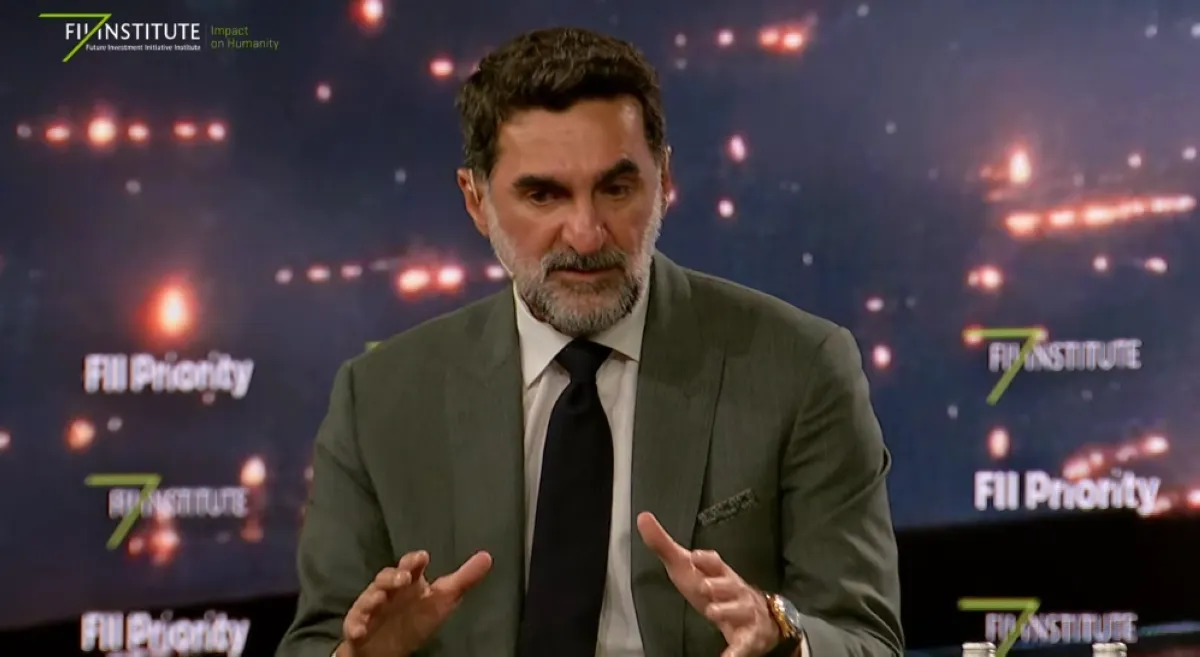
Yasir Al-Rumayyan, governor of Saudi Arabia’s Public Investment Fund (PIF), told the FII Priority Summit in Rome that PIF will continue international investments under a newly approved strategy through the end of 2030. He anchored the message in Europe’s opportunity set, quantified the fund’s €98 billion footprint since 2017, and warned that European regulatory uncertainty could still chill sovereign and large-company investment.
ROME - PIF Governor Yasir Al-Rumayyan used the FII Priority Summit in Rome to deliver a clean message: PIF’s newly approved strategy runs through 2030, and international investing is not getting turned off.
Al-Rumayyan, speaking on Thursday, reaffirmed that opportunities in Europe continue to outweigh challenges despite regulatory obstacles. He framed PIF’s approach as long-term resilience and diversification, and he directly pushed back on the idea that the new strategy would stop overseas deployment. “I can tell you that we're not going to stop,” he said, later adding that even if the percentage of international investments declines as domestic opportunities expand, the absolute overseas numbers will keep growing alongside PIF’s expanding assets under management.
That reassurance matters because it is coming at a time when investors are recalibrating for disruption risk. Al-Rumayyan pointed to the recent conflict affecting the Strait of Hormuz as an example of how vulnerabilities extend beyond any one energy market. In his telling, the impact went far past energy scarcity or energy catastrophe, reaching petrochemicals, fertilizers, and advanced manufacturing industries that depend on stable energy supplies. The point is not just that disruptions are bad, but that supply chains and industrial inputs are interconnected across borders and disciplines.
He also offered Saudi-specific planning as a buffer. Al-Rumayyan highlighted the East-West pipeline, developed decades ago after earlier threats to maritime navigation, as a reason Saudi exports could keep moving during recent tensions. His argument about long-horizon thinking came through repeatedly: Saudi Arabia, including Aramco and the PIF, plans in years and decades rather than quarters. That long planning also showed up in his view of “energy realism,” where renewables should complement conventional energy rather than replace fossil fuels. He said the world “cannot not rely on fossil fuel,” and he connected rising energy demand to artificial intelligence. In other words, even if strategy shifts, the demand stack does not magically disappear.
The investment numbers he shared put meat on the international-investing claim. Al-Rumayyan said PIF deployed approximately €98 billion across Europe and the United Kingdom between 2017 and 2025. He tied that to broad economic effects, saying it has contributed about €70 billion of GDP and created about 160,000 jobs around Europe. He also cited Saudi Aramco’s spending with European suppliers, saying Aramco spent around €80 billion with European suppliers, including approximately €20 billion in Italy alone. For boards and capital allocators, this is the heart of the argument: overseas investing is not only political messaging, it is industrial engagement with measurable footprint.
He then outlined how the new PIF strategy intends to bring “the world back to Saudi,” while still keeping a global portfolio posture. Al-Rumayyan said the PIF board approved the new strategy through the end of 2030, and that the previous strategy focused on integrating Saudi Arabia more deeply into the global economy. Now, he said, the strategy centers on six ecosystems: tourism, urban development, advanced manufacturing, industrial and logistics services, clean energy, and NEOM.
Critically, he also made clear where the friction still lives. He warned that regulatory issues remain a key challenge for international investors. Some regulations currently under consideration in Europe, he said, could discourage investment from major companies and sovereign investors including PIF, Aramco, and SABIC. He didn’t give specifics on which regulations, but he did note that regulators and policymakers are looking into it and “hopefully we will have better solutions for it.” That matters for peers because it suggests the strategic constraint is not only deal-finding. It is the rule-set governing cross-border capital, and it can move faster than board approval timelines.
Al-Rumayyan closed with deal pipeline signals. He revealed that around 140 investment opportunities would be presented during the conference, with projects requiring joint ventures estimated at approximately €10.4 billion through 2030. He added, “I think the opportunities are more,” which reads like a quiet reminder that conference deal counts are usually conservative compared with the longer pipeline.
The Aramco angle reinforced the resilience theme. Speaking in his capacity as chairman of Saudi Aramco, Al-Rumayyan praised operational performance during the crisis. He said the reliability of Aramco’s supply chain stayed above 99% and that Aramco managed to restore affected facilities within weeks despite missile attacks, whereas he said it usually takes years. He also thanked Aramco employees including engineers, firemen, and operators for maintaining operations.
For executives trying to align capital strategy with geopolitical reality, the takeaway is straightforward: PIF’s answer to conflict risk, energy demand, and domestic transformation is not to retreat from global investing. It is to double down on a long-term portfolio while treating regulation as the variable that could still change outcomes even when boards approve the plan.
This story's Key Insights and Take-aways are locked.
Create a free account to unlock Executive Actions for one credit.
Register to UnlockAlways free for Executives Club members. Join the Club
More in Business

Anthropic’s Levant Alpöge cracks the Jacobian conjecture after 87 years
A Harvard valedictorian used Claude to hit a 1939 breakthrough, but the missing “why” is the real problem.

Uber buys Delivery Hero for nearly $15B, vaulting to top food delivery outside China
The deal doubles Uber's dual-services footprint and pushes a ride-and-eats bundling play into 50 more markets.

Epic and Google drop settlement bid, forcing rival Android app stores by July 22
Google told the court it is ready to carry third-party app stores starting Wednesday, July 22.