
Pixar’s Toy Story 5 opens to $312M, proving family movies still dominate demand
A $312 million global opening for Toy Story 5 is the latest box-office data point for why kids films are not optional.
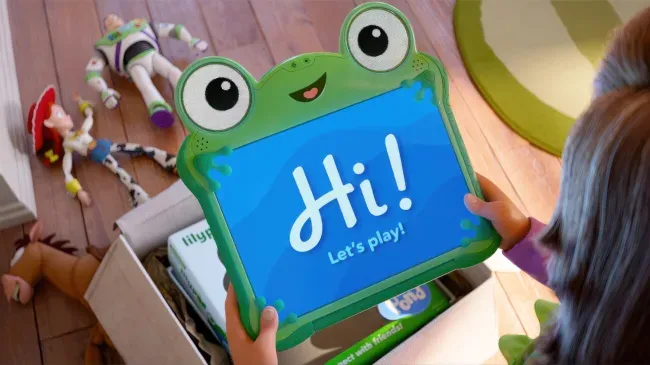
IndieWire reports that Pixar’s Toy Story 5 delivered a staggering $312 million global opening. For decision-makers, the takeaway is clear: family films are still reliably profitable, and the market is not asking for less kid-content.
Pixar’s Toy Story 5 is not just another animated sequel. IndieWire points to a staggering $312 million global opening for the fifth entry in the Pixar animated franchise, and the implication is hard to dodge: family films are undefeated at the box office.
That number matters because it is not “good for animation.” It is big, global proof that audiences will show up when they are given movies designed for kids and families. In a business where executives can spend months arguing about risk, audience taste, and theatrical momentum, a $312 million opening is the kind of real-world signal that cuts through theory.
The most interesting part is what this suggests about Hollywood’s supply. The article’s thesis is blunt: Hollywood is still not releasing enough kids movies. That is a supply-side complaint, and it lands differently than the usual demand-only analysis. When demand is clearly there, under-supplying the category becomes a choice with consequences. Studios are not just competing for attention, they are deciding how to allocate production slates. And slates determine which audiences are served and which revenue streams get nurtured.
Family films are a special kind of product because they do not rely on one narrow audience. They can draw multi-generational groups, which typically helps the theatrical window and broadens the times when people can actually see a film. While this is not a new idea, the $312 million global opening for Toy Story 5 is an updated datapoint in a market environment where studios constantly rebalance resources, chase trends, and hedge against uncertainty. When the category performs at that scale, the “we might be wrong about kids films” argument weakens.
There is also a reason this topic keeps resurfacing in industry discussions: kids entertainment operates on a pipeline. Kids movies are not only judged on opening weekend. They build habits and franchises that can extend across merchandising, home entertainment, and repeat viewership. A successful Pixar title can become a long-tail asset, but the theatrical event still matters because it sets the baseline for downstream performance and credibility. When a fifth entry in a major animated franchise can open for $312 million globally, it reinforces that audiences continue to trade up for familiar storytelling and trusted production brands.
Now layer in the broader “how studios decide” mechanics. Even when a category performs well, executives may still under-supply it if the slate math favors other bets, such as tentpoles aimed at a wider but more volatile demographic, or properties with clearer franchise momentum. That can happen for reasons that are not malicious, just organizational: directors and producers pitch, marketing teams optimize for what they can sell, and finance teams follow what has been historically rewarded. But data like this makes the optimization question sharper. If family movies are still undefeated, the default assumption should be that kids releases are strategically valuable, not a fill-in.
Second-order implications also hit boards and investors. Boards are typically tasked with overseeing capital allocation and risk posture. If studios consistently make fewer kids movies than the market would support, they could be leaving reliable earnings power on the table. That matters because animation, while expensive, often comes with identifiable audience demand and franchise economics. IndieWire’s framing implies a mismatch between the market’s revealed preference and the supply decisions being made in Hollywood.
For peers, the strategic stakes are straightforward. Executives at studios and media companies need to think about what this $312 million global opening signals for future scheduling, budgeting, and creative commitments. If family films continue to show that kind of traction, then the question is not whether kids movies can work. It is why the pipeline is not more robust. And if the answer is “because we are unsure,” this is the kind of hard evidence that should force a reconsideration.
This story's Key Insights and Take-aways are locked.
Create a free account to unlock Executive Actions for one credit.
Register to UnlockAlways free for Executives Club members. Join the Club
More in Entertainment

Russell Brand's accuser 'bewildered and confused' as he denies 7 sex charges
The criminal case against the comedian is a live test of how media companies manage talent risk when serious allegations go public.

'It's a Magic Trick': Ballet Experts Say Rosalía's SNL Pose Is Impossible
Three ballet experts tell Rolling Stone Rosalía's gravity-defying SNL stillness shouldn't be possible - and why the debate is now part of the show.

Activision CMO: GTA 6 Will Boost Call of Duty, Not Bury It
Activision's top marketer says Rockstar's blockbuster will drive players back to consoles and into Modern Warfare 4, even as the company admits its recent strategy failed.