
Pixi launches an iOS messaging app that turns text chats into interactive AR
Pixi is skipping stickers and emojis for interactive augmented reality. Here is what it signals for messaging, platforms, and product bets.
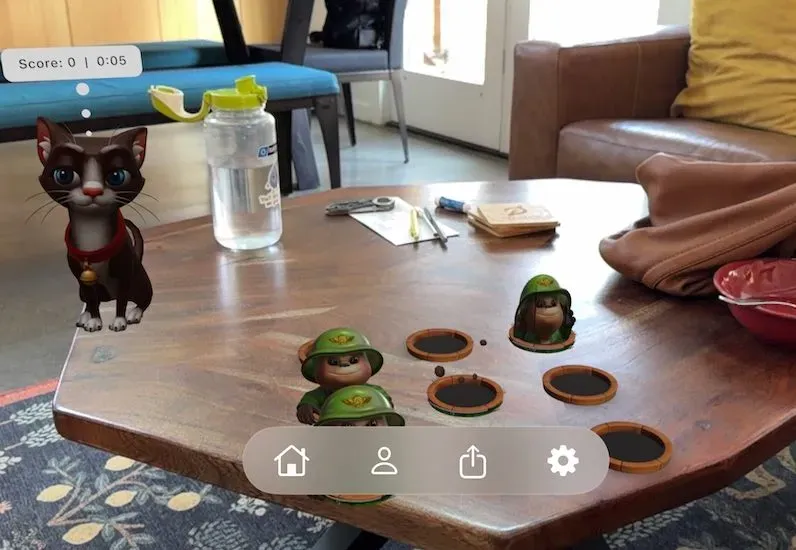
Pixi is introducing a new iOS app that converts text messages into interactive augmented reality experiences. The consequence for decision-makers is a reminder that messaging is still up for product reinvention, and AR is moving from novelty to interface.
Pixi is betting that the next evolution of messaging is not stickers, GIFs, or emoji reactions. It is interactive augmented reality (AR), delivered inside an iOS messaging experience.
That is the core move: Pixi is taking ordinary text chats and turning them into interactive AR experiences. In other words, the “content” in a conversation is no longer just what you type, or even what you share. It becomes something that can appear, respond, and feel spatial, as if the message is stepping out of the screen and into the room.
To understand why this matters, start with the baseline reality of messaging apps. Text is the oldest format, and it is also the most universal. But it is not the stickiest format on its own. The industry has repeatedly tried to make messaging more engaging: first with read receipts and delivery status, then with stickers, GIFs, and reaction buttons, and more recently with short-form media and rich interactions. Pixi is essentially asking the same fundamental question, but with a different answer: if users already open messaging multiple times a day, what happens when the app upgrades the output of that behavior from “expressing” to “experiencing”?
AR is a strong candidate for that upgrade because it changes how attention is captured. Stickers and emojis are essentially “flat fun” on top of a text layer. Interactive AR, as Pixi positions it, can transform an interaction into a shared moment in a physical-like space. That shift has second-order implications. If a messaging app can make messages feel less like content and more like an activity, it can increase time spent, deepen engagement loops, and potentially introduce new monetization surfaces, even if the source does not specify them. For executives, the point is not that every chat becomes a hologram overnight. It is that the interface becomes a platform for interaction, not just communication.
There is also a platform incentive story here, even without any quoted boardroom drama. Messaging is where network effects compound. The more people who use a given interaction format, the more valuable it becomes, because everyone has to be there for the shared experience. Interactive AR adds a new layer to that: it is not enough to send “a thing,” the receiver has to be able to render, interact with, and perceive that thing. That requirement naturally pressures product teams to think harder about device capabilities, performance, and consistency across iOS configurations. It also pressures ecosystem partners to decide whether AR experiences are portable, controllable, and safe across contexts.
Speaking of safety and control, AR experiences tend to bump into the same regulatory and policy questions as other advanced user interfaces: privacy, device permissions, and user consent. The source does not mention regulators or rules by name, but decision-makers should recognize the general pattern. Whenever an app turns a camera, sensors, or environment-like data into part of the user experience, regulators and platform policies typically care about how that data is collected, processed, retained, and exposed. In messaging, the stakes can be higher because chats imply personal communication. Even small missteps in permissioning and transparency can become trust issues quickly.
Finally, consider what this says about the competitive map. Pixi is not merely adding a feature. It is reframing the job-to-be-done for messaging from “help me react” to “help me do something.” That is exactly the kind of product bet that can force incumbents to respond, either by matching the new interaction layer or by building their own differentiators around AR-like experiences. For boards and operators, the strategic question becomes: are you positioned to compete on interaction depth, or are you comfortable defending engagement with incremental upgrades?
If you run a messaging product, social app, creator platform, or AR toolchain, Pixi's move is a signal to take AR seriously as an interface direction, not just a headset novelty. The next time users pick an app to express something, they may also pick it to experience it. Pixi is making that bet now, and the rollout on iOS suggests it is targeting the mainstream first, where distribution and usage frequency can turn a concept into a habit.
The second-order implication is simple but high stakes: once interactive AR enters the messaging layer, it raises the floor for what “engaging” looks like. If users start expecting interactive experiences in chats, competitors will either have to meet that expectation or risk becoming the app people use for plain text only.
This story's Key Insights and Take-aways are locked.
Create a free account to unlock Executive Actions for one credit.
Register to UnlockAlways free for Executives Club members. Join the Club
More in Technology

Nvidia's $89B data center quarter: the 9 companies cashing in
The AI buildout is minting fortunes beyond GPUs, and memory, cloud, and cooling suppliers are riding the same wave.

Google quietly links your phone number to every Android account on your SIM
Adding a SIM now ties your phone number to all Google accounts - and future accounts inherit it. Here's the security and privacy stakes.

Hijacker AI 'Skynet mode' runs 100,000 attack steps against exposed models
Symantec caught a criminal AI agent that borrows other models, steals data, and mines crypto; the only relief is no confirmed victims yet.