
Plants may survive 1.8 billion more years, despite a sun that is already brightening fast
New climate modeling extends the biosphere deadline to about 2 billion years, with CO2 and temperature as the battleground.
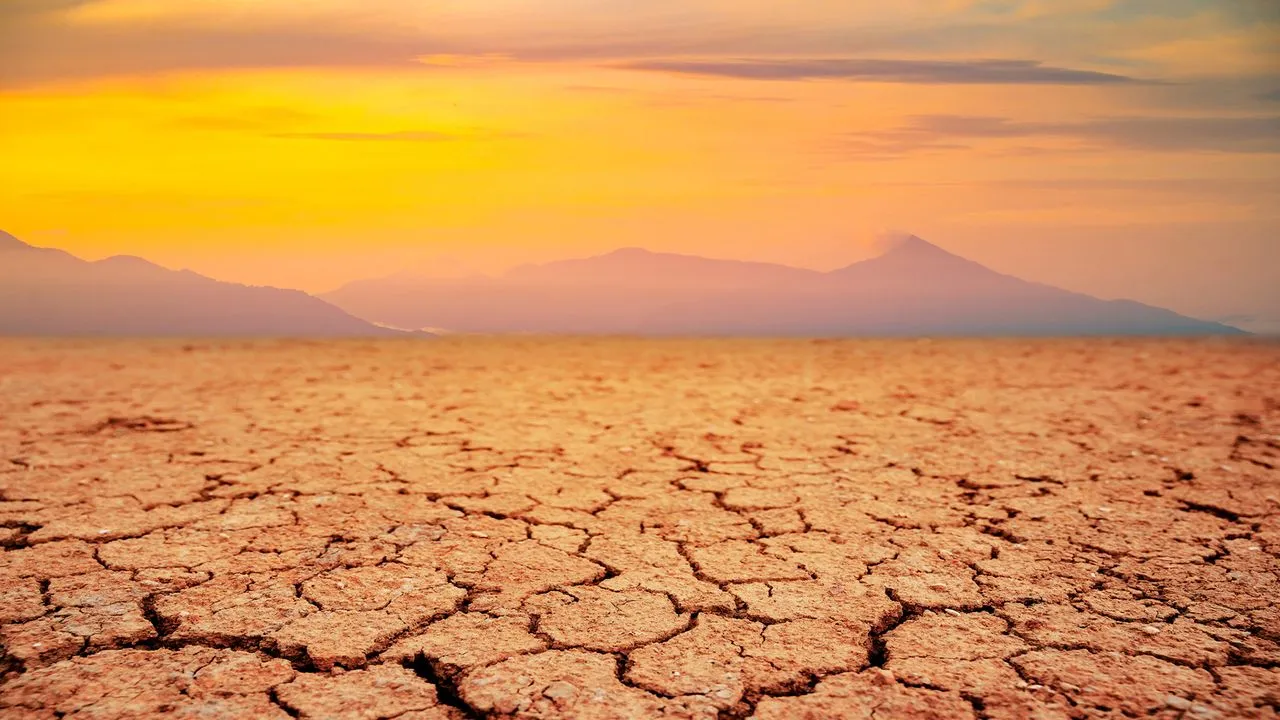
Astrobiologist Jacob Haqq-Misra and Blue Marble Space colleague Eric Wolf used 29 climate models to estimate when Earths vegetative biosphere breaks. For decision-makers, the work sharpens how resilience (or collapse) could shape life-detection targets on other planets.
Life on Earth may have around 1.8 billion years left for complex plant life, according to new research using 29 climate models published May 28 in JGR Atmospheres. That is much longer than earlier estimates had suggested, and it puts a spotlight on exactly what eventually knocks out photosynthesis: the sun getting hotter and the atmosphere running short on usable carbon dioxide.
The framing matters because Earth is already on the clock. The sun is currently producing about a third more energy than it did at the dawn of the solar system 4.5 billion years ago, and it is getting hotter until it eventually dies in about 5 billion years. The new study asks a blunt question with real implications for how we think about habitability: at what point will plants be unable to keep up, triggering cascading collapse across food webs?
To understand why this timeline is a big deal, it helps to remember how plant survival works in the first place. Life on Earth relies on photosynthesis, the process used by plants, algae, and some bacteria to turn sunlight into energy. Photosynthesis chemically converts carbon dioxide and water into sugars and oxygen. It requires both CO2 and sunlight. Push the temperature too far and photosynthetic machinery shuts down. Then you do not just lose plants. You lose the base layer for most of Earth’s biology, which means entire food webs can collapse and all life can perish.
There is also the CO2 angle, and it is sneakier. As the sun brightens, Earth’s climate and carbon cycle respond. The research highlights that as conditions shift, there will be less carbon dioxide in the atmosphere, effectively starving plants. In parallel, Robert Graham, a planetary science researcher at the University of Chicago who was not involved, explains the role of the so-called built-in thermostat: Earth has stayed relatively hospitable in surface temperature for most of the last 4 billion years because CO2 can be stored in rocks and released via volcanic eruptions. When it is hotter, the planet pulls more carbon dioxide out of the atmosphere and stores it in rocks underground, which can offset warming but also means carbon dioxide is no longer accessible to plants.
So what did the new study actually do differently? Haqq-Misra and Wolf used 29 climate models and tested what would happen to Earth’s vegetative biosphere under different scenarios. They set two extreme cases as limits, meaning two “endmember” worlds: one where Earth is too hot for life but CO2 remains stable, and another where there is not enough CO2 but temperature is stable. They then examined conditions between those extremes, including situations where Earth becomes very efficient at pulling carbon from the atmosphere when temperatures start rising. They also incorporated multiple plant types. Some plants can survive on much lower ratios of atmospheric CO2 than others. The study included plants with crassulacean acid metabolism, known in the source as a special photosynthetic process, such as succulents and orchids. It also included some marine plants, which can dissolve and access carbon in the ocean system.
The headlines alone might sound like a cosmic calendar, but the second-order implication is about model credibility and resilience. Graham, who authored one of the earlier studies, said the new work uses a sophisticated 3D climate model to show Earth’s climate may remain hospitable to plant life significantly longer than predicted by simpler models. He called it an advance over previous work, and said it suggests complex biospheres like Earth’s could be more resilient to environmental change from stellar brightening than previously suggested. In other words, the estimate is not just later. It is later for a reason: better modeling of how climate, carbon uptake, plant diversity, and ocean carbon access interact.
Still, the study comes with guardrails that matter for any executive audience used to translating science into decision-making. Andrew Rushby, an astrobiologist at Birkbeck University of London and not involved, said the paper updates the concept of biosphere lifetime but that the results are broad estimates. He cautioned that it is not possible to predict or know the possible evolutionary adaptations that the photosynthetic biosphere may undergo in response to increasing solar output and lower atmospheric CO2 over billions of years. And Haqq-Misra’s own framing underscores that these “limits” may be observational, not absolute: the authors wrote that limits posed by thermal stress or starvation may only reflect what we observe of the biosphere today rather than hard limits on how the biosphere may evolve.
For decision-makers watching adjacent industries, this is a reminder that resilience is often an input to your strategy, not an afterthought. When scientists argue about how long plants can survive, they are also shaping how we think about the thresholds on other planets. Haqq-Misra said the results are comforting, calling Earth’s system resilient and suggesting a much, much longer future. The practical angle is that the research could help scientists identify thresholds for other worlds, but it also highlights the challenge of generalizing from Earth-based models to a wider range of atmospheres. The source’s bottom line is clear: at about 1.8 billion years, plant life may still be viable, and that nears the time when Earth would lose its oceans to space, either through radiation splitting water atoms or runaway evaporation, in about 2 billion years. Until then, the biosphere’s fate is a negotiation between heat and carbon, mediated by plants and the planet’s own thermostat-like carbon cycle.
This story's Key Insights and Take-aways are locked.
Create a free account to unlock Executive Actions for one credit.
Register to UnlockAlways free for Executives Club members. Join the Club
More in Science

Alaska's 1,580-foot tsunami had warning signs. Scientists just found them.
Rapid glacier retreat, heavy rainfall, and thousands of tiny tremors preceded Alaska's 1,580-foot tsunami, a warning for every coastal community in a warming world.

The rare mutation that lets high-risk brains dodge Alzheimer's
Scientists found a natural defense against protein buildup, opening a new path to preventive treatments.

3,000 steps a day may halve Alzheimer's decline, study finds
New research links a modest daily walk to less tau buildup and nearly half the cognitive and functional decline, even for those with early signs.