
Plug-in solar panels land in UK shops - the fine print on bill cuts
The UK government says plug-in solar panels can significantly cut energy bills. Here's what buyers should know before they plug in.
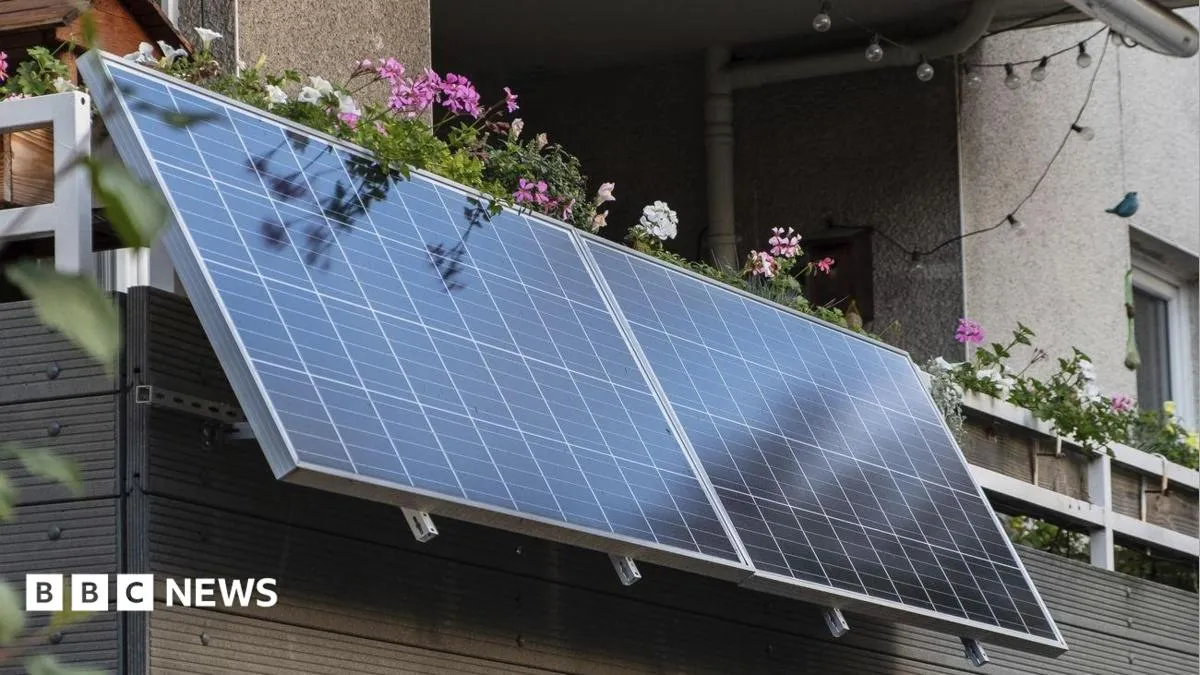
The UK government claims plug-in solar panels could help homes significantly cut energy bills. For decision-makers, this signals a shift toward accessible residential solar, but the actual savings depend on usage, tariffs, and installation rules.
The UK government has announced that plug-in solar panels, which are set to hit shop shelves across the country, could help households "significantly cut" their energy bills. That's the claim from the Department for Energy Security and Net Zero, which is backing the technology as part of a broader push to make solar power more accessible to renters and flat-dwellers who can't install traditional rooftop panels.
But the fine print matters. Plug-in solar panels, also known as plug-and-play or balcony solar systems, are compact photovoltaic panels that connect directly to a standard wall socket via an inverter. They bypass the need for a full rooftop installation, a certified electrician, or even planning permission in many cases. That ease of use is exactly why the government is touting them as a way to "significantly cut" bills - but the actual savings depend on a host of variables, including your energy tariff, how much sunlight your home gets, and whether your utility allows feed-in of excess power.
For context, plug-in solar has already taken off in Germany, where millions of households have adopted balcony solar units. The UK is now following suit, with major retailers expected to stock these panels alongside other home energy products. The government's claim is part of a wider strategy to increase solar capacity to 70 gigawatts by 2035, a fivefold increase from current levels. But unlike large-scale solar farms, plug-in panels are designed for individual consumer adoption, which brings its own set of regulatory and grid challenges.
One of the biggest hurdles is the UK's grid connection rules. While plug-in panels are designed to be simple, they still need to comply with the Microgeneration Certification Scheme (MCS) and the Distribution Network Operator's (DNO) approval process. In many cases, households must notify their DNO before installing even a small plug-in system, and some DNOs have been slow to approve these applications. This could delay the "significant" savings the government promises, as households wait for permission to start generating.
There's also the question of how much energy these panels actually produce. A typical plug-in solar panel has a capacity of around 300 to 400 watts, compared to a full rooftop system that can generate 3 to 4 kilowatts. That means a plug-in panel might only offset a fraction of a household's electricity usage - perhaps 10-20% depending on location and orientation. So while the government's claim of "significantly cut" bills is technically possible for some homes, it's not a one-size-fits-all solution. The savings also depend on whether you can use the power when it's generated, or if you have a battery to store it.
For businesses and investors, the arrival of plug-in solar panels in UK shops represents a new consumer market for renewable energy. Retailers like B&Q and Screwfix are expected to stock these units, and the government's endorsement could drive adoption among the 8 million UK households that live in flats or rented accommodation - a segment that has been largely locked out of the solar boom. This could open up new revenue streams for manufacturers, installers, and energy retailers, but it also raises questions about safety standards and grid stability as more households plug in.
The strategic stakes for executives are clear: if plug-in solar becomes a mainstream consumer product, it could disrupt the traditional solar installation market, which has relied on complex, high-margin rooftop systems. It also puts pressure on energy suppliers to offer tariffs that reward self-generation, and on regulators to streamline the approval process. For now, the government's claim is a marketing push, but the underlying trend is real: solar is becoming as easy as plugging in a toaster. The question is whether the grid and the market can keep up.
This story's Key Insights and Take-aways are locked.
Create a free account to unlock Executive Actions for one credit.
Register to UnlockAlways free for Executives Club members. Join the Club
More in Business

Tim Cook steps down as Apple CEO, stays on as chair with $45M equity
The 'Trump whisperer' keeps his White House and Beijing access as Apple navigates tariffs and a $4.6 trillion market cap.
Snowflake shares surge as AI data demand crushes estimates, lifting full-year forecast
Stocks jumped on stronger-than-expected guidance, signaling enterprise AI workloads are accelerating faster than Wall Street priced in.

Tim Cook's 15-year Apple CEO run ends: 3 lessons for any successor
After 15 years, Tim Cook hands Apple to John Ternus - here's how he turned a $350B company into a $4.6T juggernaut.