
Pocketpair will launch Palworld 1.0 July 10, without increasing its price
Despite legal noise around Nintendo, Palworld’s developer keeps the price steady at the biggest milestone yet.
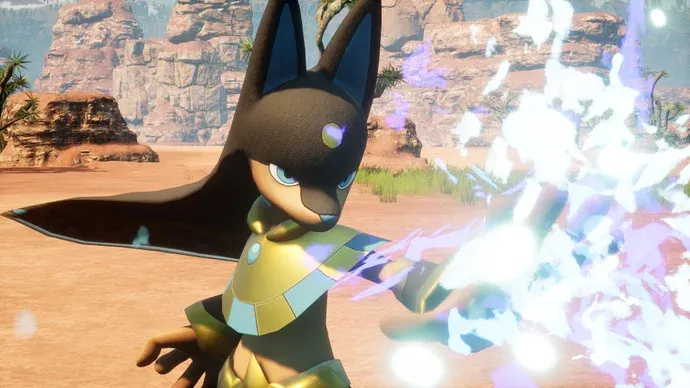
Pocketpair, the developer behind open-world survival game Palworld, has confirmed the game will launch version 1.0 on Friday, 10th July. For decision-makers, the move signals an intentional monetization posture heading into a crucial 1.0 market moment.
Palworld developer Pocketpair is heading into a real inflection point: the game will reach version 1.0 later this week. Eurogamer reports that the transition will happen on Friday, 10th July, marking the end of the game’s early access era that began in January 2024.
Here is the detail that matters for anyone thinking about pricing power in games. Pocketpair has decided not to raise Palworld’s open-world survival game price tag as it nears 1.0. In other words, the studio is choosing to treat the 1.0 launch as a credibility and product-completeness moment, not a “pay more because it’s bigger now” moment.
To understand why this is a smart thing to watch, you have to zoom out to what Palworld has actually been since it landed. It launched into early access in January 2024, and then, according to Eurogamer, it has racked up “tons of success” while still evolving through more than two years of updates. That matters because early access monetization usually runs on a mix of early adopter goodwill, ongoing content delivery, and a willingness from players to tolerate iteration.
Once a game crosses into 1.0, the audience expectation changes. Players increasingly treat 1.0 as a signal that the core experience is now finished enough to justify long-term commitment and mainstream attention. Studios and publishers know the typical pressure at that point. “1.0 launch” is often when pricing strategies are revisited, because the product narrative shifts from “in progress” to “complete.” Pocketpair’s decision to skip a price increase means it is deliberately trying to preserve trust at the exact moment trust usually gets tested.
And this is happening against legal backdrop that Pocketpair cannot ignore. Eurogamer frames the broader story around legal battles with Nintendo. While the article does not add new case details beyond that context, the headline-level implication is clear: the company is navigating uncertainty and scrutiny while simultaneously trying to move Palworld into its most stable release state.
That creates a tricky incentive structure. When litigation and public controversy are part of the environment, the studio’s options narrow. If you raise your price at the same time you are under legal pressure, you risk turning a pricing change into an extra narrative the market does not want. By keeping the price steady, Pocketpair reduces one variable that players, streamers, and mainstream outlets might otherwise fixate on. The 1.0 launch becomes about the product, not about a sudden monetization adjustment.
This matters beyond Palworld itself, because the “what happens at 1.0?” question is one that boards, CFOs, and product leaders think about across the industry. Open-world survival games are expensive to build and expensive to keep alive, and players can be unforgiving when they feel like a studio is extracting more money without delivering more value. Pocketpair’s approach suggests a different path: let 1.0 be the value proof. If the game’s long early access run has convinced players that the updates are real, then a 1.0 label can act like a final stamp without turning into a price hike.
There is a second-order implication for peers too. Other studios watching Palworld’s 1.0 moment will learn something about how to manage transition risk. If a successful early access title can reach 1.0 without increasing price, it gives operators a reference point for how to protect conversion and retention during milestone releases. It also hints at how companies may respond when legal pressure exists at the same time as product maturation.
So the strategic stake for decision-makers is straightforward. Pocketpair is aligning its biggest product milestone, a 1.0 release on Friday, 10th July, with a steady price decision while legal battles with Nintendo remain part of the context. In a market where pricing changes can quickly become headline content on their own, choosing not to raise the price is a bet that players will meet 1.0 with confidence, and that Pocketpair’s delivery record through more than two years of updates will do the selling. If that works, it sets a precedent for how to handle monetization transitions when the spotlight is already hot.
This story's Key Insights and Take-aways are locked.
Create a free account to unlock Executive Actions for one credit.
Register to UnlockAlways free for Executives Club members. Join the Club
More in Entertainment

Russell Brand's accuser 'bewildered and confused' as he denies 7 sex charges
The criminal case against the comedian is a live test of how media companies manage talent risk when serious allegations go public.

'It's a Magic Trick': Ballet Experts Say Rosalía's SNL Pose Is Impossible
Three ballet experts tell Rolling Stone Rosalía's gravity-defying SNL stillness shouldn't be possible - and why the debate is now part of the show.

Activision CMO: GTA 6 Will Boost Call of Duty, Not Bury It
Activision's top marketer says Rockstar's blockbuster will drive players back to consoles and into Modern Warfare 4, even as the company admits its recent strategy failed.