

Porphyromonas gingivalis was 30x higher in calcified valves, mouse tests show it drives CAVD
A gum-disease bacterium appears to spark inflammation that turns valve tissue into bone-like calcium makers, at least in early studies.
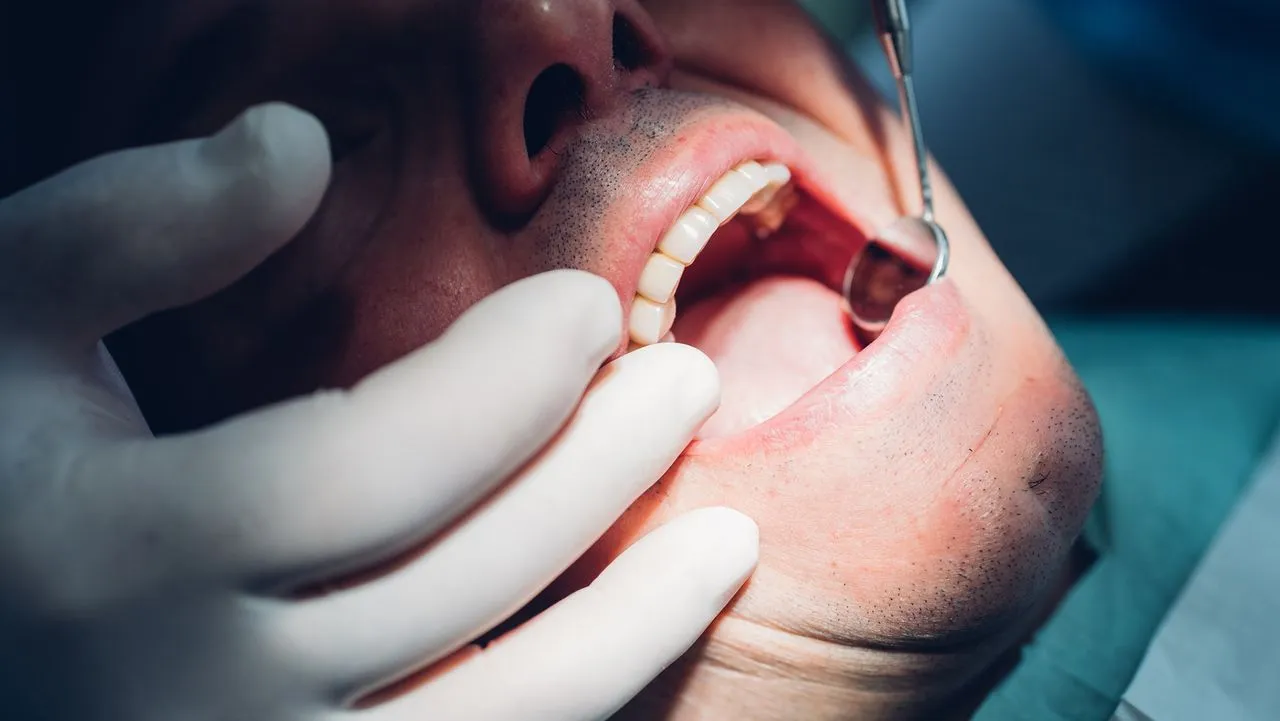
Researchers at Fuwai Hospital in Beijing report that Porphyromonas gingivalis DNA and proteins are far more abundant in calcified human aortic valve tissue and that live bacteria injected into mice can trigger valve inflammation, calcium buildup, and narrowing. The findings, presented in July at an American Heart Association meeting and not yet peer-reviewed, suggest a biologically plausible pathway linking oral health to calcific aortic valve disease.
A bacterium tied to severe gum disease showed up at about 30 times higher levels in calcified human aortic valves, and in mice it did not just correlate with disease. It appeared to help drive it.
In the study, first author Dr. Chenyang Li, a doctoral candidate at Fuwai Hospital, looked for Porphyromonas gingivalis in aortic valve tissue removed during valve-replacement surgery. Compared with valves that were not calcified, the calcified valves had much higher levels of P. gingivalis DNA and proteins made by the bacterium, with Li saying P. gingivalis “was about 30 times more abundant in calcified valves than in non-calcified valves.” To move beyond correlation, Li and colleagues injected live P. gingivalis into healthy lab mice. The bacteria reached the animals’ aortic valves, triggering inflammation, calcium buildup, and valve narrowing, even in mice without high cholesterol. In contrast, mice given antibiotics before injection had less bacteria in their aortic valves and slower disease progression, and mice injected with dead P. gingivalis showed no valve changes.
This matters because calcific aortic valve disease, or CAVD, is common and serious. It affects millions of people worldwide, and there are no approved drugs that slow or stop its progression. As the disease worsens, people can develop fatigue, shortness of breath, and chest pain. In severe cases, they often require valve-replacement surgery. So when an early study points to a new upstream lever, it grabs attention far beyond dentistry. It also forces cardiology and immunology to look again at something they have long known is plausible: that bacteria and inflammatory signals from the mouth can enter the bloodstream and affect distant tissues.
The “how” in this study is where it gets particularly interesting for executives who follow pipeline logic. The researchers traced the mice’s heart changes to interleukin-1 beta, a signaling molecule that normally helps the body fight infections. Exposure to P. gingivalis ramped up interleukin-1 beta. That, in turn, switched on genes that pushed healthy valve cells to behave more like bone-building cells, which is a hallmark of CAVD. Instead of staying as normal valve tissue, the cells begin laying down calcium in the surrounding valve environment. When the scientists blocked interleukin-1 beta in some mice, the animals developed much less valve calcification even when the bacteria reached the valve.
Two separate external observers, speaking in the context of what this early work does and does not prove, also framed the disease model in a way that could influence how stakeholders think about prevention and treatment. Dr. Elena Aikawa, a professor of medicine at Harvard Medical School who was not involved, said the findings “fit well with our current understanding of calcific aortic valve disease as an active, inflammation-driven disease rather than simply wear and tear of the valve.” She added that periodontal disease is likely one contributor among many, not the sole cause of CAVD. Meanwhile, Richard Lamont, chair of oral immunology and infectious diseases at the University of Louisville School of Dentistry, noted that the mouse experiments strengthen the case for a biological mechanism linking gum and heart diseases, while cautioning that mice have very different oral microbiomes than humans, which makes it hard to know whether the exact same process occurs in people.
For decision-makers, the business implication is not “this fixes CAVD tomorrow.” The implication is that the target map might expand. Prior research has already suggested that treating gum disease can improve blood-vessel health, and that inflammation can travel and reshape immune behavior over time. This new work adds a more specific mechanistic thread: a gut or mouth bacterium, a named inflammatory pathway, and a hallmark tissue transformation from valve cell behavior to bone-like calcium deposition. That combination can be exactly what translational teams look for when they decide whether a concept is worth spending on.
There is also a human data angle, even if the full story is still unfinished. The study team saw the same broad pattern in human valve cells grown in the lab: exposure to P. gingivalis increased inflammation and calcium buildup among the cells, and blocking interleukin-1 beta blunted those effects. Still, both Aikawa and Lamont said more research is needed to confirm the relationship in humans. And importantly, the findings were presented in July at a meeting of the American Heart Association in Boston and have not been peer-reviewed yet. That timing detail is not trivia. It signals that stakeholders should treat this as an early signal, not a settled clinical strategy.
If you are a clinician, the second-order question is simple: what counts as a meaningful upstream prevention lever for a disease that ends in surgery when it gets bad? If you are an investor or operator in medtech or biopharma, the second-order question is harder: how quickly can the field validate whether targeting inflammatory signals like interleukin-1 beta could slow CAVD progression in people, and whether oral health interventions move the needle through that same pathway? For now, the study’s most actionable truth is this: an oral bacterium, present at dramatically higher levels in calcified valves, can drive the disease mechanics in animals and activate the same calcium-inflammation logic in lab-grown human cells. That is enough to change the conversation, even if it is not enough to close it.
This story's Key Insights and Take-aways are locked.
Create a free account to unlock Executive Actions for one credit.
Register to UnlockAlways free for Executives Club members. Join the Club
More in Science

Alaska's 1,580-foot tsunami had warning signs. Scientists just found them.
Rapid glacier retreat, heavy rainfall, and thousands of tiny tremors preceded Alaska's 1,580-foot tsunami, a warning for every coastal community in a warming world.

The rare mutation that lets high-risk brains dodge Alzheimer's
Scientists found a natural defense against protein buildup, opening a new path to preventive treatments.

3,000 steps a day may halve Alzheimer's decline, study finds
New research links a modest daily walk to less tau buildup and nearly half the cognitive and functional decline, even for those with early signs.