
Portable X-ray hits orbit on Fram2, proving space diagnosis for broken bones and more
After March 31, 2025, in-orbit images cleared a diagnostic bar, while also hinting at rural Earth health upside.
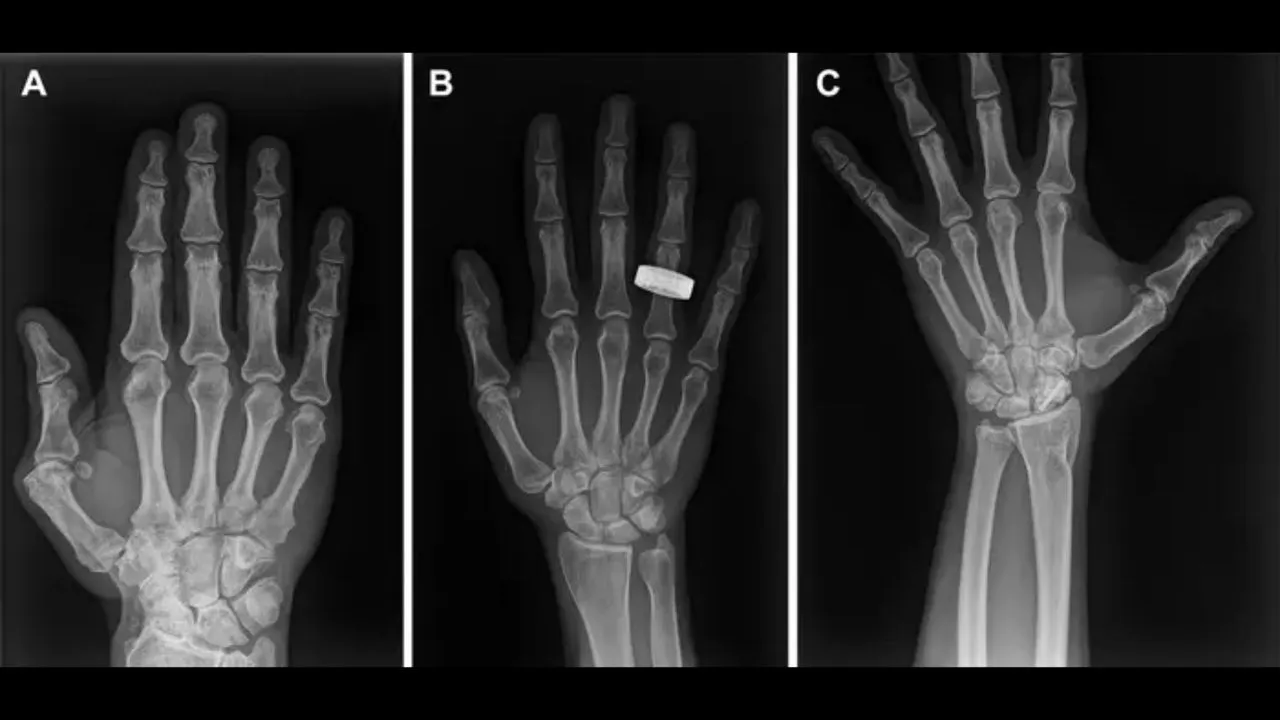
Mayo Clinic aerospace medicine assistant professor Sheyna Gifford and her team tested off-the-shelf portable X-ray systems in space on the March 31, 2025 Fram2 mission. Back on Earth, three independent medical experts found the space-based X-rays were good enough to diagnose broken bones, with broader implications for crew health and hardware evaluation.
A portable X-ray machine actually produced usable X-ray images in orbit for the first time, and the results were good enough that doctors on Earth said they could diagnose broken bones. The test took place during the private Fram2 mission launched March 31, 2025, a 3.5-day Earth-orbit flight on board a SpaceX Crew Dragon with four first-time astronauts, none of whom were medical experts.
Gifford's team put the off-the-shelf portable system through the full “real space conditions” drill: each astronaut got four hours of training before launch, then in orbit they captured X-rays of a smartwatch, a hand, an abdomen, a pelvis, and a chest. The key detail for anyone evaluating the operational reality is not just that images were taken, but that the images were recorded digitally so astronauts could review them right away without needing film. Back on Earth, three independent medical experts compared the Fram2 images with similar ground-based X-rays taken prior to launch, and while the ground-based images were better quality, the space-based ones were still good enough for diagnoses like broken bones.
Why this matters is simple: for decades, space medicine has leaned heavily on ultrasound. Ultrasound needs a medium for sound waves to travel, which means it is less flexible when you are dealing with the messy reality of space injuries. An X-ray system, by contrast, can work in a vacuum. Historically, though, X-ray machines were a pain to bring anywhere: they were big and bulky, they used a lot of power, they struggled to image anything that was not perfectly stationary (leading to blurred images), and they were vulnerable to damage from launch and atmospheric re-entry jostling. So in practice, “X-ray in space” has been more idea than equipment.
The Fram2 test suggests the equipment side has finally caught up to the medical need. On Earth, portable X-ray machines have become common in low-resource settings and mainstream events, because they can run on solar power and can be operated by people without medical expertise. Gifford specifically wanted to stress-test that portability in space. Her first chance came during a parabolic flight in 2022, when microgravity was simulated by a “Vomit Comet” style aircraft trajectory. During that earlier trial, the crew produced an X-ray image of a hand using a portable unit.
The orbital version was harder, and it produced the kind of outcome executives care about: the system survived the trip. After being buffeted around, the device made it back to Earth with only minimal damage to its exterior. The astronauts also reported it was easy to use, and they recommended future designs be easier to clamp securely into place inside the crew cabin. That feedback is not cosmetic. If clamping and stability are what determine image clarity, then “ease of securing the system” becomes a reliability and training issue, not just a comfort tweak.
The story also widens beyond human health, which is where boards and program leaders start thinking in portfolios, not one mission. The article notes that X-rays in space could be used to inspect potential damage to electronics and spacesuits, diagnose issues with malfunctioning satellites, and even be strapped to lunar rovers to analyze the moon’s surface. With proposals for a moon outpost in the background, the demand for medical imaging is not theoretical. More time in space and more complex crew activities mean more potential for injuries, and therefore more pressure on diagnostic capability during missions.
Even the “Earth benefits” angle is operational, not sentimental. Gifford points out that miniature autonomous X-ray systems could support rescue teams in remote areas or tight spaces, and could transform medical care in rural towns and villages far from large hospitals by reducing the burden on those hospitals. She also argues that distributing autonomous miniature X-ray systems around the globe could change the game in public health, emphasizing that the sky is not the limit when it comes to X-rays in space and here on Earth.
In commercial and regulatory terms, this is the kind of milestone that can accelerate adoption because it demonstrates feasibility and diagnostic adequacy. While the device quality was not equal to ground-based imaging, the fact that “space-based ones were good enough to be used to diagnose injuries such as broken bones” is a threshold result, not a vanity metric. The findings were reported on July 14 in the journal Radiology, giving the research a credible publication pathway as future missions and healthcare programs weigh the cost and risk of deploying portable radiography systems.
For executives across aerospace, health systems, and medical device companies, the strategic takeaway is that portability is no longer just a product feature. It is now mission infrastructure. Fram2 shows an off-the-shelf portable system can be trained quickly, used by non-experts, produce digital images for immediate review, and return to Earth with minimal damage. The next step, according to Gifford, is to reduce size further and improve ruggedness and usability so these systems can be included in future missions. If you are building or funding the next wave of crewed exploration, this is a reminder: the most valuable capability is often the one that fits inside the real constraints of space, not the one that looks best on a lab bench.
This story's Key Insights and Take-aways are locked.
Create a free account to unlock Executive Actions for one credit.
Register to UnlockAlways free for Executives Club members. Join the Club
More in Technology

Google quietly links your phone number to every Android account on your SIM
Adding a SIM now ties your phone number to all Google accounts - and future accounts inherit it. Here's the security and privacy stakes.

Hijacker AI 'Skynet mode' runs 100,000 attack steps against exposed models
Symantec caught a criminal AI agent that borrows other models, steals data, and mines crypto; the only relief is no confirmed victims yet.

Nvidia's AI-financier shift faces its first big test as neoclouds stumble
A rout in neocloud stocks is forcing investors to weigh Nvidia's hidden exposure as both supplier and lender to the AI buildout.