
Prediction markets turn the digital economy into a casino, faster than anyone expected
Why the “market” wrapper is wearing thin, and what decision-makers should watch as incentives get darker.

Prediction markets are increasingly treated as a digital way to price future outcomes, effectively turning more of the economy into wagering. For decision-makers, the consequence is clear: the line between information markets and gambling dynamics keeps blurring.
Prediction markets are no longer a niche curiosity for quant nerds. The digital economy is being reframed, piece by piece, as if it were a gambling casino, and the shift is happening faster than even a decade ago.
That is the core reality the “dark side” point is getting at. Prediction markets are designed to let people buy and sell contracts tied to future events, which can make uncertainty feel tradable. In theory, that can be a way to aggregate beliefs and discover signals. In practice, the same mechanism can also turn forecasting into a game where incentives increasingly resemble betting, not research. The source’s warning is that this is not a distant hypothetical. It is an unfolding transformation that no one could have foreseen even 10 years ago.
To understand why this matters, you have to start with what prediction markets do well. They convert predictions into prices. When enough participants are willing to put money behind a belief, the market price can reflect what the group thinks is most likely, and it can change as new information arrives. That sounds like productivity. It sounds like decision support.
But prices have a social life. If the dominant activity becomes positioning for payouts rather than refining understanding, the market can start to reward behavior that looks less like “finding the truth” and more like “manufacturing edges.” Even without inventing any specific wrongdoing, it is easy to see the incentive drift: volatility draws attention, leverage amplifies emotion, and performance becomes personal. Over time, participants may optimize for how the market moves, not for how accurate the underlying probability is.
This is also where the second-order implications hit boards and executives. Prediction markets operate at the intersection of information, finance, and behavior. If the public starts perceiving these systems as gambling, reputational risk increases for everyone connected to them, from platforms to sponsors to any organization that funds or integrates them. That risk is not just PR theater. It can drive partner pullbacks, changes in internal governance, and more aggressive scrutiny from compliance teams who do not want to wake up in a headline about “turning” society into a casino.
Regulation is the other pressure point. While the source does not name specific regulators or legal actions, the broader regulatory backdrop is that authorities typically treat gambling differently from ordinary markets. The moment a prediction market resembles wagering, regulators can ask whether consumer protections, licensing, and disclosure rules should apply. For decision-makers, that means you should assume that any platform or ecosystem player will eventually have to answer the same questions: Who is allowed to participate? How are risks disclosed? How is manipulation prevented, monitored, or deterred? And what exactly is being sold, an informational contract or a gambling product?
There is a strategic stake for executives even if they are not building prediction markets themselves. Businesses across the digital economy rely on data and signals. If prediction markets become a mainstream interface for forecasting, the market price could start influencing internal decisions, marketing narratives, hiring discussions, risk planning, or investment timing. When that interface carries gambling-like incentives, it can shift how organizations interpret uncertainty. Sometimes the “signal” will still be useful. Sometimes the signal will be contaminated by the incentives of the crowd that is chasing payouts.
So what is the “darkness” in the phrase, beyond the obvious casino analogy? It is the combination of scale and speed. The digital economy can route attention instantly and price outcomes continuously. Put those together and you can expand the gambling dynamic across entire categories of life, from finance to politics to culture, without needing to build a physical sportsbook. According to the source, this is a transformation so unexpected that even 10 years ago the idea did not seem realistic.
For leadership teams evaluating anything adjacent to prediction markets, the takeaway is that incentives are destiny. The question is not just whether the mechanism can aggregate beliefs. The question is whether it is aggregating bets. And if the answer is drifting toward bets, the world that gets priced is not only the future. It is also human behavior around that future. That is where second-order consequences can show up for boards first, as governance questions, and for executives next, as strategic and reputational risk.
This story's Key Insights and Take-aways are locked.
Create a free account to unlock Executive Actions for one credit.
Register to UnlockAlways free for Executives Club members. Join the Club
More in Politics
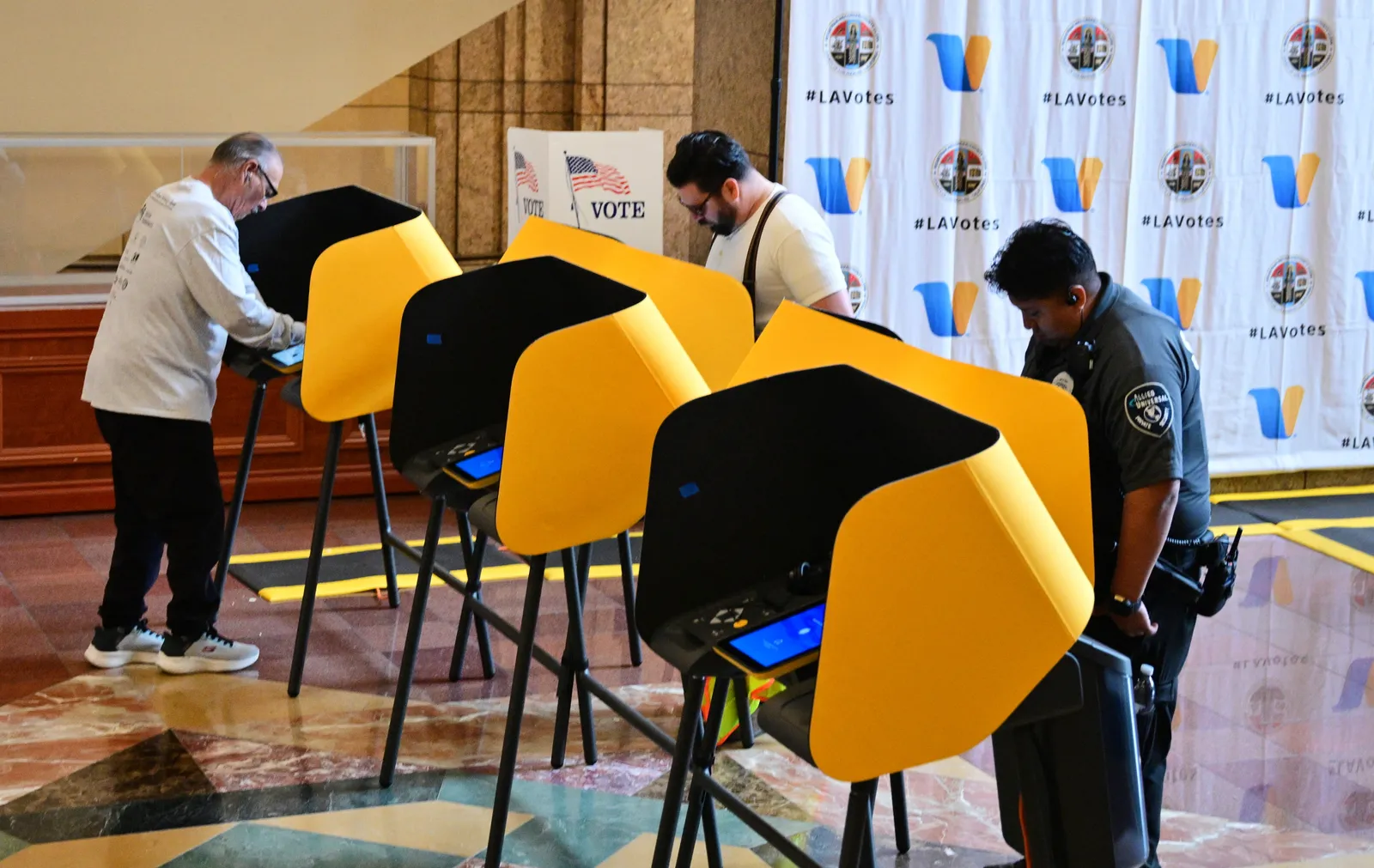
LA County: DOJ's 20,000 'noncitizen' voter list is 'unreliable,' includes U.S.-born
Preliminary review by Los Angeles County election officials finds errors in the federal list, raising the stakes for voter roll integrity ahead of November.

Trump's $1.5B Pentagon chip investment lands in North Carolina
A $1.5 billion defense infusion for North Carolina chipmaking signals a new era of Pentagon-backed reshoring - here's what it means for the industry.

Nigeria confirms first Ebola case in Abuja, a woman just off a Uganda flight
Health Minister Muhammad Ali Pate says the patient flew in from Uganda, putting Africa's latest outbreak on Nigeria's doorstep.