

Primark leans into a “supermarket tactic” as online price war squeezes store visits
Analysts point to ultra-cheap Chinese retailers and the cost of living crisis as the pressure behind Primark’s move.
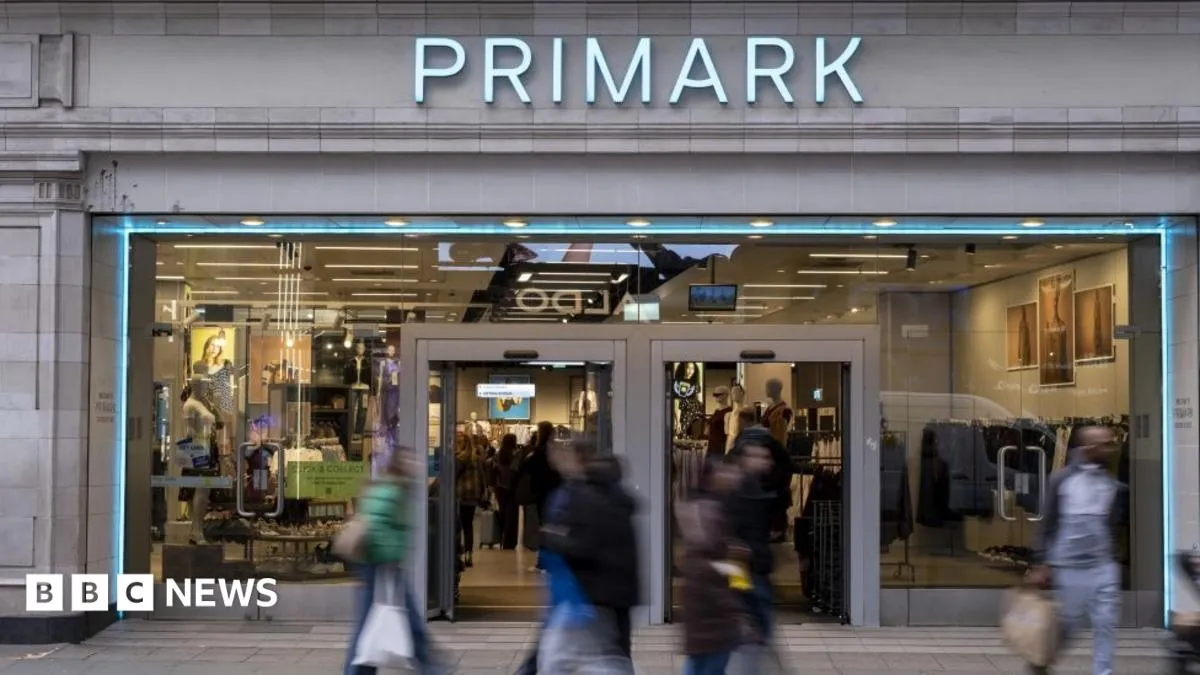
Primark is trying to keep customers shopping in-store with a new “supermarket tactic,” as online price competition intensifies. Analysts say the combined pull of ultra-cheap Chinese retailers and the cost of living crisis could be discouraging in-store visits.
Primark’s latest play is built for a world where shopping decisions happen under pressure, not just under preference. The headline development: Primark is rolling out a new “supermarket tactic” to woo customers, while analysts warn that an online price war and the cost of living crisis could be nudging some shoppers away from physical stores.
That matters because it is not just about whether Primark is “discounting.” It is about whether store traffic is becoming harder to win at all. When shoppers face stretched budgets, they tend to optimize for price, speed, and confidence. If the online channel is consistently cheaper, or perceived as cheaper, stores have to earn their keep with more than floor space and familiar brands. In this case, analysts explicitly flag two forces: ultra-cheap Chinese retailers and the cost of living crisis. Together, they create an environment where “I’ll just browse in store” becomes “I’ll buy online and move on.”
To understand why a supermarket-style tactic is getting attention, you have to look at how big-box retail and discount grocery trained shoppers to behave. In supermarkets, value is not an event, it is a system. Prices are structured to feel predictably low. Deals are regular enough that customers build them into their weekly routine. For clothing retailers, the challenge is that fast-fashion discounts were often treated like bursts, not a baseline.
Now imagine adding an online layer where bargain discovery is relentless. Ultra-cheap Chinese retailers can operate on a model that emphasizes scale, supply chain efficiency, and aggressive pricing. The BBC framing is straightforward: competition from “ultra-cheap Chinese retailers” is part of the reason analysts think some people could be putting off shopping at the store. That is a sharp reminder that offline retailers face a particular kind of pressure: the online offer does not just compete with your product, it competes with your rationale.
This is where “supermarket tactic” becomes more than a catchy phrase. It signals an attempt to make the store feel like an extension of the value mechanism people are already using online. If customers believe the internet will always beat the shop on price, then stores must shift the conversation. The point is not to copy grocery wholesale. The point is to apply the same logic: make value easy to see, make the “why go” calculation favorable, and reduce the friction between deciding and buying.
The cost of living crisis is the other half of the story, and it changes customer psychology. When budgets tighten, shoppers become more tactical. They may still buy quality, but they want stronger justification for each purchase. In-store shopping is discretionary, in the sense that it costs time. Online shopping can be done while doing something else. If shoppers start treating physical trips as “might not be worth it,” store visits can drop even if a retailer is offering deals.
Executives should also take note of the board and strategy implications. Pricing wars are rarely neat, and they often spill into merchandising choices, supply planning, and inventory risk. A retailer leaning into a value tactic may need to tighten the link between promotions and demand signals, so it does not end up with clearance stock that erodes margins later. Even when the tactical goal is “woo customers,” the operational goal is “protect the unit economics long enough to win share.” In an environment described as an online price war, that balance becomes harder.
There is also a regulatory background to keep in mind when ultra-low pricing dominates. Retail competition is global, and for UK and European markets the policy conversation around unfair competition, sourcing transparency, and consumer protection tends to surface when price gaps widen. While the BBC piece does not cite a specific regulator in the excerpt provided, the general point stands: when the competitive set includes actors that can price far below peers, governments and policymakers eventually pay attention to consumer impacts and market fairness. That can affect everything from labeling expectations to enforcement priorities. For boards, the takeaway is simple: a pricing strategy built to win today needs to be resilient to tomorrow’s compliance and reputational scrutiny.
The second-order stakes for other executives are obvious. If shoppers increasingly treat online as the default bargaining channel, then in-store differentiation becomes more difficult across the sector. The “supermarket tactic” language signals that Primark is not waiting for the crisis to ease. It is adjusting the store experience to fight for relevance. In a market where ultra-cheap online competition can reshape demand quickly, the executives who win will be the ones who treat store strategy as a revenue system, not a branding exercise.
This story's Key Insights and Take-aways are locked.
Create a free account to unlock Executive Actions for one credit.
Register to UnlockAlways free for Executives Club members. Join the Club
More in Business

Anthropic’s Levant Alpöge cracks the Jacobian conjecture after 87 years
A Harvard valedictorian used Claude to hit a 1939 breakthrough, but the missing “why” is the real problem.

Uber buys Delivery Hero for nearly $15B, vaulting to top food delivery outside China
The deal doubles Uber's dual-services footprint and pushes a ride-and-eats bundling play into 50 more markets.

Epic and Google drop settlement bid, forcing rival Android app stores by July 22
Google told the court it is ready to carry third-party app stores starting Wednesday, July 22.