
Prime Day knocks $300 off Pixel 10 Pro: 256GB hits $799
Amazon’s Prime Day deal drops Google’s Pixel 10 Pro 256GB to $799, $300 below its usual $1099.
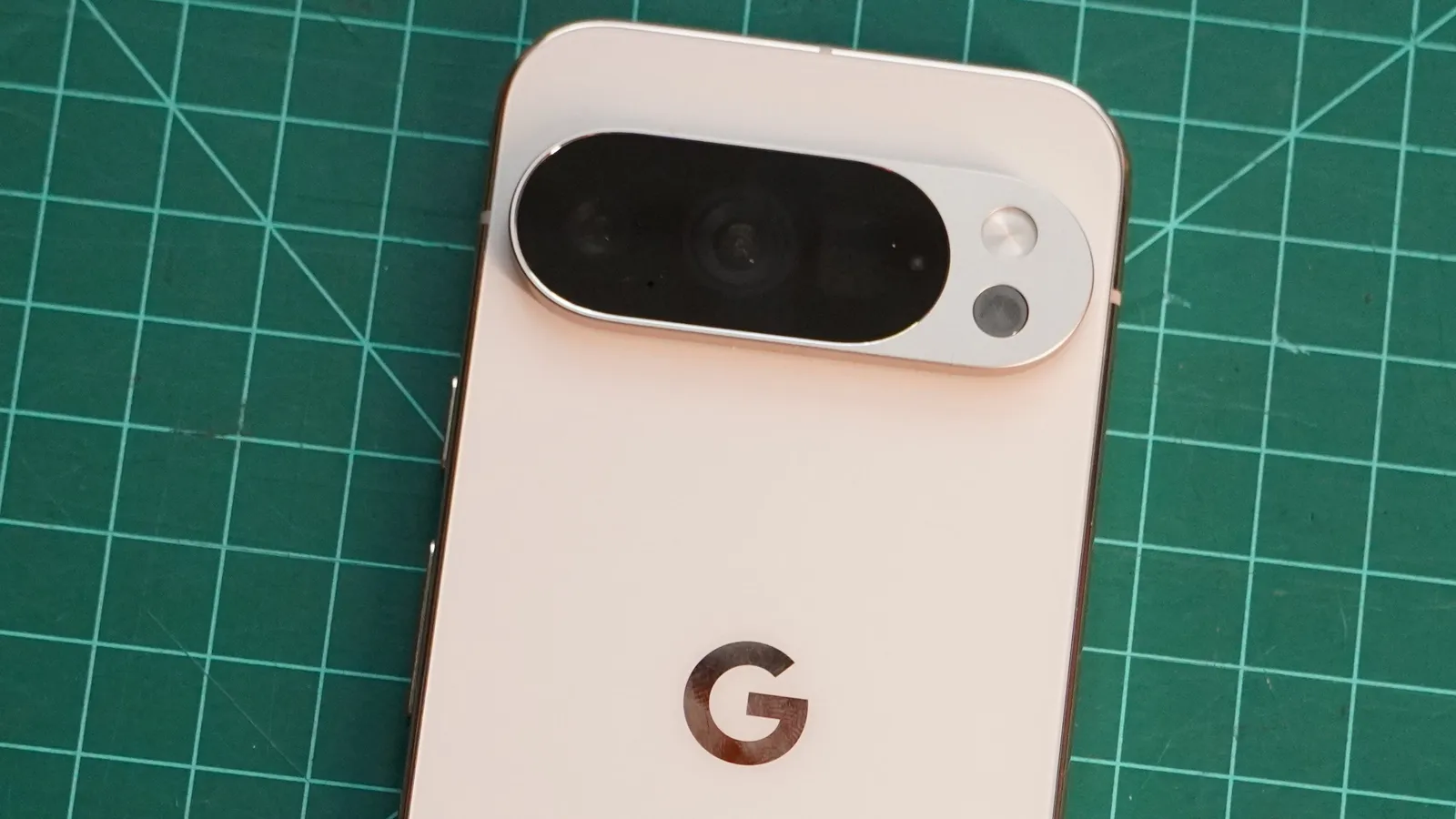
Amazon is running a Prime Day promotion that prices the Google Pixel 10 Pro (256GB) at $799. For decision-makers watching consumer tech demand, this is a reminder that handset pricing power still moves units fast.
During Amazon’s Prime Day sale, the Google Pixel 10 Pro (256GB) is available for $799. That is a $300 drop from its typically $1099 price, which makes the deal feel almost aggressively specific, not wishy-washy.
IGN also frames $799 as “among the best deals” it has seen yet for an unlocked version of this flagship Google phone. The core question for anyone deciding whether to buy now is simple: does this discount meaningfully change the upgrade calculus, or is it just another sale on a phone that barely moved from last year?
IGN’s review angle is telling. In its Pixel 10 Pro review, IGN said the phone hadn’t “substantially changed from last year’s model,” with “some very subtle tweaks and under-the-hood updates that almost don’t matter.” In other words, this is not a generational reinvention. It is a familiar flagship experience, and for buyers, the value proposition hinges on price. At $799, the bargain case gets a lot easier to defend, because the discount does not ask you to pay flagship money while the product stays in “incremental refinement” territory.
Still, “not substantially changed” does not mean “not interesting.” IGN points to the Pixel 10 Pro’s display and specs in a way that matters for day-to-day use: a 6.3-inch display with 1280 x 2856 resolution and a 1-120Hz refresh rate. That combination is the kind of detail that shows up in real usage, not just spec sheets. If you are the kind of buyer who notices smooth scrolling, responsive touch, or better motion clarity, you are not getting some bargain bin substitute. You are getting a modern flagship screen, just at a price that feels less like a bet.
The camera lineup is equally concrete. IGN lists Pixel 10 Pro cameras at a glance: a 50MP wide camera with a 1/1.3-inch sensor, f/1.68, Laser AF, OIS, and EIS; a 48MP ultrawide with a 1/2.55-inch sensor, f/1.7, and 123-degree field of view; a 48MP telephoto with a 1/2.55-inch sensor, f/2.8, 5x optical, Laser AF, OIS, and EIS; and a 42MP selfie camera with f/2.2 and 103-degree field of view. The deal becomes more than a “discount on a brand name,” because it is a specific bundle of imaging hardware that consumers actually evaluate when deciding whether the Pro tier earns its keep.
There is also a timing element. IGN notes that unless you are “adamant about holding off for the launch of the Pixel 11 Pro,” rumored to drop in August of this year, “this Prime Day deal is the best option for upgrading to a Pro device in Google’s lineup.” Translation for operators and product strategists: consumers face a classic trade-off between discounting an existing flagship and waiting for the next one. When a sale compresses the price gap, it can pull demand forward, even if the next-generation product is technically better.
For readers who wonder whether the upgrade is “worth it” compared to the non-Pro model, IGN includes a Pixel 10 vs. Pixel 10 Pro comparison summary. It mostly comes down to a slight screen upgrade and a better camera. The Pro is said to come with a 50MP wide Pro camera with up to 100x high-resolution zoom. By contrast, the standard Pixel 10 has a good camera but is “not as good,” and its screen is “a little less vibrant.” So this is not a vague “Pro is better” pitch. It is a focused explanation of the upgrade dimensions, which is exactly what a buyer needs when the purchase decision is budget constrained.
Zoom out one level and the strategic stakes start to look familiar across consumer electronics. Prime Day deals like this do not just reward end users. They test whether pricing pressure and promotional timing can stimulate upgrade cycles, especially for premium unlocked devices. When a flagship discount pulls a phone like the Pixel 10 Pro down to $799 from $1099, you can expect demand to react, because the phone is not being positioned as a mystery value. It is being positioned as a known product, with known strengths and known weaknesses, and with the price doing the heavy lifting.
For executives, founders, and investors watching the broader handset ecosystem, the takeaway is straightforward: even when product iteration is incremental, distribution windows plus aggressive discounting can meaningfully shift consumer behavior. If you run a consumer hardware business, sell subsidized devices, or support app ecosystems tied to device upgrades, Prime Day pricing is a live experiment in how quickly users respond when you change the total cost of ownership today, not “someday.”
This story's Key Insights and Take-aways are locked.
Create a free account to unlock Executive Actions for one credit.
Register to UnlockAlways free for Executives Club members. Join the Club
More in Entertainment

Russell Brand's accuser 'bewildered and confused' as he denies 7 sex charges
The criminal case against the comedian is a live test of how media companies manage talent risk when serious allegations go public.

'It's a Magic Trick': Ballet Experts Say Rosalía's SNL Pose Is Impossible
Three ballet experts tell Rolling Stone Rosalía's gravity-defying SNL stillness shouldn't be possible - and why the debate is now part of the show.

Activision CMO: GTA 6 Will Boost Call of Duty, Not Bury It
Activision's top marketer says Rockstar's blockbuster will drive players back to consoles and into Modern Warfare 4, even as the company admits its recent strategy failed.