
Prime Day sales rose 9.3% as AI traffic boosted conversion by 40%
For e-commerce operators and investors, the big signal is not just growth, it's how AI changed traffic-to-buy performance.
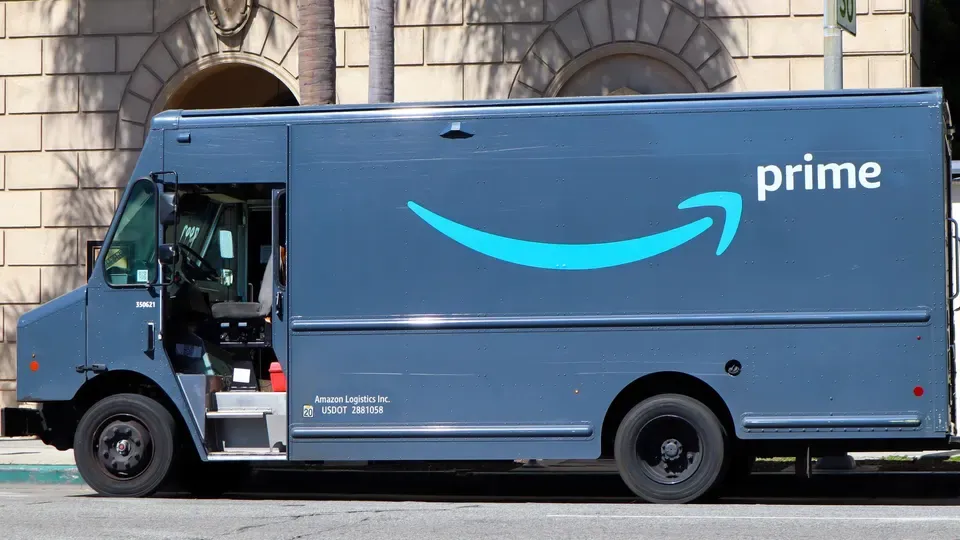
Online sales during Prime Day rose 9.3% over last year, and AI-generated traffic drove significant gains. The implication for decision-makers is clear: AI is starting to move the unit economics, not merely the marketing top-of-funnel.
Prime Day didn’t just generate more revenue this year. Online sales during the event were up 9.3% over last year, and AI-generated traffic played a measurable role, with conversion improving by 40%.
That 40% better conversion is the part that matters for anyone who has ever stared at a performance marketing report and wondered why spend keeps rising. Conversion is where traffic turns into purchases, and AI-generated traffic made that step more efficient. In plain English, the event did not only pull in more clicks. It helped those clicks turn into orders at a faster rate.
To understand why this matters, zoom out to how Prime Day typically functions as a live stress test for e-commerce systems. It concentrates demand into a short window, which means every retailer and brand has to coordinate inventory, pricing, logistics capacity, site performance, and marketing operations at once. When a day like that shows sustained improvement, it suggests something beyond a temporary spike. It suggests improvements in the machinery that finds customers, persuades them, and captures their intent.
AI enters the picture because modern e-commerce acquisition is increasingly algorithmic. AI can help shape where traffic comes from and who it reaches by optimizing targeting, routing, and content presentation. That is the marketing version of matchmaking: rather than treating all visitors the same, the system tries to improve the odds that a given person will actually buy. A 40% improvement in conversion implies the system is not just generating more traffic. It is generating better traffic.
Now, consider the incentives involved. If conversion improves, teams can often defend budgets with better justification. Higher conversion can reduce the effective cost per acquisition, since you need fewer “attempts” to land the same number of purchases. That is a real lever for CFOs and CMOs because it changes the relationship between ad spend and revenue. It also changes internal debates. When a marketer can point to evidence that AI-driven traffic is performing, the boardroom conversation tends to shift from “Can we afford this?” to “How fast can we scale this without hurting other parts of the funnel?”
There is also a governance angle that executives can’t ignore. AI-driven customer targeting sits in a regulatory environment where privacy expectations are rising and scrutiny is increasing. Even when the immediate story is performance, the longer term reality is that AI use in digital marketing depends on compliant data handling and transparent policy. A Prime Day lift like this becomes a proof point that leadership will want to operationalize, which means policy, auditability, and controls become more important, not less.
The second-order implication is that Prime Day becomes more than an event. It becomes a benchmark. If AI-generated traffic can improve conversion by 40% during a high-pressure period, it sets expectations for what “good” looks like. That could intensify competition among retailers, marketplaces, and brands that rely on performance marketing. When one participant demonstrates better conversion, peers are pressured to replicate the approach or risk falling behind on efficiency.
For decision-makers running e-commerce platforms, the strategic stakes are straightforward. A 9.3% sales lift over last year shows demand is there, but the AI conversion result shows the growth engine is becoming smarter. If you are allocating budget, staffing growth teams, or prioritizing technology roadmaps, the headline message is that AI is influencing not only reach, but also revenue conversion. And in a world where every increment in efficiency compounds across campaigns, seasons, and product cycles, that is the kind of edge that can reshape financial results over time.
The message for executives is to treat this as an operating signal, not just a marketing anecdote. Prime Day is a concentrated test, and this test indicated that AI-generated traffic delivered a meaningful conversion improvement. If your organization is measuring performance solely by traffic volume, you may be missing the most important metric: how effectively your audience turns into purchases.
This story's Key Insights and Take-aways are locked.
Create a free account to unlock Executive Actions for one credit.
Register to UnlockAlways free for Executives Club members. Join the Club
More in Business

Bungie cuts most Destiny 2 staff as Sony says Marathon still matters
Herman Hulst confirms layoffs affecting most Destiny and some Marathon teams after Bungie admits Destiny fell short.

SK Hynix jumps 11% after seeking up to $29.4B in Nasdaq listing
The chip giant filed for a Nasdaq listing plan that could raise $29.4 billion, instantly reshaping investor expectations.

Micron revenue hits nearly $42B as AI memory lifts gross margins above 81%
Fiscal Q3 results crush estimates, prove AI memory is rewriting Micron's margins, and change the momentum math for the whole chip stack.