
Prime Day spend hits $26.4B, beating Adobe’s estimate by $0.1B
Adobe says US online spending rose 9.3% from last year, while buy-now-pay-later held at 6.6% of orders.
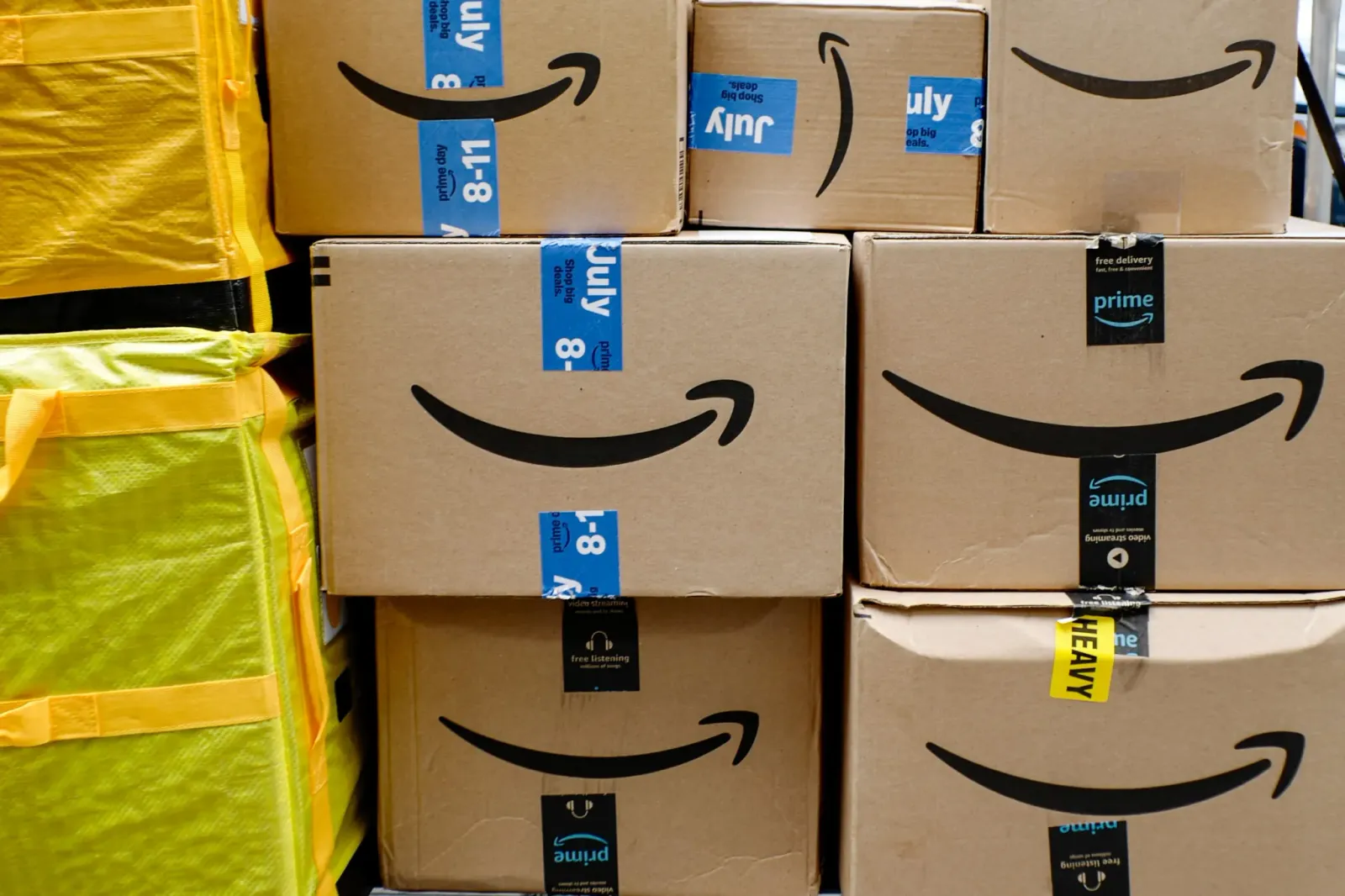
Adobe reports US online spending during Amazon’s Prime Day sale reached $26.4 billion, narrowly surpassing Adobe’s earlier estimate of $26.3 billion. For decision-makers, the data points to a consumer that is still buying, but not wildly: spending is up, yet category discounting and household spend show caution.
Amazon Prime Day ended Friday as a four-day sprint of promotions, and Adobe’s post-event measurement gives the clearest scoreboard yet: total US online spending across all retailers hit $26.4 billion during Amazon.com Inc.’s annual Prime Day sale. That number matters because it didn’t just beat last year, it also beat Adobe’s own earlier estimate of $26.3 billion, narrowly. In other words, the impulse buying was real, and the “how big was it actually?” question has an answer.
Adobe also reports that total spending for the period was up 9.3% from last year’s Prime Day sale held in July. Adobe tracks visits to retail websites, turning traffic and buying signals into an estimate for how much shoppers spent across the US during the promotion window. So while Amazon does not release specific spending metrics regarding Prime Day, Adobe is essentially filling the gap with a modeled view of retail online commerce during the event.
To understand why this is more than trivia for e-commerce people, look at the competitive shape of Prime Day. This year, Walmart Inc. and Target Corp. hosted overlapping promotions, meaning shoppers were not locked into one retailer’s ecosystem. Prime Day therefore tests not just Amazon’s ability to drive demand, but the broader pull of large-scale discounting across the category. When an external measurement still lands at $26.4 billion, it suggests the event’s gravitational force is strong enough to lift total spending across retailers, even with competitors in the same time zone.
The discounts themselves follow a familiar pattern. Adobe says discounts across retailers were similar to those offered last year, with the steepest discounting in electronics and apparel, where both averaged about 24%, according to Adobe. That matters for executives because it hints at where retailers are choosing to lean into price cuts. High-value categories like electronics and apparel can absorb discounting without training the entire market to expect constant fire sales on everything. But it also flags margin risk, since deeper discounts in major categories can compress profitability if conversion does not keep pace.
Another signal worth watching is how shoppers are paying. Adobe says shoppers continued to use “buy now, pay later” credit features, which represented 6.6% of all orders during Prime Day, according to Adobe. That share is not presented as wildly high or low in the reporting, but it still provides a useful read on consumer strain and willingness to finance purchases. If “buy now, pay later” rises, it can indicate demand supported by credit; if it falls, it can suggest shoppers are paying with cash or simply not stretching as much. The 6.6% figure gives boards and finance teams a concrete input when they think about checkout mix, risk exposure, and promotional effectiveness.
Competitor monitoring also confirms that the story is not purely “more spending equals healthier consumers.” Consumer research firm Numerator said the average household spent a total of $143 on Amazon during the four days as of 4 p.m. Friday in New York, down 8.3% from last year’s event. Numerator’s view is based on spending from more than 59,000 households. This creates an important nuance: total online spending across retailers rose 9.3%, but the average household’s spend on Amazon specifically was down 8.3% as measured at that snapshot time. For operators, that split suggests either broader shopping beyond Amazon, different household purchase patterns, or timing effects around the four-day window.
Then there’s the discount depth perspective. Global marketing firm PMG said discounts on Amazon were shallower this year compared with last year’s sale. PMG’s comment aligns with Adobe’s note that discounts were similar across retailers, with steepest areas still in electronics and apparel at about 24% average. The strategic takeaway is that Prime Day may be operating with less aggressive markdowns than last year on Amazon itself, while still delivering enough demand to lift total spending. That is a delicate balance for anyone running retail media, merchandising, or finance: hold back on price cuts too much and conversion can soften; go too hard and margins can get crushed.
Amazon, for its part, does not release the spending metrics, but it did issue a statement Saturday saying it was “pleased with the positive customer response.” Earlier this week, Amazon also said external data sources regarding Prime Day are “often inaccurate.” Put those two facts together and you get the board-level tension companies deal with after these events. External measurement firms like Adobe, Numerator, and PMG provide numbers that can be compared across retailers and against prior years. Amazon’s skepticism is essentially a reminder that measurement methodology matters. Yet here, Adobe’s estimate game still ended with $26.4 billion beating its own $26.3 billion figure, which gives more confidence to decision-makers who use these external signals to pressure-test internal assumptions.
For executives across retail and adjacent platforms, this Prime Day read is a performance test wrapped in consumer behavior. Spending is up 9.3% year over year, buy now, pay later accounts for 6.6% of orders, and the discount map still concentrates in electronics and apparel at roughly 24% averages. But household spend on Amazon is down 8.3% in Numerator’s snapshot, and Amazon is actively contesting how outsiders measure the event. The question for the next quarterly planning meeting is simple: is the category demand strengthening enough to justify promo intensity, or are retailers leaning on price and financing mechanisms to coax purchases that would otherwise be delayed or redistributed across competitors?
This story's Key Insights and Take-aways are locked.
Create a free account to unlock Executive Actions for one credit.
Register to UnlockAlways free for Executives Club members. Join the Club
More in Business

Bungie cuts most Destiny 2 staff as Sony says Marathon still matters
Herman Hulst confirms layoffs affecting most Destiny and some Marathon teams after Bungie admits Destiny fell short.

SK Hynix jumps 11% after seeking up to $29.4B in Nasdaq listing
The chip giant filed for a Nasdaq listing plan that could raise $29.4 billion, instantly reshaping investor expectations.

Micron revenue hits nearly $42B as AI memory lifts gross margins above 81%
Fiscal Q3 results crush estimates, prove AI memory is rewriting Micron's margins, and change the momentum math for the whole chip stack.