

Prosecutor's first words to jury: Russell Brand was a 'ruthless' predator
The 51-year-old comedian denies seven charges, but the prosecution's opening statement paints a decade of alleged assault across six women.
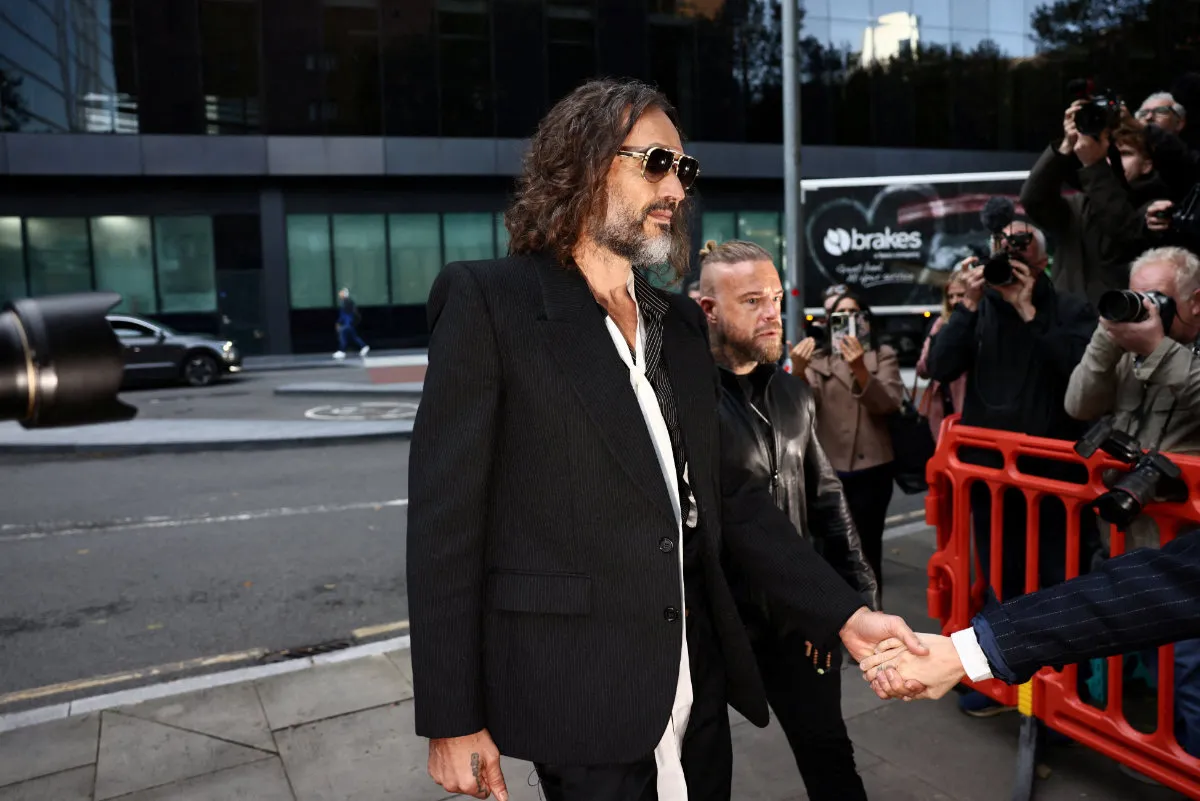
Prosecutor Riel Karmy-Jones opened Russell Brand's trial on Wednesday by calling him a 'ruthless' sexual predator, with charges involving six women and offenses alleged to span 1999 to 2009. Brand, 51, has pleaded not guilty, and the case now hinges on a jury's verdict at Southwark Crown Court.
On Wednesday, prosecutor Riel Karmy-Jones opened Russell Brand's trial at Southwark Crown Court by telling jurors the 51-year-old actor-comedian behaved as a "ruthless" sexual predator when he assaulted six women over a decade. Brand has pleaded not guilty to three counts of rape, three counts of sexual assault and one count of indecent assault, with the alleged offenses occurring between 1999 and 2009. The courtroom moment was the first public test of a case that has been building for years, and the prosecution's language left little room for ambiguity about the tone of the trial to come.
The charges involve six women, and the alleged conduct spans a decade that includes some of Brand's most prominent years in British media. From 1999 to 2009, Brand built a career as a stand-up comic, radio host, and television presenter, eventually crossing into Hollywood films. The trial now places that era under a legal microscope, with a jury tasked to weigh testimony against a former celebrity whose public persona was built on irreverence and charm. The prosecutor's opening statement is the first of many pieces of evidence the jury will hear, and it framed the allegations as a pattern rather than isolated incidents.
Brand, who has denied all charges, did not dispute the structure of the case as laid out by the Crown. The seven counts against him are split across six complainants, with three counts of rape, three counts of sexual assault, and one count of indecent assault. The alleged timeline, 1999 to 2009, places the incidents across different stages of his career, which may matter to the jury as they consider whether the prosecution can establish a consistent course of behavior. In English criminal law, a defendant is presumed innocent until proven guilty, and the burden rests on the prosecution to prove each element beyond a reasonable doubt.
The trial is being heard at Southwark Crown Court, a central London court that handles serious criminal cases. The proceedings are expected to run for several weeks, and the jury will hear detailed testimony from each of the six women involved. The case is being closely watched not only in the UK but internationally, given Brand's global profile and the broader cultural reckoning around sexual misconduct that has reshaped how such allegations are treated in the media and the entertainment industry.
For executives who work with talent, celebrities, and public figures, the trial is a reminder of the reputational and legal risks embedded in personality-driven businesses. The allegations against Brand were first aired publicly in 2023, and the subsequent investigation and charges have already taken a toll on his career. Streaming platforms paused projects, publishers distanced themselves, and Brand's public appearances were largely halted. The trial now represents the final stage of that unraveling, and the outcome will determine not only Brand's freedom but also the durability of the business model that once surrounded him.
The case also underscores the importance of contractual protections in talent agreements. Many media companies and brands now include morality clauses that allow them to sever ties if a public figure faces credible allegations or criminal charges. Those clauses have become standard in an era when a single headline can erase years of brand equity. For boards and CEOs, the lesson is straightforward: reputation is an asset that must be managed with the same rigor as capital, and due diligence on talent should extend beyond professional track records to personal conduct, especially when allegations are serious enough to reach a criminal court.
The trial's outcome will carry weight beyond the courtroom. A conviction would reinforce the trend toward accountability and likely accelerate the industry's shift toward stricter vetting and more cautious partnerships with high-profile personalities. An acquittal, by contrast, could lead to legal and financial battles over reputational damage and lost earnings. Either way, the case has already changed how the entertainment industry assesses the risk of working with charismatic but controversial figures.
For now, the jury will hear the evidence, and the prosecution will have to prove its case. But the opening statement has set a stark tone: Brand is no longer just a comedian facing accusations; he is, in the prosecution's words, a "ruthless" predator. The trial is not just about one man. It is a test of how institutions, from media companies to corporate boards, navigate the intersection of fame, power, and accountability.
This story's Key Insights and Take-aways are locked.
Create a free account to unlock Executive Actions for one credit.
Register to UnlockAlways free for Executives Club members. Join the Club
More in Business

Elon Musk unveils a flying car, and SpaceX helped build it
The Tesla CEO's showcase at a SpaceX facility signals a future where road and rocket engineering converge.

Apple's $2,000 iPhone Duo opens preorders, taking on Samsung and Google
Apple's first foldable hits the market at a premium price, reshaping a category Samsung and Google have led.

Pope Leo XIV, first American pope, diagnosed with lung cancer
The 71-year-old Chicago-born pontiff underwent successful surgery on his right lung, and his diagnosis raises new questions about his AI-focused papacy and the Vatican's future.