
Raspberry Pi lifts first-half profit forecast to $38m as AI demand ramps
What the $38m adjusted earnings guidance signals for device makers betting on AI workloads, pricing power, and supply.
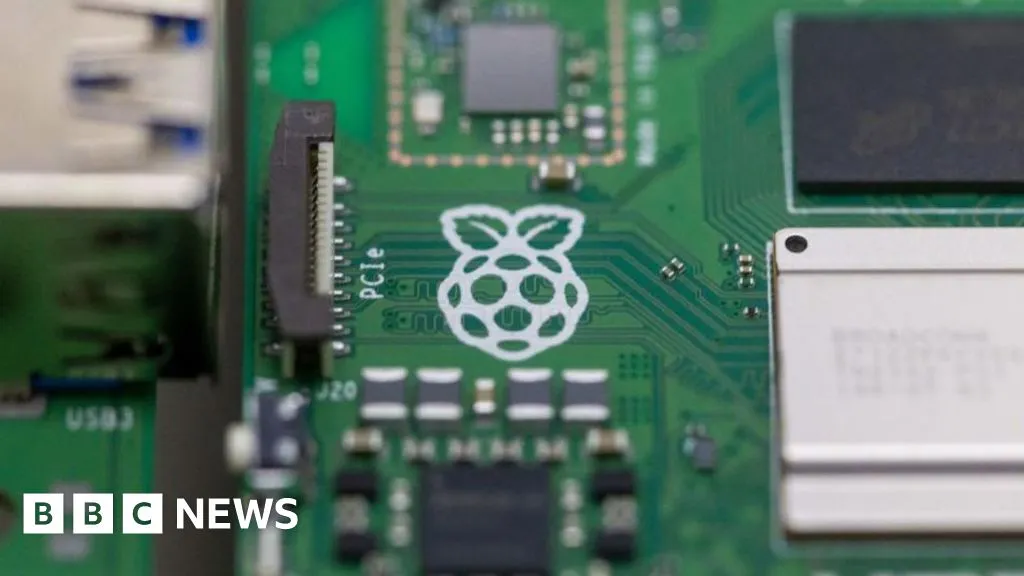
Raspberry Pi raised its profit forecast, expecting at least $38m (£28.2m) in adjusted earnings for the first half of 2026. For decision-makers, it is a clear read-through that AI-driven demand for computing hardware is starting to flow into near-term results.
Raspberry Pi says it expects to deliver adjusted earnings of at least $38m (£28.2m) for the first half of 2026. That is the headline number to watch, and it matters because it is a forward-looking profit signal, not a sales celebration.
The company’s guidance is explicitly tied to growing AI demand. In other words, this is not just “more interest in tech.” It is demand that the business believes will convert into earnings within a specific window, the first half of 2026. For an industry that often runs on long supply chains and slow revenue-to-profit conversion, a forecast lift with a defined earnings floor is a real data point.
To understand why this is such a big deal for executives, it helps to zoom out on what Raspberry Pi actually sells into. Raspberry Pi’s computing products are frequently used as low-cost, flexible building blocks by engineers and developers, and increasingly by teams that need small, efficient hardware at the edge. “AI demand” in practice can mean everything from deploying models closer to where data is generated, to using AI-enabled workloads in education, robotics, and prototyping. When that demand rises, hardware makers and platform providers often see a lag between interest and results. Guidance like “at least $38m” for a defined half of a future year is a way of telling the market that the lag is shrinking.
There is also a capital-allocation angle. Profit forecasts influence how boards think about reinvestment and risk. When a company raises expectations, it can justify actions that require time and money, such as scaling components, improving logistics, or expanding parts of the product stack that are essential for AI-adjacent use cases. Even when revenue is growing, boards are trained to worry about whether margins will hold and whether costs will spike as demand accelerates. Adjusted earnings floors like this help address one of those board-level questions: whether the earnings model can absorb growth without turning it into a cost trap.
At the same time, executives should treat this as a competitive signal. AI demand is broad, but hardware supply is not infinite. If Raspberry Pi is seeing enough traction to raise its profit outlook, that can pressure peers in two ways. First, it may increase competition for the same categories of customers, particularly developers and operators who want efficient compute per dollar. Second, it can sharpen negotiations around components and manufacturing capacity. Even if the source does not break out margins or volume drivers, the market usually reads forecast lifts as a combination of demand strength and operational execution.
Then there is the regulatory and governance backdrop, which tends to hover over AI at every stage, even when the company is not a model provider. In many jurisdictions, regulators are increasingly focused on transparency, security, and responsible deployment when AI systems touch real-world decisions. For hardware suppliers and platform companies, that can show up indirectly, through customer requirements, procurement checklists, and compliance expectations. A forecast that points to near-term earnings from AI demand suggests customers are not waiting indefinitely for policy clarity. They are shipping AI-enabled projects now, which can pull forward purchasing of compute hardware.
What should leaders do with this information? The most practical takeaway is not to chase the number for the sake of it. The more useful question is whether your own company’s AI plans have a similar conversion path from demand to earnings within a reasonable timeframe. Raspberry Pi is telling the market it expects adjusted earnings of at least $38m (£28.2m) in the first half of 2026, and that expectation is anchored to AI demand. If you are a board member, CFO, or operator making budgeting decisions today, you should consider how quickly AI-related purchasing can reach your P&L, and how much operational slack you need to prevent demand from turning into delivery bottlenecks.
Finally, this is also a reminder of how quickly narratives can become financials. For years, “AI demand” was a phrase that floated above operating statements. Now, at least in Raspberry Pi’s case, it is attached to a concrete earnings expectation tied to a specific half of a future year. If you operate in the compute ecosystem, that means the playbook is shifting from long-term hype to execution that shows up in forecasts. The companies that build that bridge early tend to earn the right to reinvest. The ones that cannot convert demand into earnings tend to get forced into hard tradeoffs later.
This story's Key Insights and Take-aways are locked.
Create a free account to unlock Executive Actions for one credit.
Register to UnlockAlways free for Executives Club members. Join the Club
More in Business

Greece eyes 15% crypto capital gains tax, forcing investors to reprice after tax
Greek legislators are preparing a 15% capital gains tax on cryptocurrencies, and markets will adjust to the after-tax reality.

SpaceX’s IPO is poised to land in index funds, changing 401(k) exposure fast
Nasdaq and other index providers are updating rules, and that likely means many investors will own SpaceX through broad funds.

Audi unveils Nuvolari plug-in hybrid V8 concept, using Lamborghini mid-engine DNA
The company hints at an R8 successor as a Temerario-based future swings from V10 roar to 987 hp electricity-assisted muscle.