
Realta Fusion says it generates electricity from fusion plasma, a potential first
Realta Fusion’s CEO claims a fusion plasma milestone turns “what’s possible” into something measurable for investors and regulators.
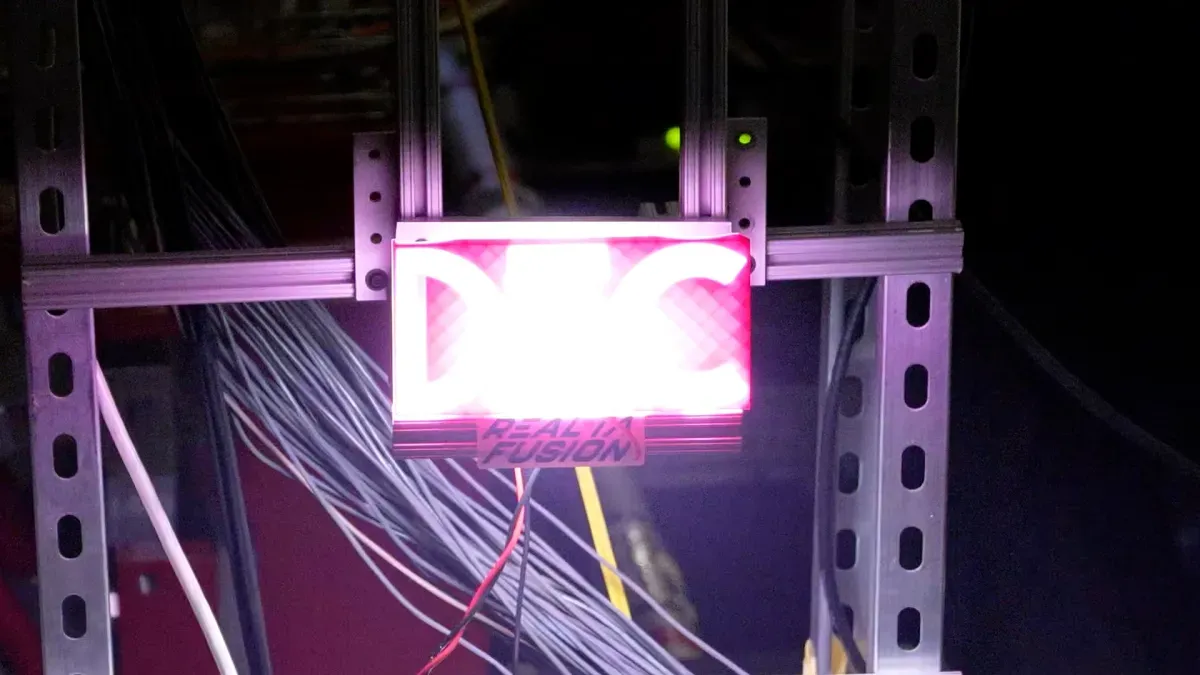
Kieran Furlong, co-founder and CEO of Realta Fusion, told TechCrunch the company can take power from a plasma. If that claim holds up, it reframes how fusion teams and funders think about near-term electricity delivery.
Kieran Furlong, co-founder and CEO of Realta Fusion, told TechCrunch, “We can take power from a plasma.” He called the milestone evidence of “what’s possible,” and the implication matters: the company is describing a direct path from a fusion reaction environment to usable electrical power, not just experimental physics.
In plain English, this is the difference between “we heated something extreme” and “we extracted power from it.” Fusion has a well-known credibility problem with non-scientists and decision-makers: many demonstrations live inside the lab’s instrumentation bubble. Realta Fusion’s statement is aiming to break that bubble by asserting a practical electricity-adjacent output, starting from a plasma.
Why executives should care is not because they suddenly need to start underwriting grid-scale fusion today. It is because claims like this change the investment math and the regulatory conversation even before a full commercial system exists. When a fusion company can plausibly argue power extraction from plasma, it can move the narrative from theoretical scaling to engineering throughput: efficiency, reliability, heat management, and the hardest systems integrations. Those are exactly the categories boards and investment committees translate into risk, milestones, and timelines.
There is also a signaling effect inside the fusion ecosystem. A “first” or “apparent first” matters because it forces everyone else to answer the same question: what counts as evidence, and what does it look like to prove it in a way that survives scrutiny? That scrutiny is not just technical. It is procurement-related and policy-related. Even in early stages, governments and regulators tend to react to demonstrable progress, especially when it touches public safety, energy infrastructure, and environmental standards. A power extraction story naturally draws attention to how a system interfaces with other hardware and how operators would validate performance.
Realta Fusion’s positioning, as presented in the TechCrunch coverage, is centered on power from plasma. That focus is strategically tidy. Fusion is a long game, but electricity is the language of markets. Electricity is measurable and comparable across technologies. It is a forcing function: if you can make power, you can talk to the same spreadsheets that fund other generation sources, even if your near-term product is still a prototype.
For decision-makers, the second-order implication is governance and milestone discipline. When a company claims it can take power from a plasma, the next board-level questions become more concrete. What exactly was measured, under what operating conditions, and what would constitute repeatability? How does the system respond to changes in plasma behavior? What are the engineering chokepoints between “power extraction” and “power delivered consistently”? Those are the questions that determine whether a milestone is a one-time experiment or a platform capability.
There is also a capital markets angle. Investors who fund fusion are typically balancing high technical uncertainty against long-dated potential upside. A credible shift toward electricity extraction can help a company attract attention from investors who prefer nearer-to-application metrics, and it can strengthen fundraising narratives. But it can also raise expectations. Once a company signals that it can extract power from plasma, it invites faster and more detailed due diligence, because stakeholders will expect independent validation and transparent milestone reporting.
For peers in the fusion space, the strategic stake is straightforward: execution credibility. The industry has many smart teams and many compelling theoretical paths. What tends to separate winners is the ability to demonstrate stepwise progress that decision-makers can underwrite. Realta Fusion, via Kieran Furlong’s statement to TechCrunch, is staking a claim that the plasma-to-power step is not only possible, but now demonstrated. Whether that claim withstands technical scrutiny will shape how boards evaluate similar milestones next, and how quickly the conversation shifts from physics-only excitement to power engineering realism.
This story's Key Insights and Take-aways are locked.
Create a free account to unlock Executive Actions for one credit.
Register to UnlockAlways free for Executives Club members. Join the Club
More in Technology

Nvidia's $89B data center quarter: the 9 companies cashing in
The AI buildout is minting fortunes beyond GPUs, and memory, cloud, and cooling suppliers are riding the same wave.

Google quietly links your phone number to every Android account on your SIM
Adding a SIM now ties your phone number to all Google accounts - and future accounts inherit it. Here's the security and privacy stakes.

Hijacker AI 'Skynet mode' runs 100,000 attack steps against exposed models
Symantec caught a criminal AI agent that borrows other models, steals data, and mines crypto; the only relief is no confirmed victims yet.