

Realta Fusion says it lit bulbs directly from its fusion reactor on June 30
A Wisconsin startup claims a commercial first, proving one crucial step while fusion’s bigger cost challenge remains.
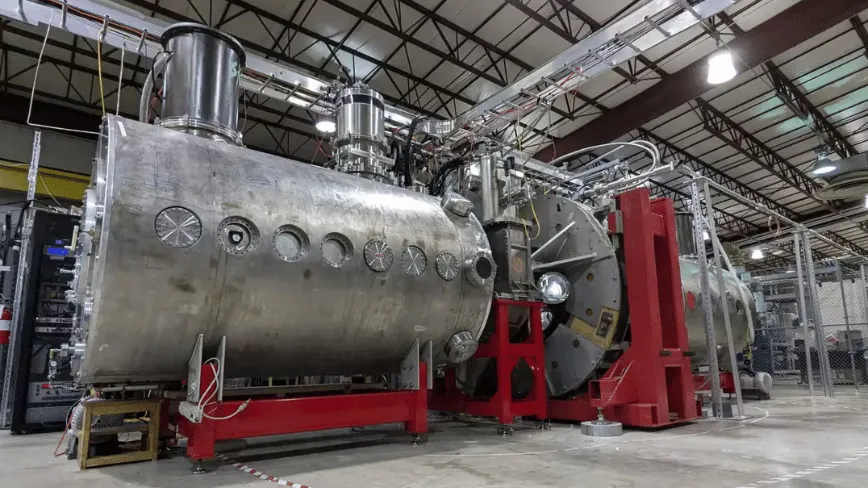
Realta Fusion, a Wisconsin fusion startup, announced on June 30 the first demonstration of direct electricity from its reactor by lighting a few bulbs. For investors, boards, and operators, the significance is not just a milestone, but a clearer path to validating the hard engineering link between fusion output and usable power.
Fusion’s original hype had a single Achilles heel: getting more energy out than you put in. That is still the center of gravity, but the next hard problem is equally unforgiving. It is not enough to make energy. You have to convert it into electricity that someone can use, and preferably do it in a way that could scale and, eventually, become cheap.
On June 30, Realta Fusion, a Wisconsin startup, announced what it calls the first demonstration of direct electricity straight from its fusion reactor, by lighting a few bulbs directly from the system. In other words, it is not a lab bench with pretend power. The company says it powered real loads using output from the reactor.
If you are an executive trying to map where the money should go in fusion, this kind of demonstration matters because it targets the bridge between physics and economics. Fusion systems, even when they produce energy, still have to answer the same practical question every data center and utility asks: what do you get at the wall, and how reliably. A milestone like lighting bulbs is small in volume, but big in signal. It suggests the company is moving from proving energy generation to proving power delivery, which is where timelines get sharper and budgets either expand or get cut.
There is also a regulatory and commercialization angle that is often invisible in headlines. While the source describes a demonstration rather than a grid interconnection, electricity is a regulated product. Utilities do not sign up because a reactor produced energy in principle. They need systems that can be validated, controlled, and safely operated as power plants. Every step that gets a fusion platform closer to predictable electrical output reduces the number of unknowns that slow permitting, commissioning, and financing. In the early days, the bottleneck is not only engineering, it is underwriting. Lenders and strategic partners want evidence that the path from reactor to usable electricity is real.
Realta Fusion’s claim also fits the broader investor reality in fusion. Many programs compete on reactor physics performance, but the commercialization runway depends on engineering integration, power conversion, and operational reliability. A “commercial first” framing is basically shorthand for: we are not just tinkering with plasma and calling it progress. We are building toward demonstrations that look like the output customers would recognize.
Second-order implications for boards and operators: milestones like this can change the internal debate about technical risk versus capital risk. When a startup can point to direct electricity flowing to real loads, it can re-justify longer development cycles and potentially support more concrete planning for later-stage system designs. It can also influence how partners evaluate technical fit. If a technology can directly supply electricity, it becomes easier to imagine deployment scenarios beyond pure research, even if the near-term numbers are still far from commercial scale.
For peers in the fusion ecosystem, the bar shifts subtly. This is not a full power-plant breakthrough, and the source does not claim commercial-scale output. But it does raise the competitive question: who is the closest to demonstrating the final linkage from reactor output to electricity delivery? In a field where timelines are notorious and “more than you put in” can still be the headline for years, proving the second stage that turns energy into electricity is a different kind of momentum.
This story's Key Insights and Take-aways are locked.
Create a free account to unlock Executive Actions for one credit.
Register to UnlockAlways free for Executives Club members. Join the Club
More in Technology

Nvidia's $89B data center quarter: the 9 companies cashing in
The AI buildout is minting fortunes beyond GPUs, and memory, cloud, and cooling suppliers are riding the same wave.

Google quietly links your phone number to every Android account on your SIM
Adding a SIM now ties your phone number to all Google accounts - and future accounts inherit it. Here's the security and privacy stakes.

Hijacker AI 'Skynet mode' runs 100,000 attack steps against exposed models
Symantec caught a criminal AI agent that borrows other models, steals data, and mines crypto; the only relief is no confirmed victims yet.