
REGA launches Saudi Properties portal for foreign buyers starting January 2026
The application process moves online, but Makkah and Madinah stay tightly regulated.
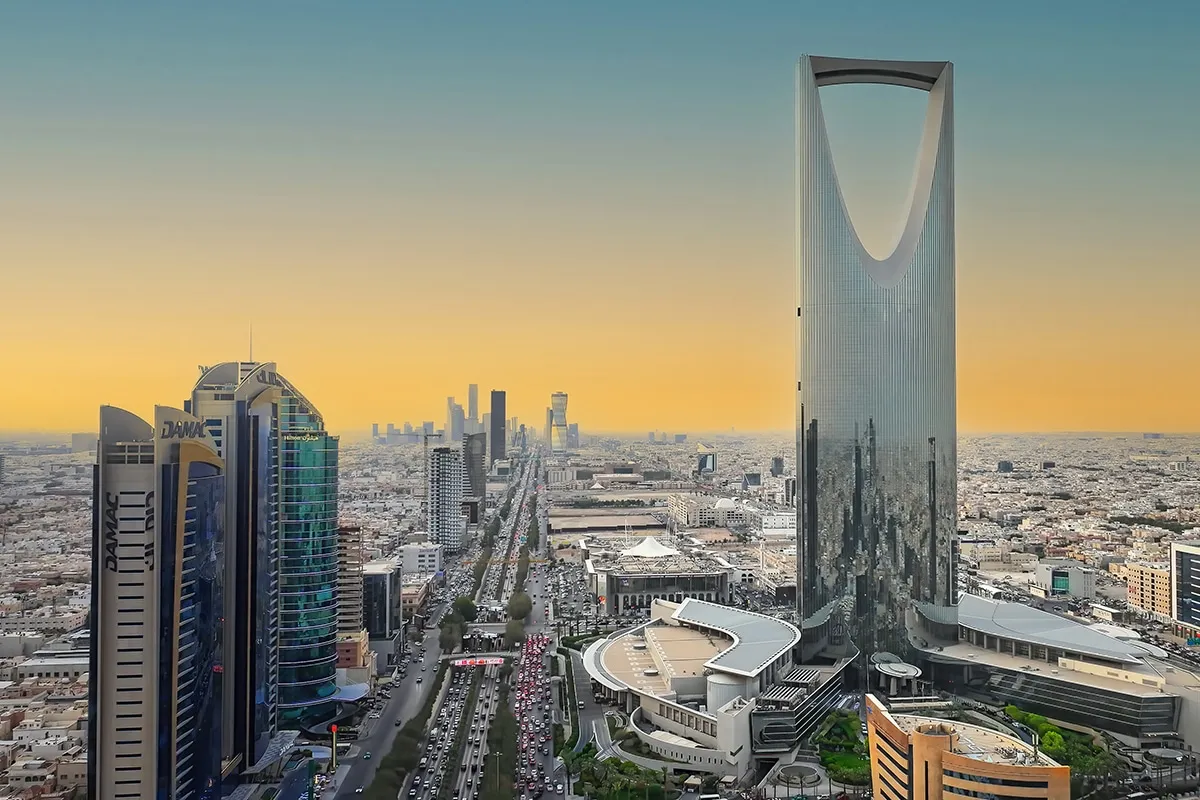
Saudi Arabia’s Real Estate General Authority (REGA) opened applications for foreign real estate ownership through the official Saudi Properties portal. For decision-makers, this creates a single digital route to eligibility checks, submissions, and tracking, with special rules for the Holy Cities.
Saudi Arabia’s Real Estate General Authority (REGA) just opened applications for foreign real estate ownership through the official Saudi Properties portal, following the new Foreign Real Estate Ownership Law taking effect in January 2026. In plain terms: eligible foreign individuals, companies, and investors can now apply online for property ownership across the Kingdom, and they can track the process digitally from start to finish.
REGA says the portal is the official gateway for foreign real estate ownership applications in Saudi Arabia, and it is designed to create a streamlined “single official channel” for the process. The digitization matters because the Foreign Real Estate Ownership Law is not just a marketing change. It is a regulatory shift that turns eligibility, application, and monitoring into a structured workflow governed by REGA’s framework.
Here is the core of what Saudi Properties does. The platform lets prospective buyers complete the property ownership process electronically, from verifying eligibility to submitting and tracking applications. REGA also points to a geographic scope and regulatory framework that were approved alongside the law’s entry into force in January 2026, and the portal is how the authority operationalizes those rules.
The application process, however, is not one-size-fits-all. REGA notes that the process differs depending on the applicant. That distinction is important for foreign investors and the teams supporting them, because “eligible” is not a vibe. It is a status determined through a verification step, and that verification feeds into what you can submit and how. In other words, the portal is a front door, but the eligibility checks are the checkpoint.
The Saudi Properties portal allows eligible non-Saudi individuals, companies, and entities to own property across various regions of Saudi Arabia. That broad coverage is part of why foreign buyers are paying attention now. Saudi Arabia is simultaneously trying to accelerate and organize its property market, and REGA frames the move as the “next phase” of the country’s new foreign ownership regime. The portal is how foreign participation becomes systematic instead of discretionary.
But there is a giant “however,” and REGA is explicit about it: ownership in Makkah and Madinah remains subject to specific regulations. REGA says property ownership within the two Holy Cities is limited to defined rules, meaning the portal does not equal uniform access everywhere. For executives and boards, this matters because it can change the expected addressable market by geography. If your strategy assumed the Holy Cities would be open in the same way as other regions, the regulatory boundaries still apply, and the portal itself is where those boundaries will be enforced.
REGA also emphasizes that the regulatory framework provides greater transparency by linking ownership opportunities with structured pathways and official data sources. That design choice is a quiet but powerful signal. Instead of a fragmented set of instructions, the official portal approach concentrates information and application mechanics into a single channel. In fast-moving markets, concentration usually reduces confusion and increases compliance. It also changes how foreign buyers and their advisors assess risk, because they can point to an official process rather than piecing together guidance.
Zoom out and you get the broader market context REGA highlights. The implementation of the Foreign Real Estate Ownership Law arrives as Saudi Arabia’s property sector experiences significant growth. REGA says the market continues to benefit from that broader momentum, and it argues these developments are strengthening Saudi Arabia’s attractiveness as a destination for living, working, and investment. The Saudi Properties portal is the practical tool that turns that attractiveness into applications and, ultimately, ownership.
For peers across real estate, proptech, private markets, and cross-border investment, the takeaway is straightforward. Foreign ownership is no longer just theoretical policy. It has an official online interface, an eligibility verification step, and a regulatory framework that includes geography-specific limits like Makkah and Madinah. Companies that operate in the region, advise investors, or plan capital allocation now have to treat the Saudi Properties portal as the operational center of the foreign ownership pipeline. And for any board member assessing exposure to Saudi real estate demand, the most important question is not whether foreigners can apply, but how smoothly and predictably the official process translates interest into executed ownership.
This story's Key Insights and Take-aways are locked.
Create a free account to unlock Executive Actions for one credit.
Register to UnlockAlways free for Executives Club members. Join the Club
More in Business

SK Hynix jumps 11% after seeking up to $29.4B in Nasdaq listing
The chip giant filed for a Nasdaq listing plan that could raise $29.4 billion, instantly reshaping investor expectations.

Micron revenue hits nearly $42B as AI memory lifts gross margins above 81%
Fiscal Q3 results crush estimates, prove AI memory is rewriting Micron's margins, and change the momentum math for the whole chip stack.

SpaceX sells $25B in debt under two weeks after IPO, despite $90B in orders
The satellite and rocket company’s quick $25 billion borrowing move signals how it plans to finance scale after going public.