
Reis Çelik turns his 1980 coup escape into Night of Blindness Golden Goblet buzz
Turkey's director converts personal trauma into a black-and-white thriller leading an early Shanghai race.
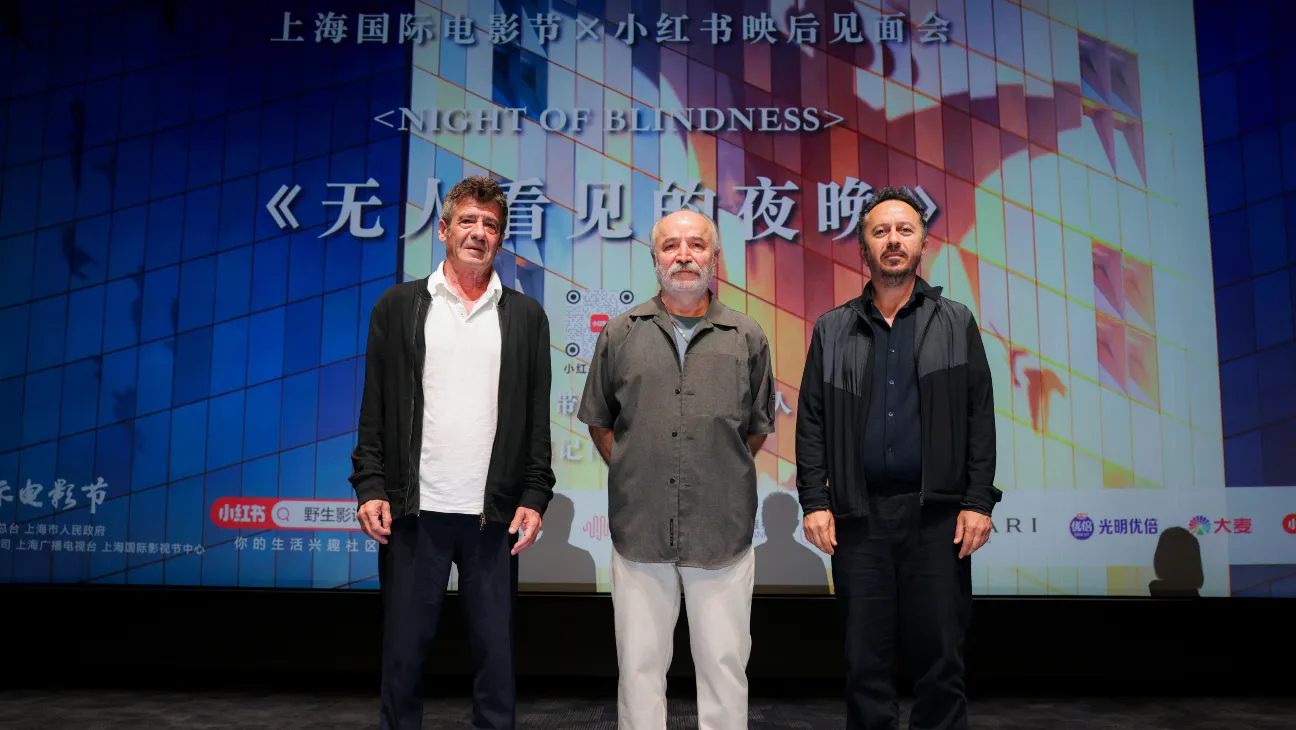
Director Reis Çelik drew on his own escape during Turkey's 1980 military coup for Night of Blindness, a tense black-and-white thriller. For decision-makers watching festival pipelines and risk-to-reward cultural bets, it signals where early awards momentum is forming.
Director Reis Çelik built Night of Blindness out of his own escape during Turkey's 1980 military coup, and the result is already generating buzz as an early Golden Goblet front-runner. This is not a generic “inspired by” story. It is a personal origin point translated into a tense black-and-white thriller, the kind that festival programmers and critics tend to orbit because it feels urgent rather than ornamental.
The Shanghai awards conversation matters because Golden Goblet momentum can function like a spotlight. Once a film moves from “promising” to “front-runner,” it attracts more attention from buyers, reviewers, and industry stakeholders who treat festival selection and early competitive placement as a proxy for broader audience impact. In this case, the creative engine is tightly bound to a historical trauma: Çelik’s escape during the coup period in Turkey. That personal grounding is the hook behind why the film reads as fear, not just suspense.
From a business perspective, festival races are weirdly rational. There is no guaranteed translation from awards buzz to financial outcomes, but early traction changes incentives. Distributors, sales agents, and jurors operate under time pressure and imperfect information. They cannot sample every film on earth, so they look for signals. One signal is the narrative clarity of a thriller that can be marketed across cultures. Another is the formal choice of black-and-white cinematography, which often reads as “craft-forward” and “theme-forward” at a glance.
There is also an incentives-and-audience layer here that is easy to miss. Fear is a universal emotion, but it lands differently depending on framing. The source describes Night of Blindness as a “tense black-and-white thriller” shaped by Çelik’s own experience of escaping during a period of political upheaval. That combination matters because it gives the film a specific historical texture while aiming at universal fear. When festival audiences sense authenticity, they typically respond with attention. And attention is the currency that turns an early leader into a later winner.
For boards, producers, and investor-minded operators, the second-order implication is that “personal trauma” as material is not a free pass. It is a creative risk that must pay off in craft. Here, the source is explicit: Çelik drew on his own escape, and the film has taken early Golden Goblet front-runner status. That suggests the project cleared the hardest gate first, the one where intent meets execution. It also implies a lesson for greenlighting decisions: authenticity only scales if it is translated into a film language audiences can feel immediately, like the described thriller tension and the stark black-and-white presentation.
Regulatory context is also the quiet backdrop, even when the story is about film. Turkey’s 1980 military coup is not just “a setting,” it is a politically charged historical event that many creators approach with care. Festivals that host international competition often become channels for narratives that can travel across markets even when local contexts remain complex. That does not mean regulators approve or disapprove based on a film’s existence. It means the same geopolitical sensitivities that make such stories harder to make can also make them more compelling once they reach an international stage where interpretation and reception diversify.
The Shanghai angle adds another dimension for decision-makers. Competitive festivals act like market mirrors. They reflect what formats and themes are resonating with gatekeepers at that moment. A director like Reis Çelik, already associated with early Golden Goblet frontrunner status, is effectively demonstrating that high-stakes political memory can be packaged as gripping genre storytelling. That is strategically relevant for peers who are choosing what to finance next, what to acquire, and what to prioritize in international launches.
So the stake is not only whether Night of Blindness wins. The stake is what its early run will tell the industry about where the next wave of awards-grade thrillers is forming: personal history turned into universal fear, rendered in black and white, arriving at Shanghai with enough momentum to be called an early Golden Goblet front-runner.
This story's Key Insights and Take-aways are locked.
Create a free account to unlock Executive Actions for one credit.
Register to UnlockAlways free for Executives Club members. Join the Club
More in Entertainment

Russell Brand's accuser 'bewildered and confused' as he denies 7 sex charges
The criminal case against the comedian is a live test of how media companies manage talent risk when serious allegations go public.

'It's a Magic Trick': Ballet Experts Say Rosalía's SNL Pose Is Impossible
Three ballet experts tell Rolling Stone Rosalía's gravity-defying SNL stillness shouldn't be possible - and why the debate is now part of the show.

Activision CMO: GTA 6 Will Boost Call of Duty, Not Bury It
Activision's top marketer says Rockstar's blockbuster will drive players back to consoles and into Modern Warfare 4, even as the company admits its recent strategy failed.