

Rep. John McGuire introduces Birthright Citizenship Clarification Act after Trump order
A new bill would codify the effort to limit birthright citizenship by challenging jus soli, reshaping the legal fight.
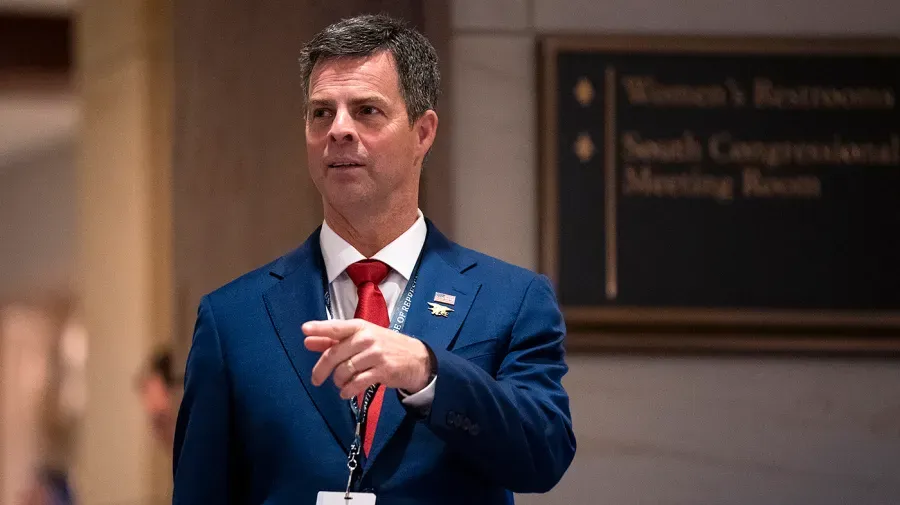
Freshman House Republican John McGuire (R-Va.) introduced the Birthright Citizenship Clarification Act to codify President Trump's executive order aimed at limiting birthright citizenship. For decision-makers, the bill signals a near-term legislative push that could lock in a major shift in citizenship policy.
Freshman House Republican John McGuire (R-Va.) introduced the Birthright Citizenship Clarification Act to codify President Trump’s executive order seeking to limit birthright citizenship. The core target is jus soli, the “right of the soil” legal principle that grants citizenship to anyone born within a nation's territory. In other words, McGuire is taking an executive branch move and trying to make it durable through statute, so the rule is harder to unwind later.
McGuire’s bill lands days after the Supreme Court ruled in a way that has kept birthright citizenship and its legal rationale in the spotlight. That timing matters because when courts and Congress move close together, the policy outcome can shift from a single legal question into a longer, more structural fight over which branch ultimately “wins” the interpretation. This is not just a headline policy debate. It is about how citizenship is determined, what legal tests govern it, and what protections families can reliably plan around.
To understand the stakes, zoom out to how citizenship law typically works. In most jurisdictions, citizenship is foundational to legal status. It controls access to work authorization pathways, eligibility for certain benefits, and the long tail of immigration-related decision-making. Birthright citizenship, specifically, is often treated as a bright-line rule: if you are born within a country’s territory, you are a citizen. A major reason it is controversial is that it collides with competing ideas about when citizenship should attach, particularly for children born to parents with temporary immigration status or those without a stable long-term legal connection.
This is where the jus soli fight becomes more than legal theory. Striking down jus soli, or narrowing how it operates, forces the system to rely on alternative legal principles or narrower definitions of who qualifies. That can create gray areas where outcomes may depend on immigration history, the legal status of parents, and how agencies interpret eligibility. Even if the ultimate goal is a tighter definition, the immediate effect can be more uncertainty, more case-by-case litigation, and more administrative complexity.
McGuire is effectively trying to turn the executive order into a codified legislative rule. The executive branch can change policy quickly, but it usually operates under legal constraints that courts can revisit. Congress, by contrast, can pass a statute that sets the baseline interpretation for years. That difference is not academic. If a statute codifies a limitation on birthright citizenship, it changes what future administrations can do with executive action, because the legal “floor” is set by law, not by policy preference.
The political mechanics are equally important. The bill was introduced by a freshman House Republican, John McGuire (R-Va.), and it is positioned squarely within an agenda to translate Trump-era actions into law. In the House, legislative proposals like this can also function as pressure tools. They signal to colleagues that there is a path to legislate the issue, potentially influencing how other members decide whether to back similar measures or how strongly they push their own variations.
There is also a second-order effect for legal and administrative institutions. When citizenship eligibility standards shift, the downstream systems that handle identity documents, records, and immigration adjudications typically have to update workflows. That can mean training, revised forms, and new legal guidance for agencies and courts. Boards and executives overseeing HR, compliance, or immigration-adjacent operations often feel these changes even when they are not the direct target, because citizenship and status questions can affect documentation, eligibility determinations, and risk exposure.
Finally, the Supreme Court context makes the moment more volatile. McGuire’s bill comes days after the Supreme Court ruled, which means the policy landscape is already in motion. When the judiciary issues rulings, it clarifies what is legally permissible but it can also narrow or widen the window for legislative action. A statute introduced right after such a decision suggests that supporters believe there is still room to shape the outcome through Congress, or that they want the legislative record to lead the next phase of the dispute.
For decision-makers, the strategic stake is simple: this bill is a signal that the fight over birthright citizenship is not ending with court interpretation. It is likely moving from judicial reasoning to legislative drafting, and that shift changes timelines, stakeholders, and the kind of certainty anyone can expect. If citizenship rules are codified to limit jus soli, the ripple effects will reach far beyond politics, touching the legal foundations families, institutions, and governments rely on every day.
This story's Key Insights and Take-aways are locked.
Create a free account to unlock Executive Actions for one credit.
Register to UnlockAlways free for Executives Club members. Join the Club
More in Politics

Glacial collapse, not rain, killed 180 in Nepal's Himalayan flood
The Himalaya's extreme geography hid the true cause of Nepal's catastrophic flood, a glacial collapse that turned a geological battleground into a mass-casualty zone.

Iran’s Esmail Baghaei says Oman talks start shipping via Hormuz, not US talks yet
Temporary route plans with Oman aim to restart commerce while Tehran says Washington dialogue is not on the table.

Standards watchdog opens probe into Reform UK deputy leader Richard Tice over interests
The parliamentary standards commissioner says it began an investigation on 28 July into a possible undeclared interest.