
Repeating radio signals from space get an ID that could unlock a “Rosetta stone”
Researchers identified a source behind mysterious repeating radio bursts, hinting at a new Rosetta stone for cosmic communication.
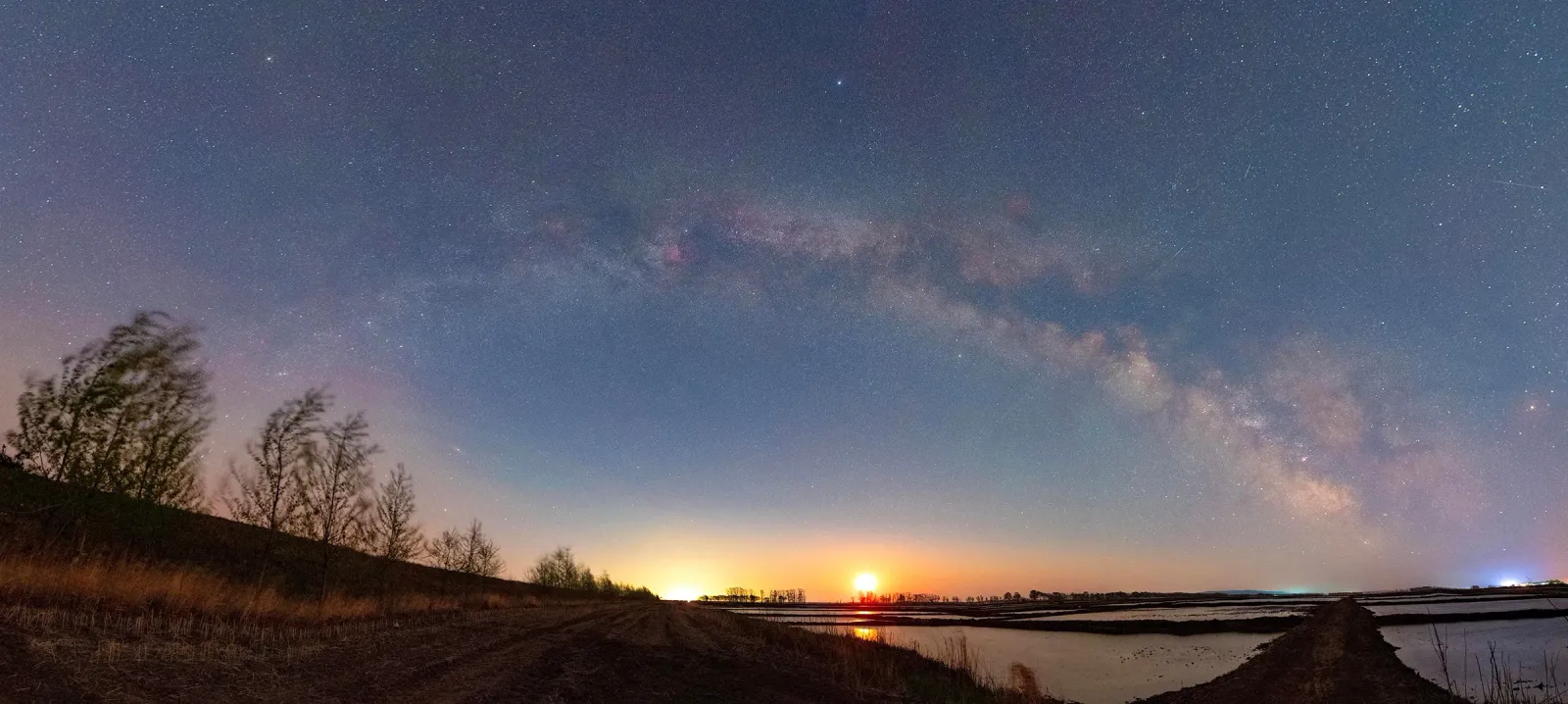
Researchers say they have identified the source of mysterious repeating radio signals from space. They argue the discovery could act as a “Rosetta stone” for decoding cosmic signals.
A mystery in the sky just got a name. Researchers say they have identified the source of mysterious repeating radio signals from space, turning previously ambiguous signals into something more traceable. The team also makes a bold comparison: they say the discovery could be a “Rosetta stone” for cosmic signals, meaning a reference point that helps scientists interpret what is coming from far beyond Earth.
Why does this matter outside of science Twitter? Because in radio astronomy, repeatability is everything. If you can find a stable source that produces signals in a pattern, you can test theories, compare observations, and build tools that extract meaning instead of just collecting noise. The identification means follow-up work can move from “what if it’s this?” to “we know where it comes from, so what can we learn from it?” That shift is the difference between a headlining discovery and a durable platform for years of research.
To understand the impact, it helps to know how cosmic signal hunting usually works. Researchers observe radio waves arriving at Earth. Sometimes those signals repeat, sometimes they vanish after a single detection. Repeating signals are particularly valuable because they give teams a chance to gather multiple datasets under different observing conditions. Without a known source, scientists typically have to work backwards from the signal characteristics. They can propose explanations, but those explanations remain loosely tethered until someone can point to an origin. Identifying the source tightens that tether.
This is not just a nerdy win. It is a systems win. Radio telescopes are expensive, schedules are constrained, and large observatories are built with a planning mindset. When researchers can confidently identify what is producing a signal, they can justify targeted observation campaigns, allocate telescope time more efficiently, and coordinate across instruments. That matters for funding committees and for the organizations that operate facilities. Even if the broader public sees this as “astronomy news,” the operational reality is: an identified source changes how scientific teams decide what to look at next.
There is also a technology adjacency here, even if the WIRED coverage focuses on the science. Repeating signals push the field toward better signal processing, stronger classification methods, and cleaner calibration practices. The more reliably a source produces the same type of emission, the more you can stress test the algorithms meant to detect and interpret it. That can have second-order effects on data pipelines used in radio astronomy more broadly, and on how teams guard against false positives. In executive terms: once a signal is pinned to a source, measurement quality becomes a competitive advantage, not just a technical detail.
Zoom out further and you get a broader strategic implication for decision-makers in science-adjacent industries: credibility compounds. Discoveries that are framed as a “Rosetta stone” are not only about immediate interpretation. They are about creating a shared reference that future work can anchor to. If other researchers can reproduce the identification and refine the interpretation, that source becomes a standard candle for cosmic radio phenomena. Standards attract investment because they reduce ambiguity. Ambiguity is expensive.
There is also a cultural stake for the boards and leadership teams funding big scientific infrastructure: the narrative matters. When scientists present a discovery as a Rosetta stone for cosmic signals, they are essentially pitching a new interpretive framework. That kind of framing is what turns one-off papers into multi-year roadmaps. Leadership teams want projects that can become platforms, not just one-time results, and repeatability is how platforms start.
So the strategic question for executives and operators across research and technology is simple: will this identified source become a durable interpretive anchor or remain a fascinating but limited case study? The WIRED report frames it as potentially transformative, specifically calling it a “Rosetta stone” for cosmic signals. If that holds up as more observations come in, this could accelerate the field’s ability to decode what the universe is “saying,” not just that it is transmitting.
This story's Key Insights and Take-aways are locked.
Create a free account to unlock Executive Actions for one credit.
Register to UnlockAlways free for Executives Club members. Join the Club
More in Technology

Nvidia's $89B data center quarter: the 9 companies cashing in
The AI buildout is minting fortunes beyond GPUs, and memory, cloud, and cooling suppliers are riding the same wave.

Google quietly links your phone number to every Android account on your SIM
Adding a SIM now ties your phone number to all Google accounts - and future accounts inherit it. Here's the security and privacy stakes.

Hijacker AI 'Skynet mode' runs 100,000 attack steps against exposed models
Symantec caught a criminal AI agent that borrows other models, steals data, and mines crypto; the only relief is no confirmed victims yet.