

Researchers pair vancomycin with pghi-4 to kill resistant E. faecium
A “revival” strategy uses a resistance blocker instead of a brand-new antibiotic, pointing to repeatable fixes.
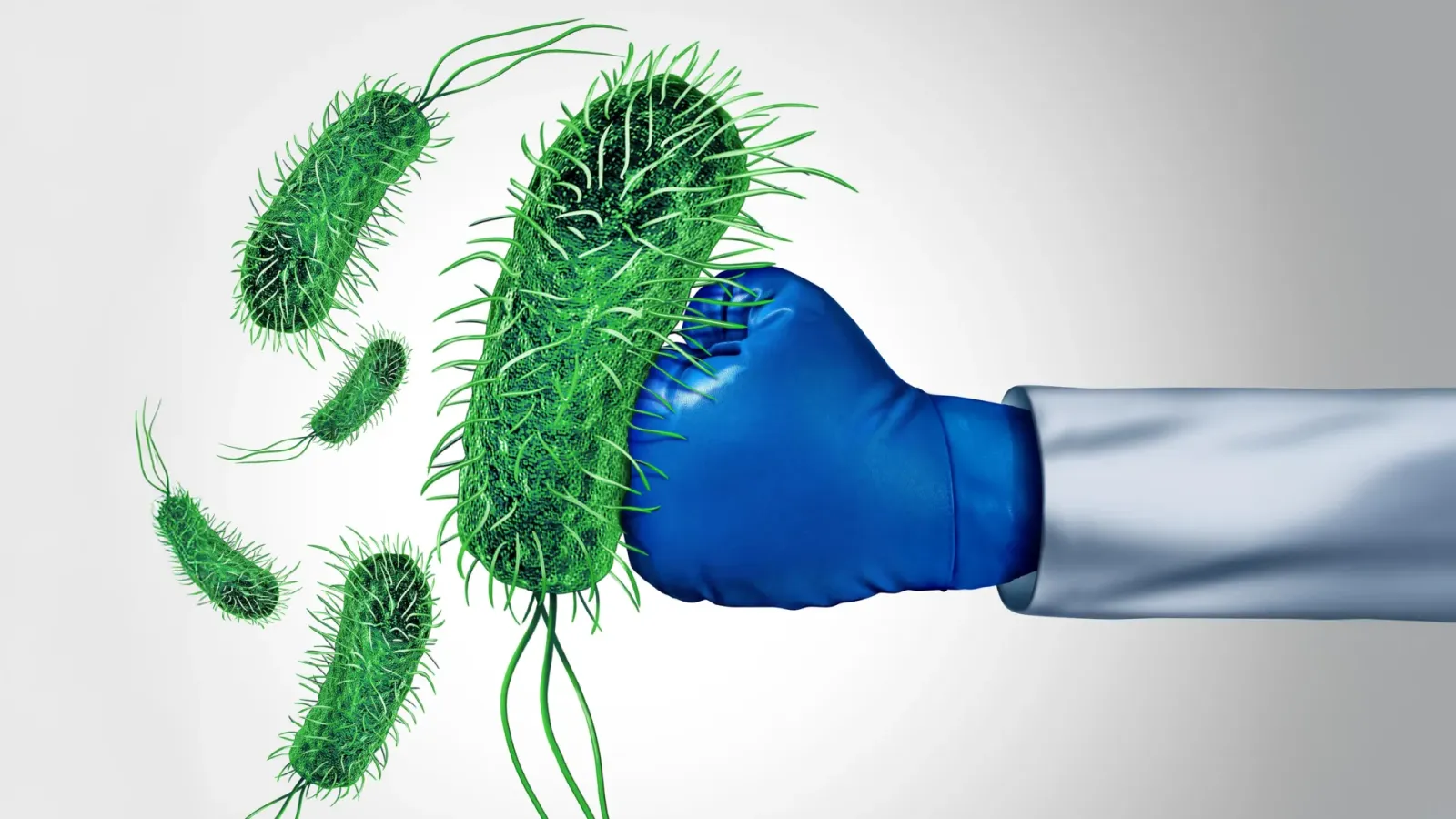
Scientists report that vancomycin can be brought back to life against drug-resistant Enterococcus faecium by pairing it with a small molecule called pghi-4. The combination restores vancomycin’s killing ability, suggesting chemical helpers could rescue other antibiotics that have faded.
Vancomycin is one of the best-known “last-line” antibiotics in modern medicine. The problem is that some dangerous bacteria have learned to resist it, turning a once-reliable weapon into something less dependable. Now, researchers say they have found a way to revive vancomycin’s effectiveness against drug-resistant E. faecium, without starting over from scratch.
The key move is almost brutally simple: instead of inventing an entirely new drug, the team paired vancomycin with a small molecule called pghi-4. Pghi-4 blocks a bacterial enzyme linked to resistance. With that resistance pathway shut down, the combination restored vancomycin’s ability to kill drug-resistant E. faecium, and the result raises hopes that the “helper molecule” approach could be used beyond this single antibiotic.
If you are an executive trying to understand why this matters, the headline idea is not just scientific. It is an operating model. Antibiotic discovery has historically been long, expensive, and slow, and companies often struggle with the economics of bringing new antibiotics to market. The more you can extend the useful life of an existing, already-understood drug, the more you shift the problem from “build a whole platform” to “optimize a combination.” That distinction can change timelines, trial design logic, and risk appetite. Even when the underlying science is hard, the commercial process can be smoother when you are leaning on something that already has a track record.
The biology here also fits a clear incentive structure for researchers and funders. Resistance is rarely a single switch. Bacteria can use enzymes and other mechanisms to neutralize or evade antibiotics. By choosing pghi-4 to block an enzyme linked to resistance, the researchers are attacking the specific reason vancomycin is failing in drug-resistant E. faecium. That is different from adding a vague “boost.” It is closer to using a lock-and-key strategy: vancomycin provides the attack, pghi-4 removes the defense.
There is another reason boards and decision-makers should pay attention: this kind of work suggests a repeatable playbook, not just a one-off breakthrough. The source explicitly frames the finding as raising hopes that similar chemical helpers could rescue other failing medicines. From a portfolio perspective, that matters because the hardest question for antibiotic developers is not only “Can we work once?” It is “Can we build a pipeline of combinations where the helper molecule targets resistance mechanisms that show up across strains or drug classes?” A modular approach like this can, in theory, reduce how much discovery work you have to do from zero each time.
Regulatory strategy is also indirectly implicated. Combination therapies often sit in a gray zone between what regulators consider incremental improvements and what they consider entirely new products. The more the helper molecule is mechanistically tied to restoring the performance of an already-known antibiotic, the easier it can be to justify the therapeutic rationale. In other words, the regulatory conversation may start from an existing safety and use profile for vancomycin, then focus on the added effects and how pghi-4 changes the antibiotic’s activity against resistant strains.
Still, this is not “problem solved.” The source only describes the revival against drug-resistant E. faecium using vancomycin plus pghi-4, and it does not claim that every resistant bacterium will fall to the same tactic. But even a narrow win has outsized strategic value in antibiotic land because each restored option buys time against the broader, relentless trend of resistance.
For executives tracking healthcare innovation, the second-order implication is that antibiotic companies and investors might look more seriously at combination engineering, resistance-blocking adjuncts, and other chemistry-first “rescue” strategies. If drug-resistant strains keep outsmarting a tool, the answer might not be a new tool. It might be a new accomplice for the old one. The researchers’ approach does exactly that, restoring a powerful antibiotic’s ability to kill when resistance had already stolen its edge.
This story's Key Insights and Take-aways are locked.
Create a free account to unlock Executive Actions for one credit.
Register to UnlockAlways free for Executives Club members. Join the Club
More in Science

Kratsios announces $5B for AI Genesis Mission, picking 278 projects from 5,000+
The White House-backed, Energy Department-led AI research push is the biggest federal science overhaul in 80 years.

Fish get transmissible tumors, forcing a new question about contagion in humans
A cancer that spreads between animals has appeared in fish for the first time, raising hard questions for health risk modeling.

NASA unmasks 1998 SH2 as a comet after 30 years, sharpening planetary defense modeling
A 2-million-mile radar anomaly and follow-up telescopes reveal hidden outgassing, changing how impact orbits get predicted.