

Researchers rediscover long-lost Gulf of Guinea coral reefs, proving resilience amid warming seas
A rediscovery off Africa reframes what “climate resilience” can look like, and why protection policies should follow evidence.
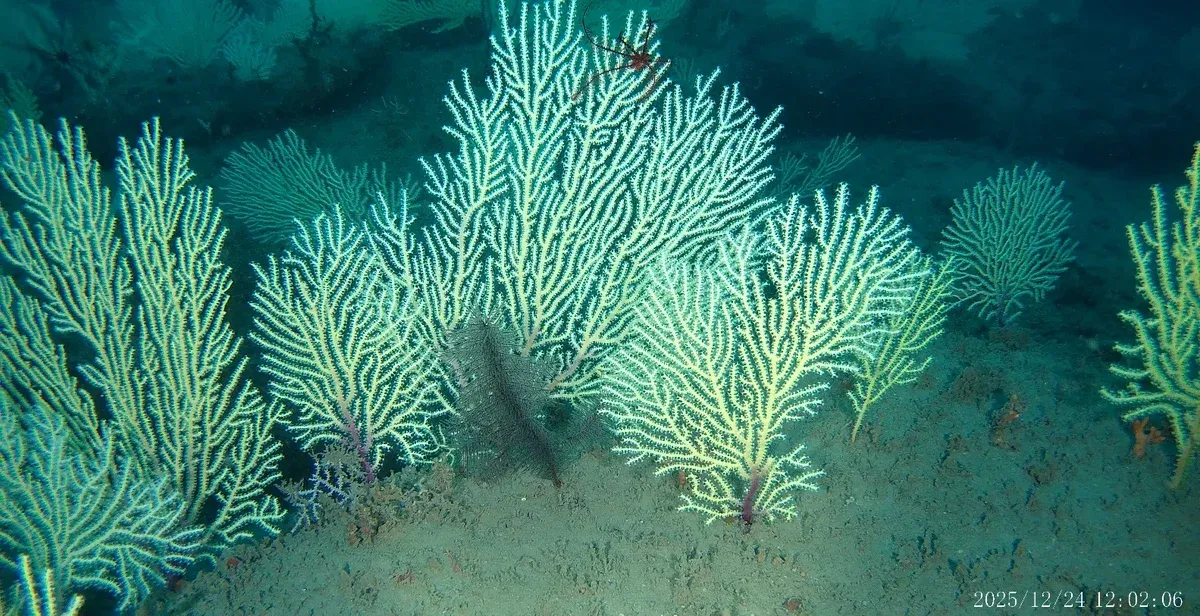
Scientific American reports the rediscovery of long-lost coral reefs off the coast of Africa in the Gulf of Guinea. For decision-makers, it signals coral ecosystems can persist despite climate stress, affecting how regulators and funders prioritize protection.
Some stories feel like science mythology. “Long-lost” coral reefs were supposed to be gone, and then researchers found them again off Africa in the Gulf of Guinea. Scientific American reports the rediscovery and highlights a bigger, more usable message: these reefs can still show resilience against climate change.
That matters because coral reefs are not just pretty underwater scenery. They are living infrastructure for fisheries, coastal protection, and biodiversity. When a reef system thought lost reappears, it changes the baseline for what is at risk, what might recover, and which conservation decisions are grounded in reality rather than hope. In other words, this is not merely a feel-good ecological update. It is an evidence update.
For executives and boards, the practical stake is that climate risk is increasingly measured by assets and outcomes, not slogans. Coral reefs are part of coastal economies. They support food webs that sustain fishing livelihoods and influence the health of marine systems that businesses rely on indirectly through supply chains and tourism. If reefs can persist longer or withstand certain stresses better than expected, that shifts how you think about timing, mitigation strategy, and adaptation planning.
It also shifts how companies and investors should treat regulatory conversations. Coral protection and climate adaptation policies often hinge on historical data and assumed trajectories. A rediscovered reef ecosystem in a specific geography provides a new data point for regulators weighing where to enforce protections, where restoration dollars should go, and how to set measurable targets. When the underlying ecosystem is present, regulators can require monitoring with clearer baselines. When ecosystems are absent, enforcement can turn into a question of reconstruction rather than stewardship.
The Gulf of Guinea is a particularly important place to watch because marine ecosystems there support communities and industries across multiple national jurisdictions. Even when a discovery happens during a scientific expedition, it quickly becomes a governance question. Who has authority to protect habitat? Which countries or agencies can mandate restrictions on damaging activities? How do cross-border waters get coordinated? A “rediscovery” intensifies those questions because it adds specificity. It can justify new management actions such as protected areas, fishing rules, or restrictions on activities that harm reefs, but only if institutions can move from discovery to policy.
There is also a market context here that executives should not ignore. Climate resilience is a concept that too often stays abstract, but coral reefs are a measurable biological system. The resilience shown by reefs off Africa suggests that ecosystems may have variation in stress tolerance, recovery capacity, and local survival, even as ocean temperatures rise. That means investments aimed at nature-based solutions, environmental credits, or conservation-linked supply chain commitments should increasingly demand verification. Not just “we care,” but “here is what we can observe and measure.” A real reef that comes back from the edge of “lost” offers a template for due diligence.
Second-order implications follow from how boards manage risk communication. If coral ecosystems can show resilience in the face of climate change, then sustainability claims can be more credible, but only if they do not overpromise. The governance challenge becomes balancing optimism with rigor: supporting protections because they help ecosystems persist, while recognizing that resilience is not invincibility. This is the difference between resilient messaging and reckless messaging.
For peers facing climate-linked decisions, the strategic takeaway is simple: update your assumptions when high-quality evidence changes the map. Scientific American's report of long-lost coral reefs rediscovered off Africa in the Gulf of Guinea signals that coral ecosystems may still endure under climate pressure. The companies, investors, and public agencies that act on that information with stronger monitoring, smarter prioritization, and realistic targets will be better positioned than those treating climate adaptation as a waiting room. The ocean just handed decision-makers an overdue homework assignment, and it has dates, locations, and biological outcomes attached.
This story's Key Insights and Take-aways are locked.
Create a free account to unlock Executive Actions for one credit.
Register to UnlockAlways free for Executives Club members. Join the Club
More in Science

ADM’s Naghibi says psychobiotics grew fast, but “mechanisms” still aren’t pinned down
The gut-brain link is no longer a seminar punchline. Now the big question is what, exactly, drives mental-health effects.

KAUST’s genome tool inserts large DNA sequences in rice and tobacco without DNA breaks
A new plant-genome editing method removes a long-standing bottleneck, unlocking bigger genetic “plug-ins” for future crop traits.

Aquincum museum reconstructs 16 Roman faces with 3D CT, silicone models, and ancient DNA
A new exhibition in Budapest turns skulls into hyperrealistic people, raising questions about what science can and cannot know.