

Resident Evil clip at SDCC shows Bryan fighting zombies in a flipped cop car
Zach Cregger previews early-movie chaos, including a radio scare, a gun jam, and a zombie crawl.

Director Zach Cregger introduced a new early sequence from Resident Evil at San Diego Comic-Con, showing Austin Abrams as Bryan battling a zombified woman in a snowy field. For decision-makers, it signals a marketing strategy built on high-consideration horror set pieces months ahead of the September 18 theater date.
Resident Evil is set to hit theaters on September 18, and a fresh clip shown during San Diego Comic-Con made sure nobody in the room forgot that date. Director Zach Cregger introduced the footage by clarifying that it takes place "early in the movie". The clip immediately throws Bryan (played by Austin Abrams) into a nightmarish problem, not a mystery, and it is the kind of escalating, sensory horror that studios and exhibitors both understand: if you hook people with tension early, you buy attention later.
The scene starts with Bryan coming across a flipped cop car in a snowy field at night. As he crawls into the passenger side to check on the officer, he notes that the door has been mysteriously left open, and he checks the pulse. Then the radio suddenly turns on, jump-scaring the audience, and Bryan tries to talk: "Hello, I'm not a cop, so I don't know what to say, but I have an emergency here. Can you hear me?" There is no response. That small beat matters more than it sounds. It takes the familiar procedural setup of a car, a cop, and a radio call, and turns it into something unreliable. In horror terms, that is gold, because it tells the audience the rules of communication do not hold.
From there, the clip escalates into pure survival math. As Bryan looks around the car, a zombified woman appears outside the car window. The woman crawls toward him on all fours, and Bryan grabs the cop's gun and tells her to stop as the undead threat gets physically closer. He kicks the zombie in the face and tries to shoot, but the gun does not fire. When a gun fails in a confrontation, audiences instantly feel the stakes tighten. It is not just scary, it is operationally inconvenient. And the clip keeps the pressure on: she chases him around the car, he screams and frantically fiddles with the gun, and then he realizes the safety is still on. That moment also does what effective scare scenes often do, it reframes competence. Bryan is not helpless, but he is behind the situation.
Then the horror becomes chaos with consequences. In the panic, Bryan fires off to the side and almost drops the gun, before the zombie woman suddenly disappears. He moves around the car looking for her when she suddenly comes running out of the darkness. He stumbles backward, firing missed shots after missed shots, and ultimately falls over. Lying on the ground, he shoots one more time, and that shot knocks the zombie off her feet like a cannon. That is the end of the clip, and it lands with a satisfying visual punctuation mark: despite the gun problems, the final shot delivers impact. It is also a reminder of how these sequences are designed for audience psychology, not just story. Each failed attempt increases tension, each new appearance resets expectations, and the last payoff makes the fear feel earned rather than random.
Cregger also signaled that what the audience saw at the panel is not the final product. He noted that the finished theatrical footage will be somewhat different from what was shown during the panel, and he added, with a wink, that "They managed to cut about 25 f-words out of that clip." That kind of disclosure matters in two ways. First, it acknowledges the film's tone and intensity without making it marketing copy. Second, it reinforces the idea that the theatrical version is being shaped for broader release norms, which is exactly how studios manage risk across rating targets, press coverage, and audience expectations.
For executives, there is a bigger implication underneath the gore. A Comic-Con clip like this is not just fandom bait, it is a stress test for what people will remember when they see the poster later. Horror is particularly sensitive to perceived authenticity of scares, and this clip leans on concrete beats: a flipped cop car, a radio that turns on, a woman appearing at a window, and a gun that refuses to behave until the safety click. Those are the exact details that translate into word-of-mouth, social clips, and theater trailers.
And if you are thinking about how this affects the broader slate, Resident Evil is also positioned for the kind of release window coordination that matters for distribution and exhibition. The article points viewers toward a guide to upcoming horror movies and lists the September 18 theater date as the key timing anchor. When a studio holds a theatrical date that far ahead of the release, the marketing job is to keep attention from decaying. This clip does that by delivering a complete mini-arc within a short runtime, ending with a decisive visual outcome.
Peers in film and streaming can learn from how this is being framed. If you want audience trust, you show the fear mechanics, not just the concept. And if you want decision-makers to care, you stage the spectacle early, adjust it for release, and make the final product feel like the improved, cleaned-up version of the same moment fans are already replaying in their heads. Resident Evil has less than two months of runway to September 18, and the clip suggests the film is betting that early chaos will become a reason to buy tickets later.
This story's Key Insights and Take-aways are locked.
Create a free account to unlock Executive Actions for one credit.
Register to UnlockAlways free for Executives Club members. Join the Club
More in Entertainment

'It's a Magic Trick': Ballet Experts Say Rosalía's SNL Pose Is Impossible
Three ballet experts tell Rolling Stone Rosalía's gravity-defying SNL stillness shouldn't be possible - and why the debate is now part of the show.

Activision CMO: GTA 6 Will Boost Call of Duty, Not Bury It
Activision's top marketer says Rockstar's blockbuster will drive players back to consoles and into Modern Warfare 4, even as the company admits its recent strategy failed.
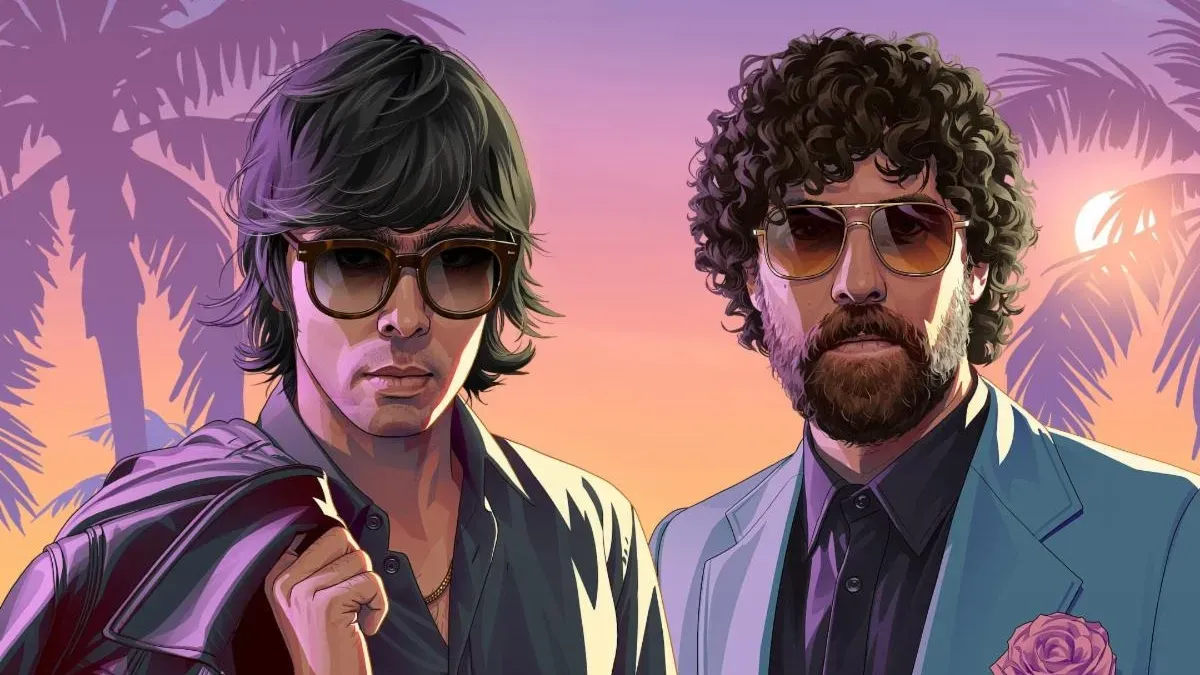
Justice to Score GTA 6, Share New Song with Tame Impala, SZA, King Gizzard
Rockstar taps the French duo for the GTA VI score, and the first taste is a genre-melting collab with Tame Impala, SZA, and King Gizzard & The Lizard Wizard.