
Revora raises $2M seed to turn AI chat into an e-commerce operating platform
The Saudi-founded conversational commerce startup moves from MyAlice’s sales chat to structured AI agents that close purchases.
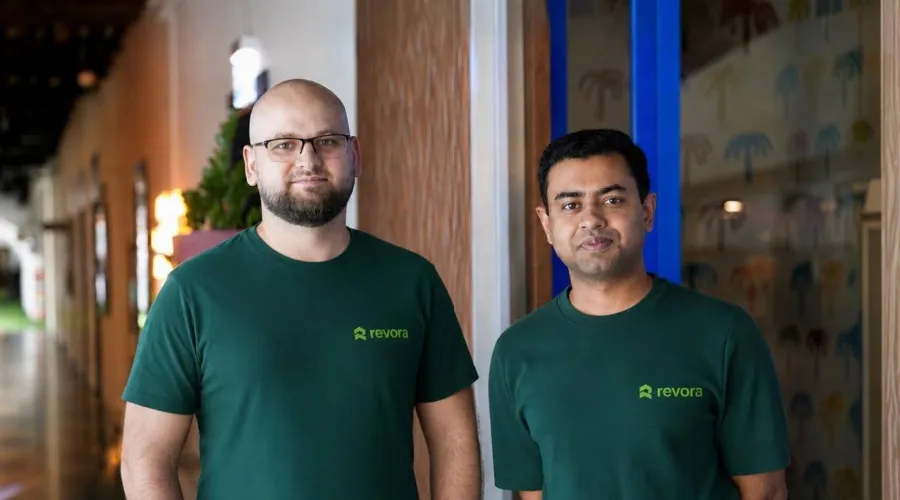
Revora, formerly known as MyAlice, announced a $2 million seed round co-led by i2i Ventures and Oraseya Capital, plus a rebrand and shift in product strategy. For decision-makers, the bet signals where MENA e-commerce is heading: away from “AI features” and toward AI that understands product catalogs and completes transactions in conversation.
On 25 June, 2026, Saudi Arabia-headquartered e-commerce AI startup Revora announced a $2 million seed round and a rebrand from MyAlice. This is not another “conversational commerce” wrapper. Revora positions the move as a shift from a conversational commerce tool into an AI operating platform for e-commerce merchants, with the core promise that its AI agents recommend products, recover carts, and take payment inside the conversation.
Co-led by i2i Ventures & Oraseya Capital, the round also includes participation from Anchorless Bangladesh, Conjunction Capital, F6 Ventures, Hi2 Global, Orbit Startups, and strategic angels such as Salman Butt (co-founder, Salla), plus operators from Bolt, Mubadala & EY. The immediate stake for merchants and investors is practical: Revora says brands using its AI-led sales and campaigns see a 15-20% revenue increase, and the company is already live in 21+ countries.
So what exactly is Revora building, and why is the rebrand from MyAlice a big deal? The company’s pitch is that the merchant problem is not “engagement.” It is closing sales. Revora’s AI agents are designed to do three things that traditional chat tools often struggle to do end-to-end. They recommend products, recover carts, and take payment inside the conversation. And the company emphasizes that this happens “whether that's on WhatsApp, Instagram or the brand's own site,” in “the customer's own dialect.” In other words, the product is trying to become the sales motion, not just a front-end channel.
Underneath the conversation layer, Revora’s other bet is arguably more defensible: it turns a merchant’s product catalog into clean, structured data. That structured catalog is what enables AI-powered search and shopping agents to find products, recommend them, and help customers buy. The company frames this as compounding value: every merchant that joins adds to a “commerce graph” that the team argues no messaging vendor, helpdesk, or model provider can replicate. For boards and senior operators, that is the heart of the strategy shift. If the value lives in structured product understanding, then the differentiation is not the chatbot UI. It is the data model and the integration surface across sales and commerce systems.
Revora also gives a timeline of momentum that helps explain why it raised now. The company says revenue grew 10x since it focused on Saudi Arabia and the GCC in late 2024. It also says it is already live across 21+ countries. Finally, it says the latest funding is aimed primarily at growth in Saudi Arabia, described as its largest and fastest-growing market, and at product development for a future where more buying runs through AI.
That “future where more buying runs through AI” matters because the region is already a proving ground for fast-moving commerce adoption. In MENA, consumers frequently move between messaging, social apps, and brand sites, and merchants often stitch together tools across channels. Revora’s framing is that merchants winning the next decade will not be those with the most tools, but those that replace them with a smarter integrated AI layer. This is less about hype and more about operational leverage: fewer fragmented systems, more automation in the sales loop, and better conversion from discovery to checkout.
From a governance and fundraising lens, the investor mix also reads like a signal. i2i Ventures and Oraseya Capital co-led, with additional participation from both capital firms (Anchorless Bangladesh, Conjunction Capital, F6 Ventures, Hi2 Global, Orbit Startups) and strategic angels. The stated investor enthusiasm focuses on tangible value and revenue, not just experimental AI: i2i Ventures highlighted that Revora cuts through “AI noise” with “tangible value today & real scale potential.” Anchorless Bangladesh said it is “proud to double down” as Revora scales, pointing to “real revenue from agentic AI in the Middle East.” Oraseya Capital framed the space as an “early adopter” dynamic for AI in e-commerce and tied Revora’s mission to improving operational and customer outcomes.
Behind the product, Revora’s leadership also tracks the “operator scars plus technical depth” story they are selling. The company was co-founded by Shuvo Rahman and Daniyal Baig. Daniyal spent over 12 years in the MENA region in leadership roles across media and fintech, most recently as COO of Forbes Middle East. The release also says he built and ran an inventory management product for small merchants across the region, aiming to learn from operational gaps that still plague independent commerce. Shuvo brings product and technical depth and is said to have built a data and technology platform in a prior venture, iFarmer, connecting smallholder farmers with financing, advisory services, and market access. The strategic implication is straightforward: for an AI commerce company, merchants do not only need a model. They need workflows that fit how catalogues, payments, and customer communication already operate.
For other founders, investors, and merchant-side executives watching MENA, Revora’s move is a reminder that “agentic AI” is shifting from demos to deployment. The scoreboard Revora emphasizes is revenue. It also emphasizes structured data as the long-term asset. If Revora can keep translating conversational touchpoints into payments, and payments into measurable lift, the category could accelerate. The next question for decision-makers is whether Revora’s commerce graph approach becomes the integration standard, or whether merchants eventually demand even deeper platform control across catalog, customer identity, and checkout systems. Either way, the signal is clear: in this round, $2 million is not the headline. The product shift is.
This story's Key Insights and Take-aways are locked.
Create a free account to unlock Executive Actions for one credit.
Register to UnlockAlways free for Executives Club members. Join the Club
More in Business

Bungie cuts most Destiny 2 staff as Sony says Marathon still matters
Herman Hulst confirms layoffs affecting most Destiny and some Marathon teams after Bungie admits Destiny fell short.

SK Hynix jumps 11% after seeking up to $29.4B in Nasdaq listing
The chip giant filed for a Nasdaq listing plan that could raise $29.4 billion, instantly reshaping investor expectations.

Micron revenue hits nearly $42B as AI memory lifts gross margins above 81%
Fiscal Q3 results crush estimates, prove AI memory is rewriting Micron's margins, and change the momentum math for the whole chip stack.