

Revora raises $2M seed to turn conversational commerce into AI sales platform
Seed co-led by i2i Ventures and Oraseya Capital, as Revora rebrands from MyAlice and targets GCC growth.
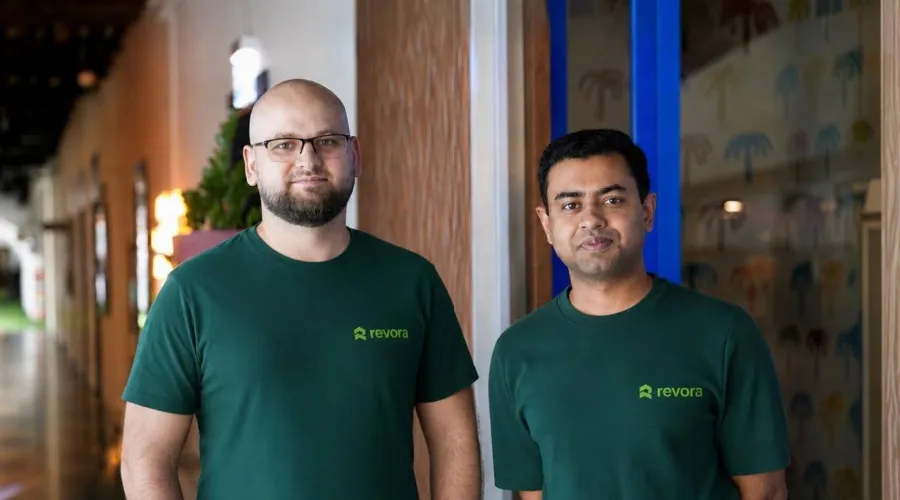
Saudi Arabia-based e-commerce AI startup Revora, formerly known as MyAlice, announced a $2 million seed round co-led by i2i Ventures and Oraseya Capital on 25 June 2026, along with a rebrand. The funding backs a shift from conversational commerce into an AI operating layer for merchants, with Revora already reporting 21+ live countries and 10x revenue growth since focusing on the Saudi Arabia and GCC market in late 2024.
Revora is changing the pitch in conversational commerce, and it just backed that move with a $2 million seed round. On 25 June 2026, the Saudi Arabia-headquartered startup, formerly known as MyAlice, announced both the rebrand and the funding, positioning itself less as a chat tool and more as an AI operating platform for e-commerce merchants.
Here is the money question the round answers quickly: where does “AI for shopping” actually show up on a merchant’s balance sheet. Revora says merchants using its AI-led sales and campaigns see a 15-20% revenue increase. It also says it has live deployments in 21+ countries, and that revenue grew 10x since the company focused on Saudi Arabia and the GCC in late 2024. In other words, this is not a vibes-only bet. The company is arguing that AI agents can do what the old funnel could not, by closing the sale inside the conversation, then proving it with operating metrics.
So what exactly is Revora building? The core is an AI agent layer that starts where merchants feel the most pain: closing the sale. Revora’s agents recommend products, recover carts, and take payment within customer conversations. The channel is flexible, including WhatsApp, Instagram, and the brand’s own site, and the experience is adapted to the customer’s dialect. The message is clear: as commerce shifts toward AI-driven discovery and shopping, the winning interface is the one that can complete the transaction, not just ask for attention.
That “complete the sale” approach is paired with a second strategic asset: a structured product catalog. Revora converts a merchant’s catalog into clean, structured data, and the company treats that data as its long-term moat. The logic is grounded in how buyers actually shop when AI is involved. If AI is going to recommend, search, and transact, it needs a commerce brain it can reliably interpret. Revora frames this as a “commerce graph” that accumulates as more merchants join, and it argues that this kind of structured relationship between products and shoppers cannot be replicated by a messaging vendor, helpdesk, or model provider alone. For decision-makers evaluating the space, that matters because the hardest part of “AI commerce” is often not generating text, it is building a system that can consistently connect catalog truth to buyer intent.
The seed round itself is co-led by i2i Ventures and Oraseya Capital, with participation from Anchorless Bangladesh, Conjunction Capital, F6 Ventures, Hi2 Global, Orbit Startups, and strategic angels including Salman Butt (co-founder, Salla), plus operators from Bolt, Mubadala, and EY. This blend hints at how Revora is thinking about scale. It is not just raising for model access or experimentation. The company says the round proceeds go toward growth in Saudi Arabia first, calling it its largest and fastest-growing market, while also investing in the product for a future where more buying runs through AI.
The founders are built for this specific regional argument. Revora was co-founded by Shuvo Rahman and Daniyal Baig. Daniyal spent over 12 years in the MENA region in leadership roles across media and fintech, most recently as COO of Forbes Middle East. He also built and ran an inventory management product for small merchants across the region, which the company describes as a hands-on lesson in the operational gaps that often constrain independent commerce. Shuvo brings product and technical depth, and Revora is his second startup, following a successful exit from his agritech venture iFarmer, where he helped build a data and technology platform connecting smallholder farmers with financing, advisory services, and market access.
One reason this rebrand is interesting to operators and investors is that it reframes “conversational commerce” as an implementation layer that merchants can operationalize, not a one-off marketing feature. Revora explicitly says its bet is that merchants winning the next decade will not be those with the most tools, but those who replaced them with a smarter, integrated AI layer. Daniyal Baig also points to a metric the company is “obsessed with”: merchants generating real revenue from the product. That emphasis is important because it shifts board-level scrutiny from adoption to monetization.
Even the investor quotes reinforce how Revora wants this to be evaluated. Kalsoom Lakhani, Co-founder/General Partner at i2i Ventures, says Revora cuts through the AI noise with tangible value and real scale potential, calling it an emerging-markets-native bet with traction that “speaks for itself.” Rahat Ahmed, General Partner at Anchorless Bangladesh, credits Revora’s team for agentic AI execution in the Middle East and says they backed Shuvo and team from the very beginning. Omar Khan, Partner at Oraseya Capital, frames e-commerce as an early adopter of AI and positions Revora as a way to improve operational and customer outcomes.
For executives watching the region, the second-order takeaway is that funding is clustering around systems that connect AI to transaction workflows, not just customer engagement. Revora’s claim of revenue impact, its structured catalog strategy, and its regional focus suggest that the next competitive edge in MENA e-commerce may be measured in conversion rates and order completion, not just in clever chat experiences. If Revora is right, the merchants that operationalize AI as a sales engine will move faster than those treating it like another channel. And that is the strategic stakes behind a $2 million round that could quietly reshape how shopping works across the Gulf and beyond.
This story's Key Insights and Take-aways are locked.
Create a free account to unlock Executive Actions for one credit.
Register to UnlockAlways free for Executives Club members. Join the Club
More in Business

Bungie cuts most Destiny 2 staff as Sony says Marathon still matters
Herman Hulst confirms layoffs affecting most Destiny and some Marathon teams after Bungie admits Destiny fell short.

SK Hynix jumps 11% after seeking up to $29.4B in Nasdaq listing
The chip giant filed for a Nasdaq listing plan that could raise $29.4 billion, instantly reshaping investor expectations.

Micron revenue hits nearly $42B as AI memory lifts gross margins above 81%
Fiscal Q3 results crush estimates, prove AI memory is rewriting Micron's margins, and change the momentum math for the whole chip stack.