

Rich Dad Author's $1.2B Claim Ignites China's Leverage Believers
Robert Kiyosaki says he owes US$1.2 billion; in China, burned property investors are wrestling with awe and bitterness.
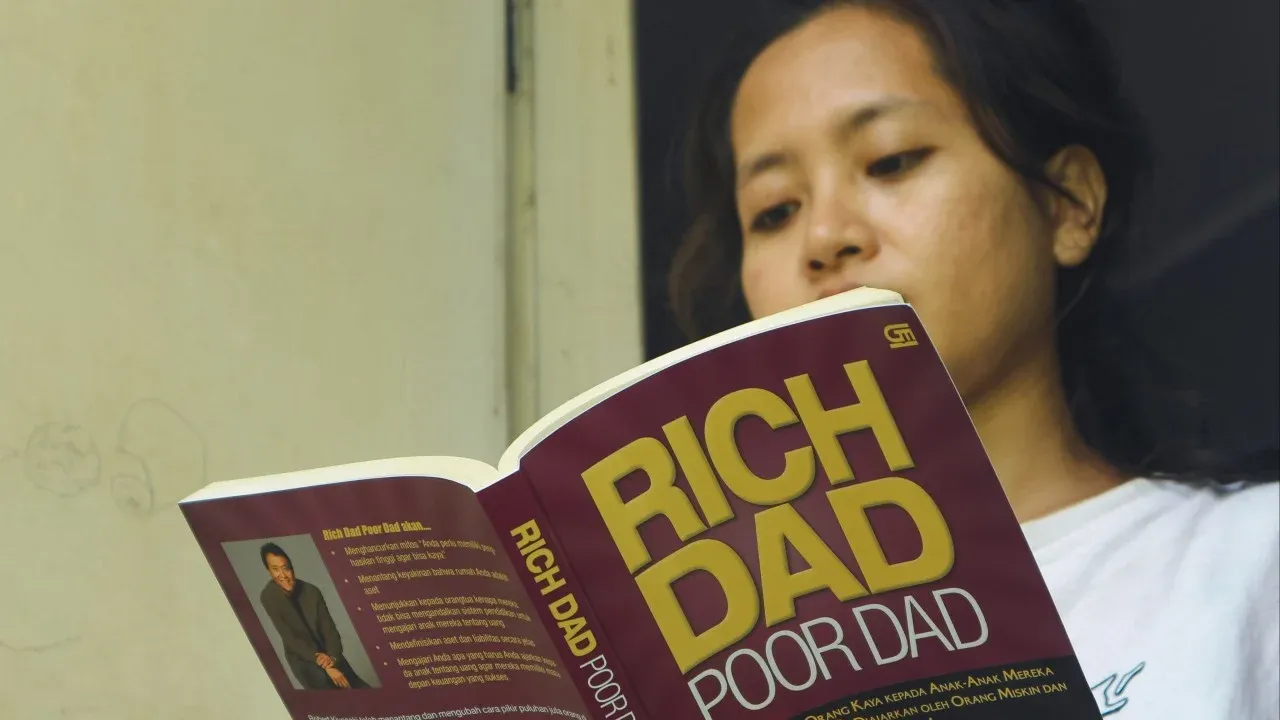
Robert Kiyosaki, the 79-year-old author of Rich Dad, Poor Dad, claimed in podcast interviews that he owes US$1.2 billion, a confession now reigniting discussion in China. For founders and CFOs, the episode is a blunt reminder that debt is a covenant you must service, not a badge to admire.
Robert Kiyosaki, the 79-year-old Japanese-American author of Rich Dad, Poor Dad, claimed during a series of podcast interviews over the summer that he owes US$1.2 billion. That debt pile is not a typo, and it does not come with a warning label. The SCMP report says the revelation has sparked heated discussion in China, where property investors who took Kiyosaki's leverage-focused advice have watched their own debt turn from a weapon into a wound amid a deep market downturn.
The reaction is split along a familiar fault line. Some admirers respond with awe, impressed that a 79-year-old can honestly talk about walking around with more than a billion dollars of someone else's money. Others respond with bitterness, because the same formula that made Kiyosaki's books a global phenomenon led Chinese households to mortgage their homes, buy property at peak prices, and then sit inside an asset that fell as the bills kept coming. Awe and bitterness are the two bookends of a very old story: the person who sells the shovels sometimes gets richer than the people who dig the hole.
For nearly three decades, Rich Dad, Poor Dad has been a mainstay of coastal China's financial self-help shelf. Its core message is not to avoid debt but to distinguish good debt from bad debt. Buy income-producing assets with borrowed money, the logic goes, and you escape the wage trap. In Kiyosaki's world, debt becomes a machine that turns inflation to your advantage, provided the asset's cash flows cover the interest. But in China's property market, the asset was supposed to be the seller, not the cash flow. Too many investors bought a home, pointed to appreciation, and never tested the servicing cost. The deep downturn did the test for them.
What makes the $1.2 billion figure so awkward is that Kiyosaki has spent most of his adult life preaching that you can turn debt into an advantage. His books, seminars, and television commentary encouraged ordinary people to leverage up before inflation arrives. The result of that teaching, when applied to a market like China, was a wave of personal balance sheets going from property gains to negative equity. Now the teacher has his own enormous liability, and it has become a kind of live stress test for that fear. The only difference is that he is a celebrity with global immune, and can book away; Chinese households tend to be stuck with the property itself.
This is not to say he is necessarily wrong. Technically, $1.2 billion in debt might be a sign of Kiyosaki's ability to raise capital, and his defenders argue that if you borrowed in dollars and bought assets abroad, inflation is doing the repayment. But the SCMP source does not disclose the structure. We do not know which assets back the debt, what his interest rate is, or whether he could cover the annual service. That ambiguity matters for any decision-maker who uses debt to scale. The line between leverage and distress is not the book title; it is the cash available on the worst week.
The China connection is a direct and reversed symmetry. Chinese property investors were taught by the global market, and by their own assumptions, that real estate is a perpetual price arrow. When the downturn came, the debt did not argue. It just matured. Many households lost their seed or forced sales they could not recover. So a $1.2 billion debt from the author who told them debt is good feels like a teacher showing up with a hangover after the final exam. It does not prove leverage is wrong. It proves leverage needs a who pays you before the debt is due.
For a founder or CFO, the Kiyosaki episode should be a conversation starter, not a tarot card. The guy who taught a generation to scale other people's money is currently a very large version of its own theory. If his assets have cash flow of $300 million a year, the debt is tiny. If his assets only appreciate on paper, the debt is a sword. Run that test on your own balance sheet and your partnership units. The only way to not be bitter about debt is to never promise yourself the market will move faster than your ability to service it.
The strategic stakes for every boardroom: leverage judges your own data. China's property story took a weird peak and then a falling, and the mental put that debt can weather reflected. When a company overleVers an asset it expects to sell at a higher price, it is not investing. It is a pricing error. Kiyosaki says he owes $1.2 billion, and the reason the debt is news is not the number, but the fact that the number is still alive. The people who went into less dramatic discuses to approve the concept are left to ask the question: would you want a conference telling the market a $1.2 billion liability is your asset? If that question shakes a little, the board oolong should exhale before it chooses more credit.
This story's Key Insights and Take-aways are locked.
Create a free account to unlock Executive Actions for one credit.
Register to UnlockAlways free for Executives Club members. Join the Club
More in Business

Tim Cook steps down as Apple CEO, stays on as chair with $45M equity
The 'Trump whisperer' keeps his White House and Beijing access as Apple navigates tariffs and a $4.6 trillion market cap.

Snowflake shares surge as AI data demand crushes estimates, lifting full-year forecast
Stocks jumped on stronger-than-expected guidance, signaling enterprise AI workloads are accelerating faster than Wall Street priced in.
Tim Cook's 15-year Apple CEO run ends: 3 lessons for any successor
After 15 years, Tim Cook hands Apple to John Ternus - here's how he turned a $350B company into a $4.6T juggernaut.