
Rick Ross rejects “facade” claims about Drake, saying “nothing about that was fake”
On The Joe Budden Podcast, Rozay explains why real friendships can still “go left” and keeps it moving.
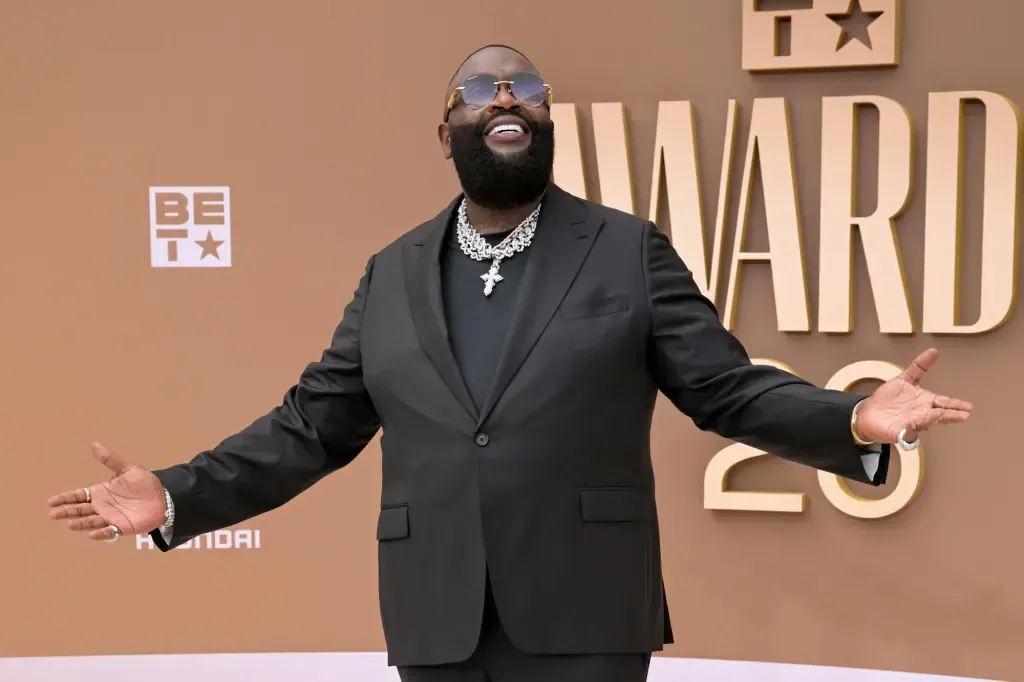
Rick Ross denied on The Joe Budden Podcast that his relationship with Drake was a “facade,” pushing back on questions from host Joe Budden. For decision-makers in media and music, it is a reminder that public narratives often lag behind the incentives, timing, and pressures shaping collaborations.
Rick Ross did not mince words when Joe Budden asked why Ross and Drake never told the public that their “brotherhood” and on-camera “collabs every summer” were, in Budden’s words, a “facade.” Ross shut that down immediately, replying: “No, no, don’t get it f-ked up. Nothing about that was fake.”
Ross framed it as simple, human logic rather than a grand conspiracy. “If a n-a f-k with you, a n-a f-k with you,” he said. “If it’s something that go left, that's when it go left. It can go left right now on this podcast. It wasn't fake. Before that, n-as showing love.” In other words, he is not arguing the relationship was flawless. He is arguing the relationship was real, and the later change does not retroactively turn everything into performance.
Budden pressed back, saying that when people hear what happened, “it don't connect.” That tension matters, especially in music where fans, labels, and media all try to reverse-engineer meaning from outcomes. When a collaboration cools, audiences look for a reason that explains the entire story as if it should still be consistent in hindsight. Ross’s position is closer to the real-world pattern that relationships in creative industries can be genuine in the moment, and still end due to shifts in priorities, business realities, or personal circumstances.
Ross went further by answering the meta-question: why do people keep hunting for a single “connection” that ties the whole arc together? He suggested that some things are not meant to have their narrative threads pulled apart endlessly. “Some things are not to be looking for the connection,” he said. That is a worldview, and it is also an operational stance for how public-facing artists manage uncertainty. If you assume every turn has to have a clean, explainable thread, you invite endless speculation. If you accept that some changes happen, you regain control of the story.
To underline that point, Ross referenced Budden’s own past. He brought up Budden’s notorious falling out with former co-hosts Rory Farrell and Jamil “Mal” Clay, drawing a parallel between how people talk about relationships when they break. Ross’s comparison was blunt: “That's like me looking for the connection between the last weird n-as you used to do the podcast with.” He contrasted it with what he described as a normal evolution of professional ties, saying, “You loved them n-as, didn't you? That's business. You moved on.”
He then returned to the theme he started with, that goodwill is not always durable, and that “real pressure” is often the dividing line between lasting partnership and a split. “You wish all them n-as the best if it ain't no real pressure. Continue to do you, keep winning. But once it go left, it go left.” For a business audience, the implication is clear: public chemistry is not the same thing as stable business alignment. Even when the initial bond is authentic, the underlying incentives can still drift.
This conversation landed in a bigger moment for Ross. He dropped his 12th solo album Set in Stone today (July 17) and is in the middle of his Port of Miami 20th Anniversary Tour. Billboard also went down to South Florida to check out the tour's opening night, and you can find that coverage below. Translation: while the Drake relationship remains a constant internet-shaped storyline, Ross is also balancing a very real job function, promoting a major project and sustaining a touring engine. In artist economics, the timeline never pauses. Even if the narrative heat stays hot, releases and live schedules keep demanding attention.
So what does this mean for anyone running a business that relies on collaborations, partnerships, or co-created attention? In the music ecosystem, relationships can be “real” and still change, and the public will keep demanding a single explanatory frame. Ross is basically saying: stop trying to turn a later breakup into proof of earlier acting. For executives, labels, podcast networks, and media teams, the second-order lesson is about risk management of narratives. When partnerships end, speculation grows. The better you understand that speculation is driven by incentives and missing information, the less you can get yanked around by it.
Ross did not provide extra facts about what specifically changed between him and Drake. Instead, he drew a boundary around interpretation: “Nothing about that was fake.” Whether the audience accepts that or not, the operational takeaway is that authenticity claims are strategic, and silence can be its own communication. Budden asked for a clear admission of “facade.” Ross offered a different kind of clarity, that the bond was genuine until it wasn’t, and once it moved, it moved.
This story's Key Insights and Take-aways are locked.
Create a free account to unlock Executive Actions for one credit.
Register to UnlockAlways free for Executives Club members. Join the Club
More in Entertainment

12TB Steam 'teraleak' goes beyond Valve: GTA 3, Mafia 2 prototypes exposed
A 12-terabyte dump of Steam data reveals prototypes and builds of third-party classics like GTA 3 and Mafia 2, plus unreleased Valve content, rewriting game history.

LinkedIn's romance problem: 1 in 4 workers say dating on it is fair game
A new survey shows a quarter of U.S. employees treat the professional network as fair game for romance, even as LinkedIn bans it and removes hundreds of thousands of offending posts.

Enhypen's first No. 1 album breaks K-pop's Billboard 200 streak
The K-pop group's 98,000-unit debut tops the chart while Dolly Parton's catalog reentry shows how death reshapes streaming.