

Rings of Power Season 3 explains Celeborn’s absence with a First Age Galadriel flashback
McKay confirms an “epic” romantic flashback will clarify Galadriel’s descent and why Celeborn returns now.

Patrick McKay, co-showrunner of The Rings of Power, confirmed at San Diego Comic-Con that Season 3 will address Celeborn’s absence through an “epic” First Age flashback. The show will use Celeborn’s return, alongside a glimpse already seen in the Season 3 trailer, to reshape how audiences understand Galadriel after hundreds of years apart.
If you’ve been wondering why Celeborn has been missing from The Rings of Power storyline, Season 3 is going to answer you, and it’s not going to be subtle. Co-showrunner Patrick McKay said at San Diego Comic-Con that the show will “go back to the First Age” for a romantic, “beautiful, epic” Galadriel flashback that explains what happened during the time he’s been gone.
McKay’s point is straightforward, but it changes the way you’ll read Galadriel going forward. He told GamesRadar+ and other press at a roundtable that seeing Celeborn bring out “this whole other part of Galadriel” will help audiences understand “what has happened to her and why she has had this descent” over the centuries of separation, and also show “a totally different part of her begin to come out and flourish” when he returns.
For executives, the interesting part is how the production is doing character continuity work that also functions like a narrative reset. The show has already introduced Galadriel as a single emotional lens across multiple seasons, and McKay essentially describes a second storyline running underneath: anyone “really important” in your life changes what you are capable of and reveals different qualities. In other words, Celeborn is not just a returning character, he is an interpretive key. The flashback is the lockpick, and the present-day payoff is the sprint against consequences.
The flashback choice is also already partially baked into what fans have seen. The Rings of Power Season 3 trailer includes a glimpse of the “First Age” scene, with Galadriel and Celeborn dancing in a forest, surrounded by golden lights. That matters because trailers are not just marketing, they are audience alignment tools. They confirm tone, stakes, and relationship dynamics early, before the full story lands. Here, the production is using romantic imagery tied to an origin moment to set up later emotional cost, rather than treating the relationship as background flavor.
Now layer in the immediate plot pressure. McKay’s comments connect Celeborn’s return to the rising darkness that forces urgency. The source notes that Celeborn and Galadriel have been separated for hundreds of years when he comes back in Season 3, and that he “must join the fight quickly against the rising darkness.” That combination, flashback to explain the emotional descent plus fast re-entry into conflict, is a classic two-track strategy: satisfy long-term character questions while still accelerating the main engine of plot.
It is also a casting moment with industry implications. The source says Stranger Things star Jamie Campbell Bower is playing Celeborn in Season 3 as he “steps into Celeborn’s shoes.” Celeborn is described as an Elven warrior and Galadriel’s husband, and his absence from the story so far has been a visible gap for fans. When a show brings in a known actor for a pivotal role and pairs it with a timeline reveal, it signals confidence that viewers will accept a more complex arc rather than demanding a straight-line “where is he, why now” answer.
From a broader business perspective, this is the kind of decision that affects retention and churn. Relationship-driven storytelling can stabilize audiences across episodes because it creates personal stakes, not just world stakes. But it can also raise expectations: once a show promises an “epic” flashback and frames it as an explanation for Galadriel’s centuries-long decline, the eventual payoff has to deliver. The good news for decision-makers is that the source already indicates the creative plan: use the First Age meeting scene to contextualize the descent, then use Celeborn’s return to show Galadriel changing in response.
There is also a lesson for peers managing large IP ecosystems. The Rings of Power is operating in a world where lore fans notice inconsistencies fast, and where releases are watched not just for plot, but for canon feel, time periods, and how relationships map onto the mythos. By anchoring the answer in the First Age and explicitly tying it to the moment Celeborn and Galadriel first met, the show is drawing a boundary around uncertainty. You can debate execution, but the intended structure is clear.
Strategically, if you are advising a studio, board, or investor looking at audience momentum for franchise television, the take is simple: continuity is not only a creative concern, it is a commercial one. Season 3 is using a flashback to resolve a major character absence, and it is doing it while the overarching conflict escalates, which is how you turn “wait, why” into “oh, that’s why” without slowing the story’s pace.
This story's Key Insights and Take-aways are locked.
Create a free account to unlock Executive Actions for one credit.
Register to UnlockAlways free for Executives Club members. Join the Club
More in Entertainment

'It's a Magic Trick': Ballet Experts Say Rosalía's SNL Pose Is Impossible
Three ballet experts tell Rolling Stone Rosalía's gravity-defying SNL stillness shouldn't be possible - and why the debate is now part of the show.

Activision CMO: GTA 6 Will Boost Call of Duty, Not Bury It
Activision's top marketer says Rockstar's blockbuster will drive players back to consoles and into Modern Warfare 4, even as the company admits its recent strategy failed.
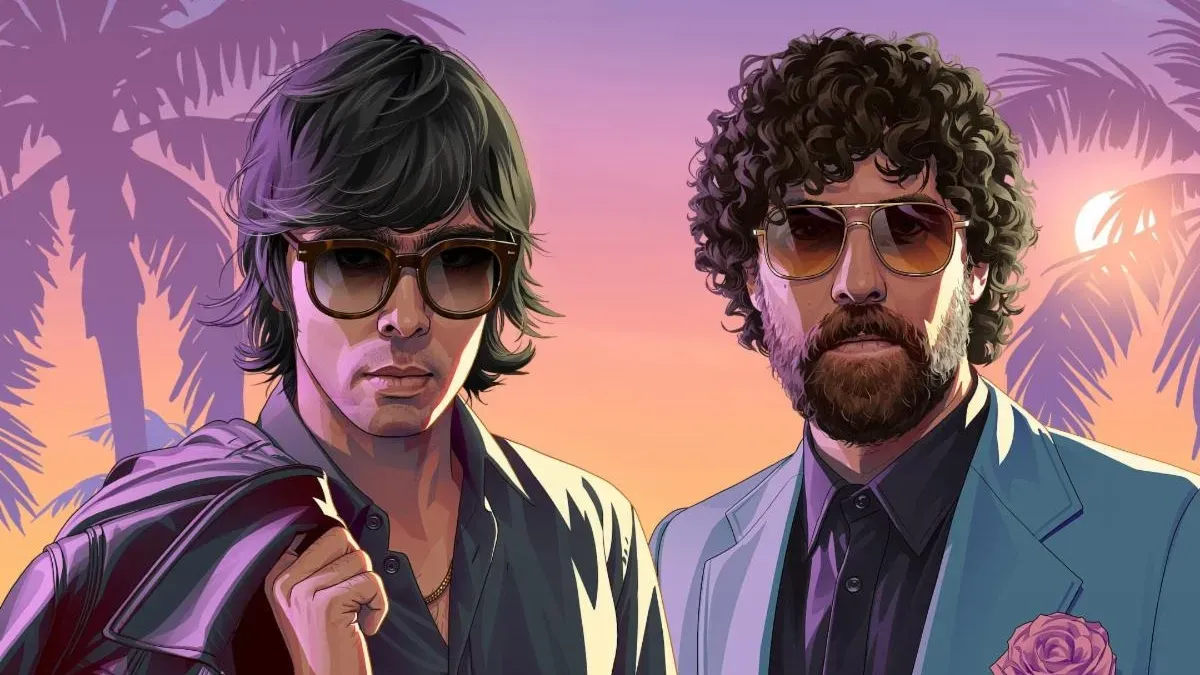
Justice to Score GTA 6, Share New Song with Tame Impala, SZA, King Gizzard
Rockstar taps the French duo for the GTA VI score, and the first taste is a genre-melting collab with Tame Impala, SZA, and King Gizzard & The Lizard Wizard.