
Ro Khanna says armed Israeli settlers detained him in West Bank
A US lawmaker reports US-made weapons and Israel Defense Forces inaction during a West Bank visit.

Ro Khanna, a progressive US House Democrat from California, says armed Israeli settlers detained him during a visit to the Israel-occupied West Bank. He tells Reuters this reflected a first-hand view of realities faced by Palestinians under occupation, with US-made weapons involved and Israel Defense Forces refusing to intervene.
Ro Khanna, a progressive US House Democrat from California, says armed Israeli settlers detained him during a recent visit to the Israel-occupied West Bank. In an interview with Reuters on Thursday, Khanna described the experience as a first-hand view of the realities faced by Palestinians living under occupation, and he said the detention happened the previous day while his delegation visited an area in the southern West Bank that has seen repeated attacks by Israeli settlers.
That detail matters because Khanna is not talking about a vague “tense situation.” He is describing an encounter with armed settlers, and he adds two specific elements that tighten the accountability lens: he said the settlers were armed with US-made weapons, and he said Israel Defense Forces refused to intervene. Those are the kinds of facts that, in politics and policy, force scrutiny beyond the immediate scene. When US-made arms show up on someone’s account of what unfolded on the ground, Washington stops treating the story as “foreign news” and starts treating it as a domestic policy question.
To understand why this lands so hard for decision-makers, you have to translate the on-the-ground description into the incentives underneath. The West Bank is not just a geographic hotspot; it is a governance stress test where occupation dynamics, security enforcement, and international law debates collide in daily life. Khanna’s report points to a gap between the presence of an armed actor and the response of the formal security force. If that claim is accepted as accurate, then the relevant question is not only what happened to him, but what the deterrence and enforcement system looked like in that moment.
There is also a second layer, because Khanna ties his detention to an area that has experienced repeated attacks by Israeli settlers. That phrasing signals an ongoing pattern rather than a one-off incident. In policy terms, repeated incidents turn into a feedback loop: affected communities experience recurring fear, external observers press for enforcement, and political factions use new reports to argue that current approaches are either failing or being selectively applied. Khanna’s words, as Reuters frames them, sit squarely in that loop.
For people who fund, build, or influence technology and security policy, the “US-made weapons” detail is the part that tends to travel the farthest. Even when a claim is about an operational event, the supply chain question becomes immediate: which categories of weapons are being exported, how those transfers are tracked, and what compliance frameworks are supposed to prevent misuse or escalation. Without adding any new facts beyond what the source states, it is still clear why executives and boards watch this kind of story. Defense and security procurement are never just transactions. They are reputational risk, regulatory exposure, and geopolitical leverage all at once.
On the regulatory and oversight side, members of Congress reporting first-hand accounts can shift the tempo. Reuters notes Khanna gave the interview on Thursday, from a Palestinian village, describing what he saw while his delegation visited. That timing matters. Investigations, hearings, and policy reviews often start with something concrete that journalists and lawmakers can point to. If a detention claim includes both the identity of the affected policymaker and the assertion about US-made weapons and non-intervention by Israel Defense Forces, it gives oversight efforts sharper edges.
There is also an operational implication for anyone thinking about “risk management” in volatile settings. Khanna’s account is essentially a reminder that travel security and political visibility do not automatically protect against local armed actors. Even for a US congressman, the reported outcome was detention by armed settlers, with the stated claim that Israel Defense Forces did not intervene. That combination suggests that standard assumptions about authority and immediate enforcement may not hold in every micro-environment.
For executives and board members in adjacent sectors, the strategic stake is simple: when lawmakers describe armed incidents involving internationally sourced equipment, the fallout can quickly broaden. It can move from a reported incident to compliance reviews, export-control questions, procurement scrutiny, and public pressure. Even if companies are not mentioned in the Reuters excerpt provided, the structural dynamic is familiar: governments and parliaments respond to credibility and specificity, and specificity tends to accelerate review.
In the end, the core of the story is Khanna’s claim that armed Israeli settlers detained him during a West Bank visit, and that he attributes key aspects of the incident to US-made weapons and Israel Defense Forces refusing to intervene. Because he ties the incident to an area with repeated settler attacks, the report reads less like a surprise event and more like an observation of a continuing reality faced by Palestinians under occupation. For decision-makers watching this space, the question is not only what happened to one delegation. It is what this suggests about enforcement consistency, oversight expectations, and how quickly political attention can turn into policy and compliance consequences.
This story's Key Insights and Take-aways are locked.
Create a free account to unlock Executive Actions for one credit.
Register to UnlockAlways free for Executives Club members. Join the Club
More in Politics
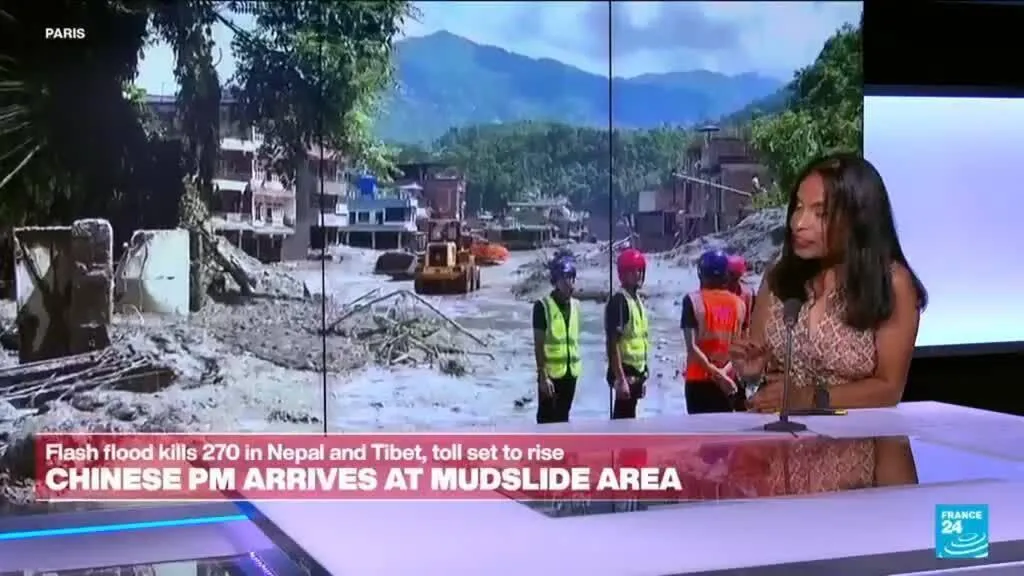
Glacial collapse, not rain, killed 180 in Nepal's Himalayan flood
The Himalaya's extreme geography hid the true cause of Nepal's catastrophic flood, a glacial collapse that turned a geological battleground into a mass-casualty zone.
Iran’s Esmail Baghaei says Oman talks start shipping via Hormuz, not US talks yet
Temporary route plans with Oman aim to restart commerce while Tehran says Washington dialogue is not on the table.

Standards watchdog opens probe into Reform UK deputy leader Richard Tice over interests
The parliamentary standards commissioner says it began an investigation on 28 July into a possible undeclared interest.