
RoboCare gets a six-figure investment from 216 Capital on June 23, 2026
The Tunisian precision-agtech startup uses satellite, drone, IoT, and AI to expand into Africa and the Middle East.
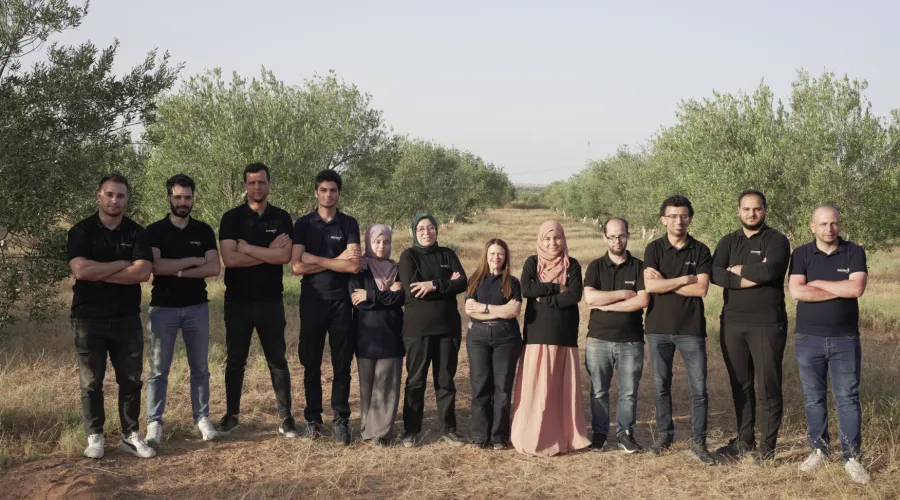
On June 23, 2026, 216 Capital announced it is investing a six-figure amount into RoboCare, a Tunisian startup focused on precision agriculture and AI. For decision-makers, the move signals increased VC attention to data-driven farming platforms built for MENA crops like olives and tomatoes.
On June 23, 2026, 216 Capital announced its entry into the capital of RoboCare, a Tunisian startup that specializes in precision agriculture and AI applied to agriculture, through a six-figure investment. The stated goal is to fund RoboCare's next growth phase and support expansion into African and Middle Eastern markets.
This is not a generic “we use tech in farming” pitch. RoboCare builds an agricultural management platform designed to help farmers make better decisions by combining multiple data sources: satellite imagery, drone data, IoT sensors, weather data, and field expertise. Then it uses AI models to enable early detection of crop diseases and stress, optimize resource usage, and improve farm performance, with a focus on higher-performing and more sustainable agriculture.
The timing matters because the platform is being positioned against very specific, very real pressure points in the region: climate change challenges, water stress, and rising agricultural production costs. Precision technologies are framed in the press release as a strategic lever to strengthen both productivity and farm resilience. In plain English, this kind of platform is trying to shift agriculture from “react when something breaks” to “notice stress and disease early, then act,” while also reducing waste in inputs like water, fertilizer, and other resources.
There is also a sharp market distinction baked into the product strategy: RoboCare’s models are specialized for crops that are strategic for the region, particularly olive trees, cereals, and processing tomatoes. The company contrasts itself with generalist agricultural platforms by emphasizing that it builds its models from local data to address North Africa and Middle East soil and climate conditions. That matters because farming is local. Models that work in one geography can miss the mark in another if rainfall patterns, temperature swings, soil profiles, and crop behavior differ. Here, the press release is essentially saying the product is tuned to MENA realities rather than copied from elsewhere.
The traction signal is operational. RoboCare already monitors several thousand hectares under “intelligent surveillance” and has generated thousands of agronomic alerts, allowing operators to respond faster and more effectively. The company also says it has established partnerships with several institutional players and is gaining growing visibility within international AgriTech ecosystems. Even without the investment size specified down to an exact dollar amount, the “several thousand hectares” line and “thousands of agronomic alerts” suggest a system that is actively being used, not just prototyped.
For 216 Capital, the investment is explicitly tied to strategy. The press release quotes Hassen Arfaoui, Principal at 216 Capital, saying the investment aligns with supporting high-potential tech startups capable of delivering concrete answers to major economic, social, and environmental challenges on the continent. Agriculture is positioned as a key sector for food security and economic growth across many African and MENA countries, and RoboCare is aiming to become one of the leading players in agricultural digital transformation at the regional scale.
The second-order implication for executives and boards is that this is a bet on the infrastructure around farming decisions, not just a single “smart” device. A platform that ingests satellite imagery, drone data, IoT sensors, and weather data is inherently dependent on data pipelines, ongoing model refinement, and workflows that farmers and agribusiness players can actually use. Funding a “next growth phase” and expansion into Africa and the Middle East implies the company believes it can replicate value across markets by mapping local data to local recommendations, particularly for the region’s high-stakes crops.
If you lead a similar agritech, fintech-for-ag, or enterprise data company, the headline takeaway is simple: investors are backing precision agriculture that is both data-rich and region-specific, and they are doing it with an expansion narrative aimed at MENA and broader African markets. If you ignore that shift, you risk treating AI in agriculture as a feature instead of a distribution and retention engine. If you take it seriously, you are forced to ask the question the press release quietly answers with its details: can your models detect disease and stress early, optimize resource usage, and prove it through real monitored hectares and actionable alerts?
This story's Key Insights and Take-aways are locked.
Create a free account to unlock Executive Actions for one credit.
Register to UnlockAlways free for Executives Club members. Join the Club
More in Technology
Prime Day drops $240 off Roborock Saros 20 to $1,359.99
A $240 markdown turns Roborock's robovac and mop hybrid into a hands-off home upgrade, with performance details that matter.

Oracle cut 21,000 jobs in a year as AI pushed its workforce down
A SEC filing ties the 12.9% reduction to AI adoption, while Oracle keeps funding debt-fueled data center buildout.

Rob Morris built Koko to reach teens with free mental-health tools online
Koko meets young people where they already are, using research-backed, self-guided interventions and moderated peer support.