
Robyn and Zara Larsson remix “Talk To Me” live, turning one song into a mini universe
Their July 14 Royal Arena reunion turns Robyn’s Max Martin-era track into a Zara remix plus a new Robyn favor.
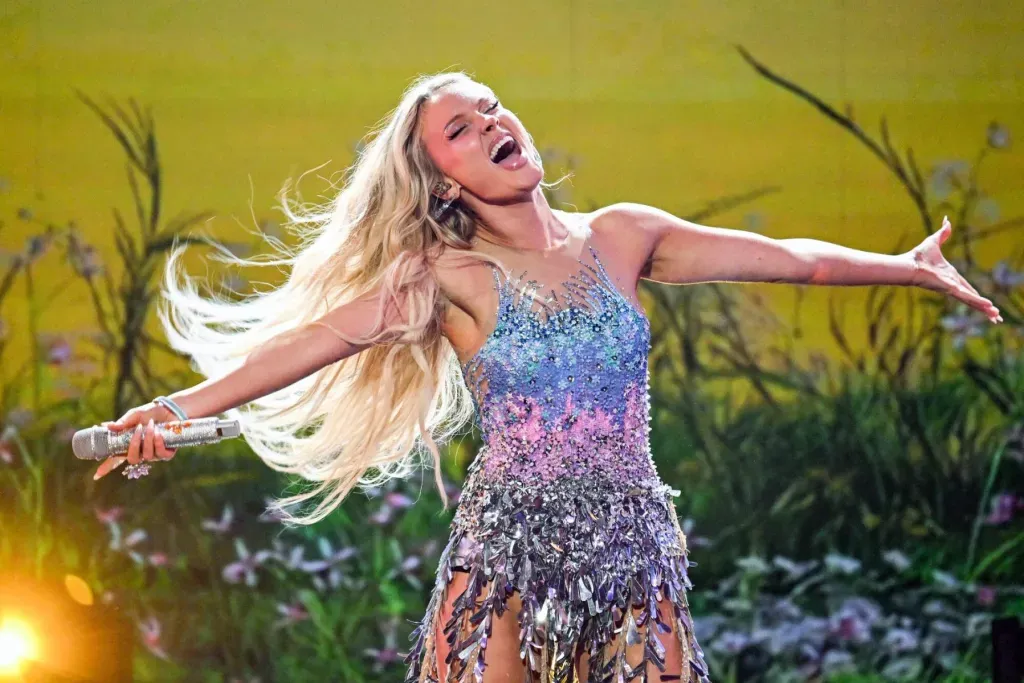
Robyn and Zara Larsson released “Talk To Me, Zara,” a collaborative rework of Robyn’s March album track “Talk To Me.” The move matters to decision-makers because it shows how major pop brands are using star-to-star remix cycles to reheat catalog, stretch tours, and drive U.S. attention.
Robyn and Zara Larsson did not just collaborate. They reworked a track fans already associate with Robyn's latest era and then brought it to life in front of a crowd big enough to make every label executive in the room pay attention.
On July 14, at Copenhagen's Royal Arena, Robyn debuted “Talk To Me, Zara” live, bringing Larsson out as a surprise guest on the final night of the European leg of her Sexistential tour. The song itself is a new version of “Talk To Me,” originally on Sexistential, Robyn's ninth studio album released in March. Larsson remixed the pulsing, Max Martin-co-produced original and added her own verse, so this is not a passive feature. It is a creative override that changes how the record plays in the public imagination.
From a business perspective, this is a familiar pop play, but the execution is sharper than usual because it knits together three momentum engines: an album cycle, a tour moment, and a transatlantic chart strategy. Sexistential arrived after 2018's Honey, and the album was also paired with Robyn's first major headline tour since 2019. By choosing the tour finale for the first live moment, Robyn effectively used the maximum attention window to introduce a remix that points people back to the album. Then Larsson adds a U.S.-relevant credential to the mix: her career upswing in America.
That U.S. context is not just trivia, it is leverage. The source notes that Larsson's biggest stateside hit remains 2015's “Never Forget You” with MNEK, which peaked at No. 13 on the Hot 100, while “Ruin My Life” reached No. 20 on Billboard's Pop Songs chart in 2018. This year, she notched her first career Grammy nomination, for “Midnight Sun” in the Best Pop Dance Recording category, and she returned to the Hot 100 for the first time in a decade when her 2016 single “Lush Life” went viral, capping one of the strongest chart runs of her career.
In other words, both artists have incentives that align. Robyn brings an established cultural touchstone: “Dancing on My Own” earned a Grammy nomination for Best Dance Recording in 2011. Larsson brings a current chart and awards runway in the U.S. When you overlay that onto a Max Martin-co-produced track, you get a production signature that historically performs well because it is tuned for replay. The remix format extends the shelf life of the underlying song, but the “surprise guest” debut turns it into an event rather than another credit on a playlist.
The collaboration also reinforces a second relationship layer that executives should notice: reciprocity. “Talk To Me, Zara” marks the second collaboration between the pair. Larsson returning a favor is spelled out in the source: Robyn contributed a new mix of “Puss Puss” to Larsson's remix album Midnight Sun: Girls Trip, released in May. That remix album was not a solo concept either. It also featured reworkings from PinkPantheress, Shakira, Tyla, Kehlani and Madison Beer. So this is not a one-off celebrity gimmick. It is part of a broader remix ecosystem that aggregates mainstream attention by clustering multiple global names in one release.
If you are thinking like an operator or board member, the interesting strategic implication is how these remix cycles can behave like low-friction marketing channels. A remix album and a tour finale both create reasons for audiences to re-engage with catalog, and they do it with recognizable brands attached. Even with no discussion of regulatory action in the source, the downstream “policy” analog for music is platform governance: charting and awards pipelines can amplify releases when they trigger new streams, new media coverage, and new playlist placements. Executives do not control everything in those systems, but they can influence the input signals by timing creative drops around tour peaks and award-season attention.
This also matters for peers who manage artist careers and label portfolios. Robyn's Sexistential era is positioned as her first album since 2018's Honey, with her first major headline tour since 2019. That makes “Talk To Me, Zara” a continuity tool: it keeps the album's best hooks moving after the initial release wave. For Larsson, the collaboration lands during that U.S. upswing, which includes her Grammy nomination for “Midnight Sun,” her Hot 100 return via “Lush Life,” and prior chart performance with “Never Forget You” and “Ruin My Life.” Pair those realities and the collaboration becomes a bridge, not just a spotlight.
The stakes are simple and immediate. In a market where attention is scarce and algorithms are unforgiving, remix-driven star power can extend reach beyond a single release window. And for decision-makers, the signal here is that “featured” is not the endgame anymore. The endgame is re-contextualization, where a second artist changes the record's meaning, pushes it into their own fan ecosystem, and then uses a live debut to convert curiosity into sustained momentum.
This story's Key Insights and Take-aways are locked.
Create a free account to unlock Executive Actions for one credit.
Register to UnlockAlways free for Executives Club members. Join the Club
More in Entertainment

'It's a Magic Trick': Ballet Experts Say Rosalía's SNL Pose Is Impossible
Three ballet experts tell Rolling Stone Rosalía's gravity-defying SNL stillness shouldn't be possible - and why the debate is now part of the show.

Activision CMO: GTA 6 Will Boost Call of Duty, Not Bury It
Activision's top marketer says Rockstar's blockbuster will drive players back to consoles and into Modern Warfare 4, even as the company admits its recent strategy failed.

Justice to Score GTA 6, Share New Song with Tame Impala, SZA, King Gizzard
Rockstar taps the French duo for the GTA VI score, and the first taste is a genre-melting collab with Tame Impala, SZA, and King Gizzard & The Lizard Wizard.